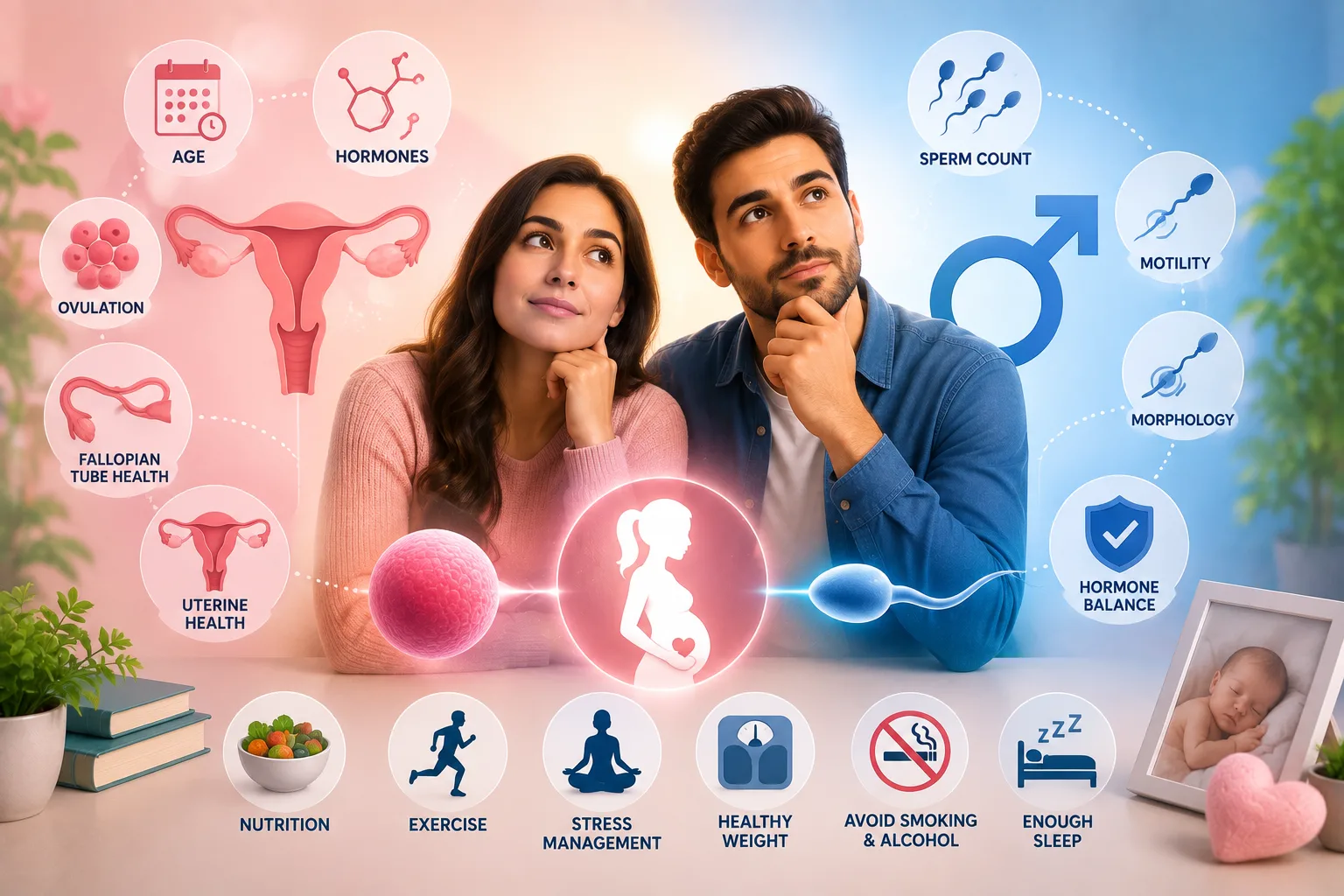
Fertility is influenced by many factors, and understanding them is the first step toward improving your chances of pregnancy. While many people assume infertility is only a women's issue, the reality is that both male and female fertility contribute equally to successful conception.
In fact, studies suggest that male factors account for nearly 40–50% of infertility cases, while female factors contribute to a similar percentage. Lifestyle, age, underlying medical conditions, and overall reproductive health all play an important role.
Whether you're planning to start a family now or preparing for the future, this guide explains the key factors that affect fertility, common causes of infertility, and practical ways to improve your reproductive health.
What Is Fertility?
Fertility refers to the natural ability to conceive a child. Pregnancy occurs when:
- A healthy egg is released from the ovary.
- Healthy sperm reaches and fertilizes the egg.
- The fertilized egg successfully implants in the uterus.
Any disruption in this process can reduce the chances of conception.
Female Fertility Factors
Several biological and lifestyle factors influence a woman's ability to conceive.
1. Age
Age is one of the biggest factors affecting fertility.
Women are born with a fixed number of eggs, and both the quantity and quality decline over time.
Generally:
- Fertility is highest during the 20s.
- It gradually declines after age 30.
- The decline becomes more noticeable after 35.
- Pregnancy becomes more difficult after 40.
While many women conceive naturally later in life, age can increase the time it takes to become pregnant.
2. Ovulation Health
Regular ovulation is essential for conception.
Conditions that interfere with ovulation include:
- Polycystic Ovary Syndrome (PCOS)
- Thyroid disorders
- Hormonal imbalances
- Premature ovarian insufficiency
Signs of ovulation problems may include:
- Irregular periods
- Missed menstrual cycles
- Very light or heavy bleeding
Without regular ovulation, pregnancy becomes less likely.
3. Fallopian Tube Health
The fallopian tubes allow the egg and sperm to meet.
If the tubes become blocked due to:
- Pelvic infections
- Endometriosis
- Previous surgeries
- Sexually transmitted infections (STIs)
Natural conception may become difficult because fertilization cannot occur.
4. Uterine Health
A healthy uterus is necessary for embryo implantation.
Certain conditions may affect implantation, including:
- Uterine fibroids
- Polyps
- Congenital uterine abnormalities
- Scar tissue
Many of these conditions can be diagnosed and treated successfully.
5. Endometriosis
Endometriosis occurs when tissue similar to the uterine lining grows outside the uterus.
It may:
- Cause chronic pelvic pain
- Affect egg quality
- Damage reproductive organs
- Reduce implantation success
Early diagnosis often improves treatment outcomes.
Male Fertility Factors
Male fertility is equally important when trying to conceive.
1. Sperm Count
A healthy sperm count increases the chances of fertilization.
Low sperm count may result from:
- Hormonal disorders
- Varicocele
- Smoking
- Alcohol use
- Certain medications
2. Sperm Motility
Motility refers to how well sperm move.
Even with a normal sperm count, poor movement can reduce the likelihood of reaching the egg.
3. Sperm Morphology
Morphology describes the size and shape of sperm.
Abnormally shaped sperm may have difficulty fertilizing an egg.
4. Hormonal Balance
Hormones regulate sperm production.
Conditions affecting testosterone or pituitary hormones can reduce fertility.
5. Lifestyle Choices
Everyday habits can have a major impact on male fertility.
Common factors include:
- Smoking
- Excessive alcohol consumption
- Drug use
- Poor diet
- Obesity
- Chronic stress
- Lack of sleep
Making healthier lifestyle choices often improves reproductive health.
Lifestyle Factors That Affect Fertility
Many fertility problems are linked to lifestyle rather than medical conditions.
Nutrition
A balanced diet supports hormone production and reproductive health.
Focus on:
- Fresh fruits
- Vegetables
- Whole grains
- Lean proteins
- Healthy fats
Body Weight
Both being underweight and overweight can disrupt hormone balance.
Maintaining a healthy weight may improve fertility in both men and women.
Exercise
Regular physical activity supports overall health.
However, excessive exercise without proper nutrition may negatively affect fertility.
Stress
Long-term stress can influence hormone levels and reproductive health.
While stress alone rarely causes infertility, managing it may improve overall well-being.
Smoking and Alcohol
Smoking damages both egg and sperm quality.
Heavy alcohol consumption may also reduce fertility and affect pregnancy outcomes.
Reducing or avoiding these habits is recommended for couples trying to conceive.
Medical Conditions That Can Affect Fertility
Several health conditions may interfere with conception.
Common examples include:
- PCOS
- Endometriosis
- Thyroid disorders
- Diabetes
- Autoimmune diseases
- Uterine fibroids
- Male hormonal disorders
- Varicocele
Early diagnosis often leads to better treatment outcomes.
How Fertility Is Evaluated
Doctors may recommend different fertility tests depending on your symptoms.
For women:
- Hormone blood tests
- Ovulation assessment
- Pelvic ultrasound
- Ovarian reserve testing
- Fallopian tube evaluation
For men:
- Semen analysis
- Hormone testing
- Physical examination
- Ultrasound (when required)
Testing both partners helps identify the underlying cause more quickly.
Can Fertility Be Improved Naturally?
In many cases, healthy habits may improve fertility.
Helpful steps include:
- Maintaining a healthy weight
- Eating a nutritious diet
- Exercising regularly
- Managing stress
- Sleeping 7–8 hours daily
- Avoiding smoking and tobacco
- Limiting alcohol
- Managing chronic medical conditions
While these changes cannot treat every fertility problem, they can improve reproductive health.
When Should You See a Fertility Specialist?
Consider consulting a fertility specialist if:
- You are under 35 and have been trying to conceive for 12 months without success.
- You are over 35 and have been trying for 6 months.
- You have irregular menstrual cycles.
- You have been diagnosed with PCOS or endometriosis.
- You have experienced repeated miscarriages.
- There is a known male fertility issue.
Seeking medical advice early may improve treatment options.
Common Myths About Fertility
Myth 1: Infertility is only a woman's problem.
False. Male fertility issues contribute to nearly half of infertility cases.
Myth 2: Young people cannot have fertility problems.
False. Fertility challenges can affect adults of any age.
Myth 3: Healthy people are always fertile.
Not always. Some reproductive conditions develop without noticeable symptoms.
Myth 4: Stress alone causes infertility.
Stress may influence reproductive health, but it is rarely the sole cause.
Tips to Improve Your Chances of Conception
- Track ovulation accurately.
- Maintain a healthy lifestyle.
- Eat a nutrient-rich diet.
- Exercise regularly.
- Avoid smoking and excessive alcohol.
- Get enough sleep.
- Seek medical advice if conception is taking longer than expected.
- Address underlying health conditions early.
Final Thoughts
Understanding fertility is the first step toward improving your chances of conception. Both male and female fertility are influenced by age, lifestyle, reproductive health, and medical conditions such as PCOS, endometriosis, thyroid disorders, and male sperm health.
While some fertility challenges require medical treatment, many couples benefit from early diagnosis, healthy lifestyle changes, and timely guidance from fertility specialists.
Every fertility journey is unique. By understanding the factors that affect conception and taking proactive steps to protect your reproductive health, you can make informed decisions and improve your chances of building the family you hope for.