
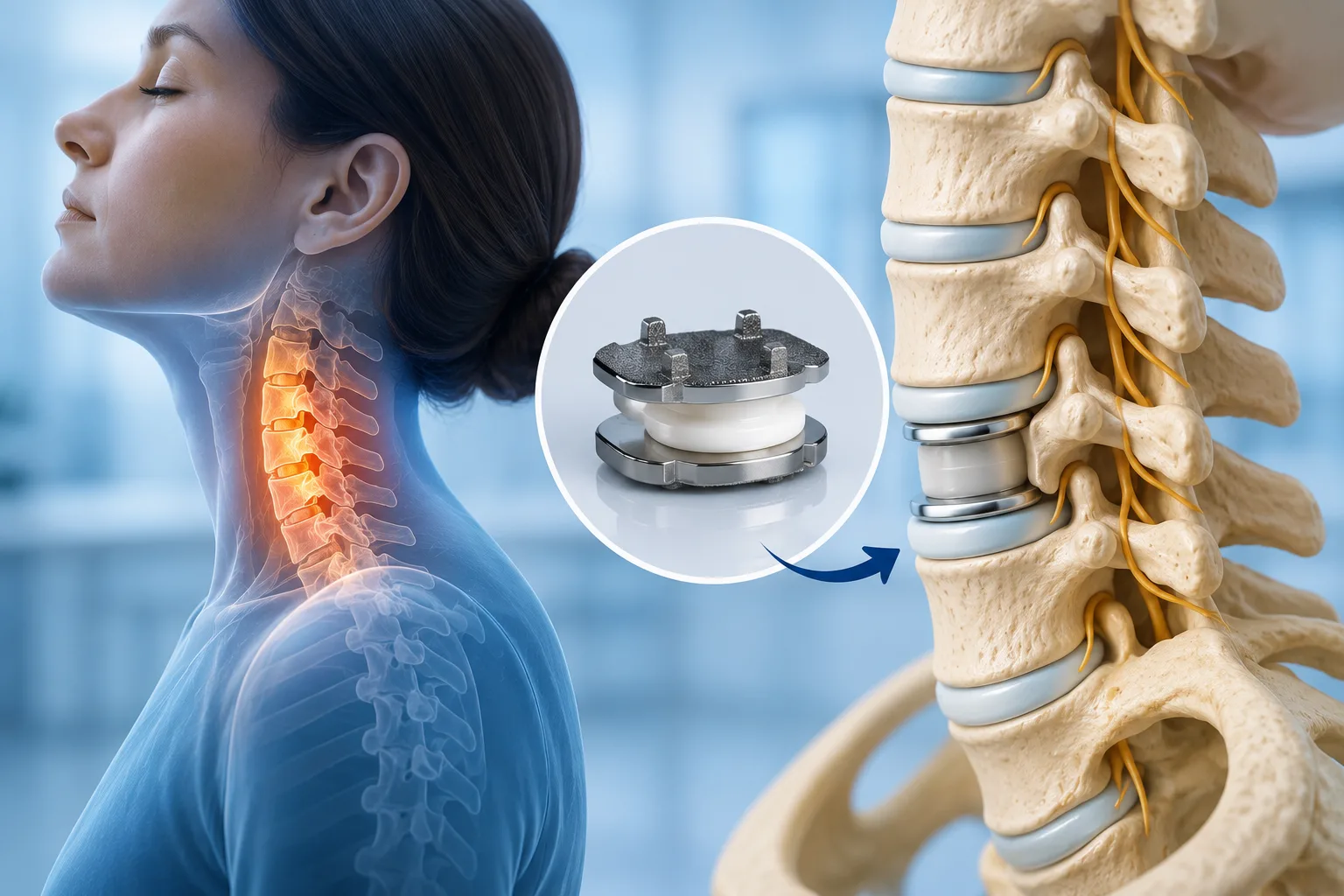
Hearing that you may need neck surgery can feel overwhelming, especially when unfamiliar medical terms are involved. One procedure that often raises questions is cervical disc replacement. While the name may sound complicated, the goal is actually quite straightforward. The procedure is designed to relieve pressure on nerves while helping the neck maintain its natural movement.
If your doctor has mentioned cervical disc replacement, understanding the basics can help you feel more confident when discussing your treatment options.
What Is a Cervical Disc?
Your neck, also called the cervical spine, is made up of seven bones called vertebrae. Between these bones are soft discs that act like cushions, absorbing shock and allowing your neck to bend and rotate comfortably.
Over time, injury or age related wear can damage a disc. When this happens, the disc may press on nearby nerves, leading to symptoms such as neck pain, arm pain, numbness, or weakness.
You can learn more about common cervical spine conditions that may affect the discs and nerves in the neck.
What Is Cervical Disc Replacement?
Cervical disc replacement is a surgical procedure that removes a damaged disc and replaces it with an artificial one. The artificial disc is designed to allow movement while reducing pressure on the affected nerve.
Unlike some other neck surgeries that permanently join two bones together, cervical disc replacement aims to preserve motion in the treated area whenever appropriate.
Who May Be a Candidate?
Not everyone with neck pain needs surgery. Many people improve with medication, physical therapy, or other non surgical treatments.
Your doctor may consider cervical disc replacement if you have:
- Persistent neck or arm pain
- A damaged cervical disc confirmed by imaging
- Numbness or weakness caused by nerve compression
- Symptoms that have not improved with conservative treatment
Your overall health, the location of the damaged disc, and the condition of your spine all play a role in determining whether this procedure is appropriate.
What Happens During the Procedure?
The surgery is performed through a small incision at the front of the neck.
During the procedure, the surgeon:
- Removes the damaged disc
- Relieves pressure on the affected nerve
- Places an artificial disc into the empty disc space
- Confirms the new disc is properly positioned
The artificial disc is designed to move with the spine, helping maintain flexibility in the neck.
What Is Recovery Like?
Recovery varies from person to person, but many patients begin walking shortly after surgery.
Your surgeon may recommend:
- Light daily activities during the first few weeks
- Avoiding heavy lifting
- Following a physical therapy program if needed
- Attending regular follow up appointments
Returning to work depends on the type of job you have and your overall recovery.
What Are the Potential Benefits?
For appropriately selected patients, cervical disc replacement may offer several advantages.
Potential BenefitHow It HelpsPreserves neck movementAllows more natural motionRelieves nerve pressureMay reduce arm pain and numbnessMaintains spinal flexibilitySupports normal daily activitiesFaster return to routine for some patientsEncourages recovery when recommended by the surgeonEvery patient is different, and your surgeon will explain the expected benefits based on your condition.
Key Takeaways
Cervical disc replacement is one option for treating certain neck conditions that cause nerve compression and persistent pain. The procedure replaces a damaged disc with an artificial one while aiming to preserve natural movement in the neck.
If symptoms such as neck pain, arm pain, numbness, or weakness continue despite conservative treatment, a comprehensive evaluation can help determine the most appropriate next step. Specialists at Atlantic Brain and Spine evaluate a wide range of cervical spine conditions and discuss both surgical and non surgical treatment options based on each patient's individual needs.
Frequently Asked Questions
Is cervical disc replacement better than spinal fusion?
Neither procedure is universally better. The right option depends on your spinal condition, overall health, and your surgeon's recommendation.
How long does cervical disc replacement surgery take?
Most procedures take a few hours, although the exact time varies depending on the individual case.
Will I lose movement in my neck?
The goal of cervical disc replacement is to preserve movement at the treated level, although recovery varies from person to person.
How soon can I return to normal activities?
Many patients gradually resume light activities within a few weeks, but your surgeon will provide guidance based on your recovery progress.