INTRODUCTION
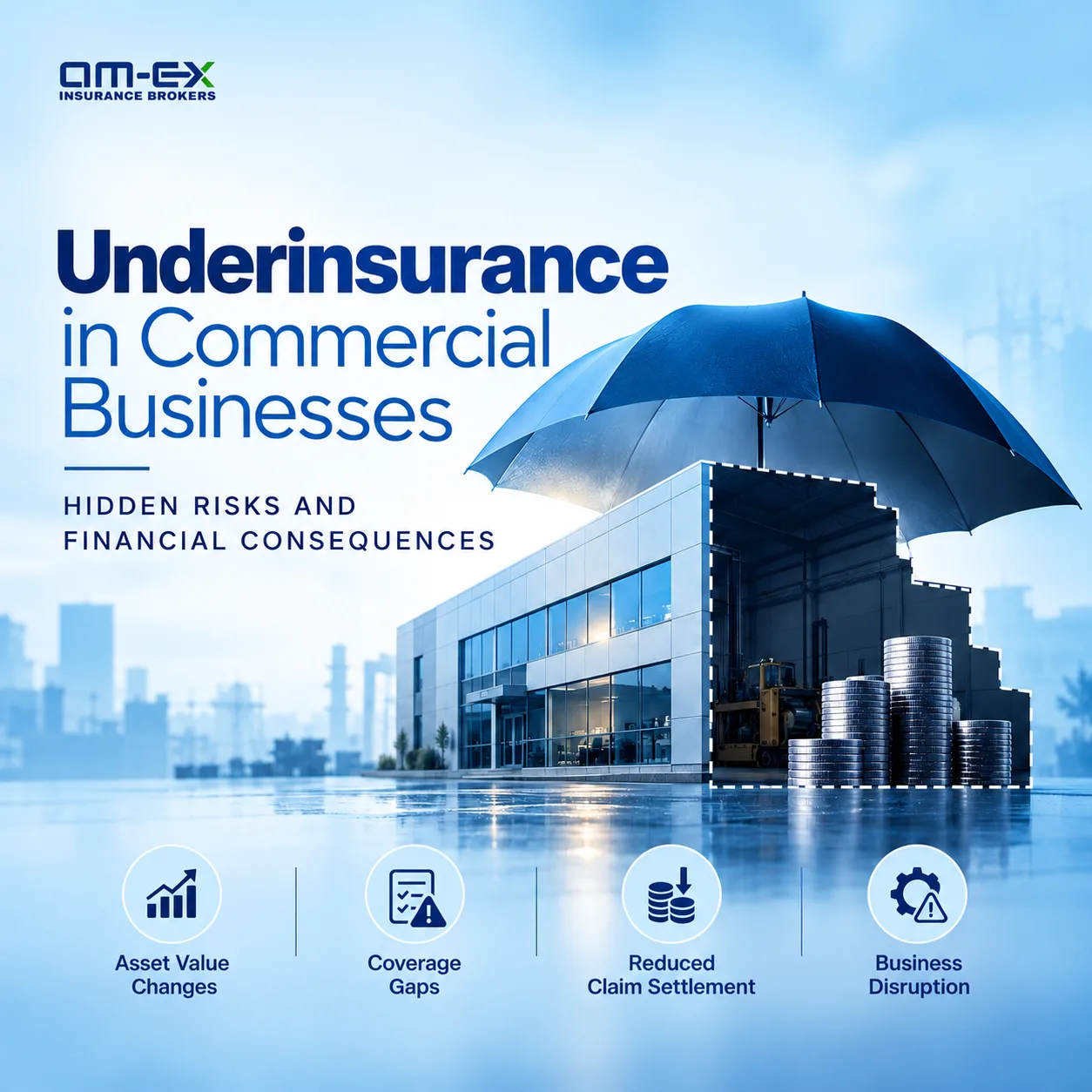
Insurance is important for companies to protect themselves from unforeseen financial losses. However, an insurance policy does not always mean a business is properly protected. If the value you provide for insurance is less than the value of your assets as on date of loss, you are underinsured.
Underinsurance can result in deductions in claim settlements, unexpected costs and interruption of activities for commercial businesses. Knowing these risks allows businesses to make informed insurance decisions and bolster their financial protection.
WHAT IS UNDERINSURANCE IN COMMERCIAL INSURANCE?
A business is underinsured if it insures its property for less than its actual value at the time of loss.
For instance, if the assets of a factory are valued at ₹1 crore but are insured for only ₹50 lakh, then after a covered loss under the Policy, the business could suffer a huge financial loss due to under-insurance. In case of conditions of average clauses being applied, the claim settlement may be reduced proportionately as per the policy terms.
COMMON CAUSE OF UNDERINSURANCE
Outdated Asset Valuations: Companies can use old values without reflecting increases in the cost of foreign exchange, taxes, construction, machinery and replacement.
Business Expansion: Adding new equipment, expanding facilities, or increasing inventory without updating insurance coverage can leave gaps in coverage.
Incorrect Stock Valuation: Seasonal fluctuations and changes in inventory levels can leave businesses underinsured during periods of high stock.
Choosing Lower Premiums: Selecting coverage primarily to reduce premium costs may leave businesses financially exposed when significant losses occur.
HOW CAN BUSINESS AVOID UNDERINSURANCE?
Businesses should conduct regular asset valuations to ensure that insured amounts reflect relevant replacement or reinstatement costs. Insurance coverage should be reviewed whenever new machinery is purchased, property is expanded, or inventory levels change significantly.
It is also important to understand policy conditions, exclusions, deductibles, and average clauses. Reviewing business interruption requirements and reassessing coverage at every renewal can help businesses identify potential gaps before a loss occurs.
CONCLUSION
If a business does not have enough insurance coverage, it can create severe financial difficulties when there is an unexpected loss. Old valuations, business growth and inadequate coverage limits can leave businesses liable for expenses that could have been covered under the right insurance arrangements.
Through regular policy reviews, accurate valuations and understanding coverage conditions, businesses may reduce these risks and enhance their financial resilience.
AM-EX Insurance Brokers can help firms evaluate their commercial insurance needs and identify any gaps in coverage. A review of the business operations, the covered assets, policy limits and other pertinent conditions can help businesses decide whether their current arrangements are still appropriate.