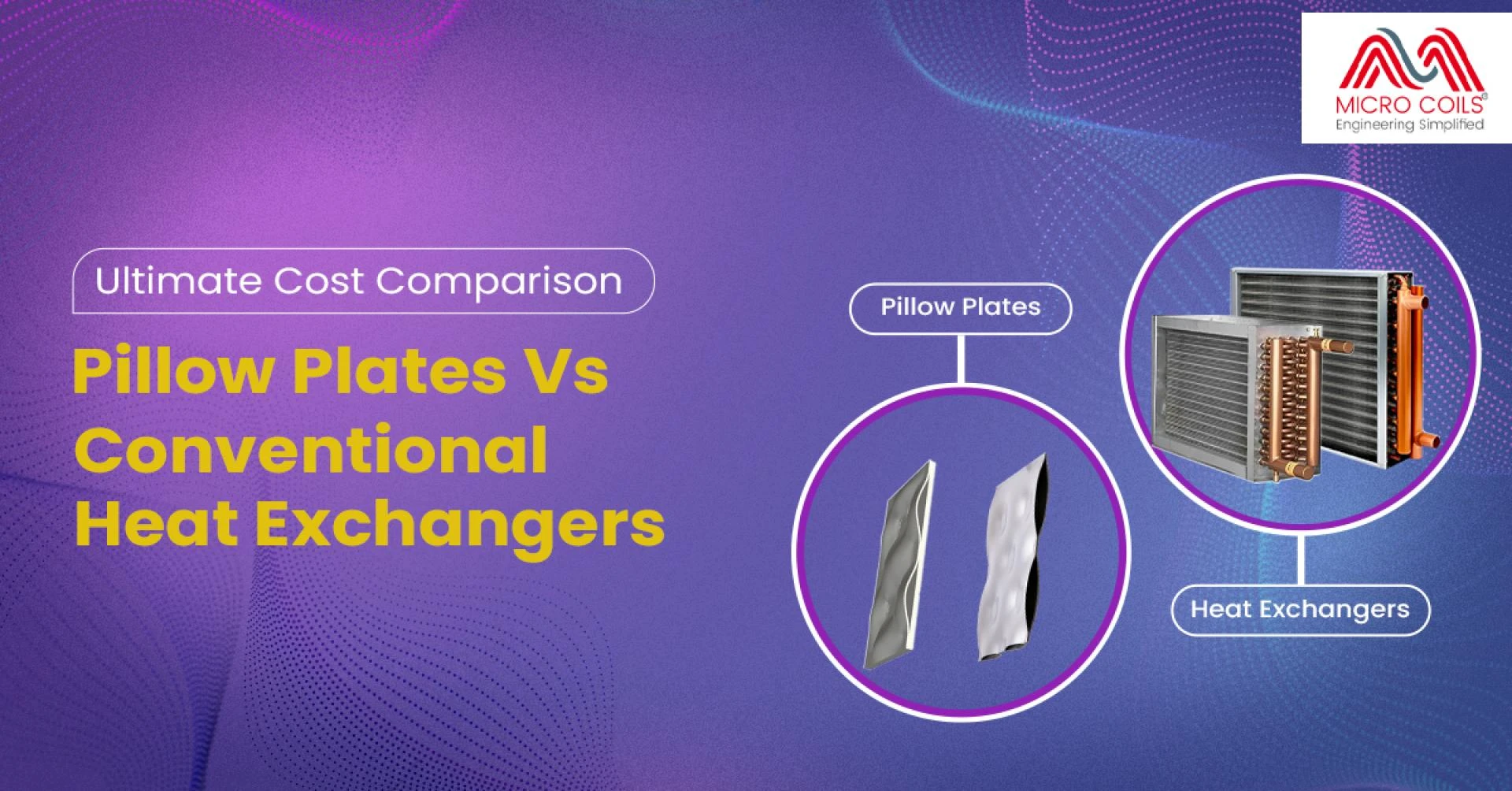
When choosing between pillow plates and conventional heat exchangers, cost is often the deciding factor. However, understanding the true cost comparison requires looking beyond just the initial purchase price. This comprehensive analysis will help you make an informed decision by examining all cost factors involved in both options.
Initial Investment Costs
The upfront cost difference between pillow plates and conventional heat exchangers varies significantly based on application and size requirements.
Pillow Plate Costs:
• Lower material costs due to simple construction
• Reduced manufacturing complexity means lower production costs
• Minimal welding requirements compared to conventional units
• Custom designs may increase costs but still remain economical
Conventional Heat Exchanger Costs:
• Higher material requirements for shells, tubes, and internal components
• Complex manufacturing processes increase production costs
• Extensive welding and assembly work adds to manufacturing expenses
• More expensive due to intricate design and precision requirements
• Additional components like baffles and tube sheets increase material costs
Generally, pillow plates offer significant cost advantages over equivalent conventional heat exchangers in terms of initial purchase price. This makes them attractive for budget-conscious projects where upfront investment is a primary concern.
Installation and Setup Expenses
Installation costs can significantly impact your total project budget. Pillow plates provide substantial installation advantages due to their lightweight design, which reduces crane and handling costs considerably. The simple mounting arrangements minimize installation time, while fewer connection points mean less piping work is required. Their compact design often eliminates the need for additional structural support, and quick installation reduces both labor costs and project timeline.
Conventional heat exchangers present more complex installation challenges. Heavy equipment requires specialized lifting and handling equipment, while complex piping connections increase installation time significantly. These units may need additional structural reinforcement, and longer installation periods increase labor costs substantially. More complex commissioning procedures also add to the overall installation expense.
Installation costs for pillow plates are typically much lower than conventional heat exchangers due to their simpler design and lighter weight, making them an economical choice for many applications.
Operating and Energy Costs
Long-term operating costs often determine the real winner in cost comparisons. Pillow plates offer excellent operating advantages through high heat transfer efficiency, which reduces energy consumption considerably. They maintain lower pressure drop characteristics, meaning reduced pumping costs throughout their operational life. The excellent temperature control improves process efficiency, while uniform heat distribution minimizes hot spots and energy waste.
Conventional heat exchangers may experience higher pressure drops requiring more pumping power over time. Fouling can reduce efficiency and increase energy consumption significantly, while uneven heat distribution can waste energy. Some designs may require more frequent cleaning cycles, adding to operational expenses.
The energy savings with pillow plates can be substantial over the equipment's lifetime. These savings often justify the initial investment and contribute to better overall economics for most industrial applications.
Maintenance and Service Costs
Maintenance expenses can make or break your equipment's cost-effectiveness over time. Pillow plates excel in maintenance simplicity due to their straightforward design with fewer components to maintain. Easy access for cleaning and inspection reduces service time, while smooth surfaces naturally resist fouling buildup. Without internal tubes to clean or replace, maintenance becomes more predictable and less expensive. Reduced downtime for maintenance activities keeps operations running smoothly, and lower spare parts inventory requirements reduce carrying costs.
Conventional heat exchangers present more complex maintenance challenges. Internal components require specialized maintenance expertise, while tube cleaning can be time-consuming and expensive. Regular gasket and seal replacement adds ongoing costs, and more frequent professional service requirements increase annual maintenance budgets. Higher spare parts costs due to complex components also contribute to elevated maintenance expenses.
Annual maintenance costs for pillow plates are significantly lower than conventional heat exchangers. The simple design means fewer things can go wrong, and when maintenance is needed, it's usually straightforward and inexpensive.
Lifespan and Replacement Considerations
Equipment lifespan directly affects your long-term investment returns. Pillow plates demonstrate exceptional durability through robust construction with fewer failure points. Corrosion-resistant materials are readily available for harsh environments, while the simple design experiences less mechanical wear over time. These units typically provide extended service life with proper maintenance and are easy to modify or expand when system requirements change.
Conventional heat exchangers face different longevity challenges. Complex internal components may wear faster under demanding conditions, while tube fouling and corrosion can reduce operational lifespan. Gasket and seal failures require regular attention, and average lifespan varies widely based on application and maintenance quality. Replacement often requires complete unit changeout, which can be disruptive and expensive.
The longer expected lifespan of pillow plates, combined with lower maintenance requirements, provides better return on investment over time and reduces the total cost of ownership significantly.
Space and Infrastructure Costs
Real estate and infrastructure requirements affect your total cost of ownership in ways that are often overlooked. Pillow plates offer remarkable space efficiency through their compact design, requiring less floor space than conventional alternatives. They can be mounted on walls or integrated into existing structures, which reduces building and infrastructure requirements. This translates to lower foundation and support structure costs, particularly valuable in space-constrained facilities.
Conventional heat exchangers typically demand larger footprints, which increases facility costs. They may require dedicated equipment rooms, while heavy units need substantial foundation work. More space is also needed for maintenance access, which can limit installation options and increase building requirements.
The space savings with pillow plates can translate to significant cost savings, especially in expensive urban locations or when retrofitting existing facilities where every square meter counts.
Regional Cost Advantages in India
Pillow plate manufacturers in India offer several compelling cost advantages that make them increasingly attractive options. Lower manufacturing costs due to competitive labor rates provide immediate price benefits, while reduced shipping costs for domestic projects help control total delivered costs. Local technical support reduces service expenses and response times, while government incentives for domestic manufacturing can provide additional savings. Shorter lead times reduce project financing costs and allow faster project completion.
Indian manufacturers have become increasingly competitive in quality while maintaining significant cost advantages. Many can provide customized solutions at prices that are difficult to match internationally, making them attractive partners for both domestic and export markets.
Integration with Cooling Systems
When comparing costs for cooling applications, consider integration capabilities with other equipment like dry cooler systems. Pillow plates offer direct integration capabilities that reduce system complexity and lower overall installation costs. Their efficient heat transfer characteristics require lower pumping requirements, while simplified control systems reduce automation costs. Better temperature control improves overall system efficiency, contributing to long-term operational savings.
Total Cost of Ownership Analysis
When you consider all factors comprehensively, pillow plates demonstrate clear cost advantages across multiple categories. Initial cost savings make them immediately attractive, while installation savings compound the benefits. Energy cost reductions provide ongoing operational advantages, and maintenance savings contribute to lower annual operating budgets. Space cost savings can be significant depending on location and application, while longer equipment lifespan provides better return on investment.
Making the Smart Choice
The cost comparison clearly favors pillow plates in most applications. While conventional heat exchangers might still be necessary for very high-pressure applications or specific process requirements, pillow plates offer superior cost-effectiveness for the majority of heating and cooling applications.
The initial cost savings alone make pillow plates attractive, but the real value emerges from lower operating costs, reduced maintenance expenses, and extended equipment life. When you factor in installation savings and space efficiency, the total cost advantage becomes even more compelling.
For businesses looking to optimize their heat exchange investments, pillow plates represent a smart choice that delivers both immediate and long-term cost benefits. The technology has matured to the point where reliability concerns are minimal, making the cost advantages the primary consideration for most applications.