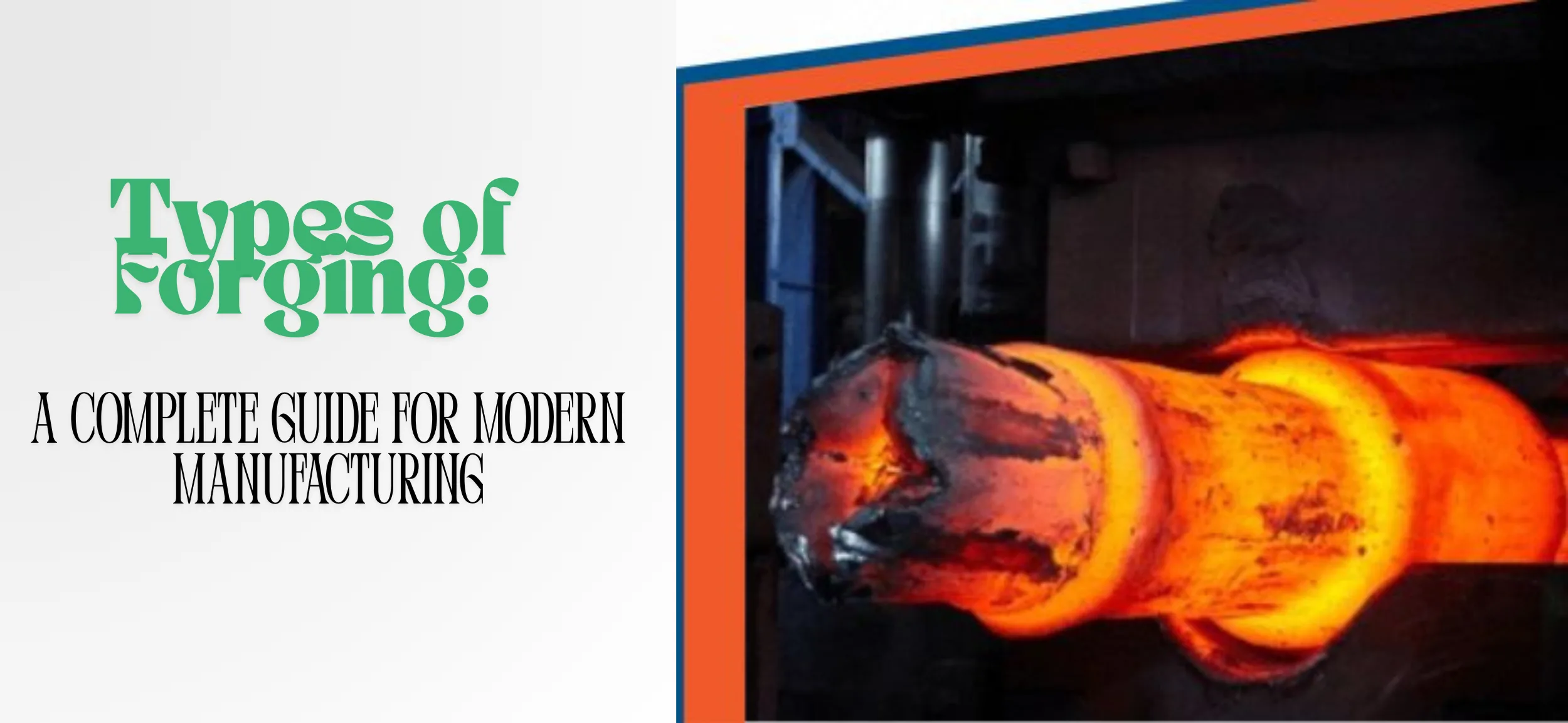
In today’s industrial landscape, forging plays a crucial role in producing high-strength, durable components used across industries like automotive, oil & gas, aerospace, and energy. Whether it’s carbon steel forging or precision-engineered parts like forging flanges, understanding the different types of forging processes can help businesses choose the right solution.
As a leading forging supplier in India, companies like CHW Forge are driving innovation and quality in this space.
What is Forging?
Forging is a manufacturing process where metal is shaped using compressive forces, typically delivered through hammers or presses. Unlike casting, forging enhances the grain structure of metal, resulting in superior strength, toughness, and reliability.
Types of Forging Processes
1. Open Die Forging (Smith Forging)
Open die forging involves shaping heated metal between flat or simple dies without completely enclosing it.
Key Features:
- Ideal for large components
- Excellent mechanical strength
- Used in shafts, discs, and rings
Applications:
Heavy industries, power plants, and infrastructure.
2. Closed Die Forging (Impression Die Forging)
In this process, metal is placed inside a die that contains a pre-cut shape and is compressed to achieve precise dimensions.
Key Features:
- High accuracy and repeatability
- Minimal machining required
- Suitable for complex shapes
Applications:
Automotive parts, aerospace components, and forging flanges.
3. Ring Rolling Forging
This process produces seamless rings by rolling a pierced billet into a circular shape.
Key Features:
- Strong grain flow
- Reduced material waste
- High structural integrity
Applications:
Bearings, gears, and industrial rings.
4. Cold Forging
Cold forging is performed at or near room temperature, improving surface finish and dimensional accuracy.
Key Features:
- High precision
- No heating required
- Cost-effective for high-volume production
Applications:
Fasteners, bolts, and small automotive parts.
5. Hot Forging
Hot forging involves heating metal above its recrystallization temperature, making it easier to shape.
Key Features:
- Suitable for carbon steel forging
- Reduces risk of cracking
- Enables complex designs
Applications:
Heavy machinery parts, flanges, and structural components.
6. Press Forging
Instead of repeated hammer blows, press forging uses continuous pressure to shape the metal.
Key Features:
- Deep penetration
- Uniform structure
- Better control over deformation
Applications:
Large industrial components and high-strength applications.
Why Forging Matters in Modern Industry
Forged components offer several advantages over other manufacturing methods:
- Superior strength and durability
- Better resistance to fatigue and impact
- Improved grain structure
- Cost efficiency in the long run
This is why industries rely heavily on trusted manufacturers like CHW Forge, a reputed forging supplier in India, known for delivering high-quality forged components globally.
Choosing the Right Forging Partner
When selecting a forging partner, consider:
- Experience in carbon steel forging
- Capability to produce precision parts like forging flanges
- Certifications and quality standards
- Global supply capabilities
Companies like CHW Forge combine advanced technology with decades of expertise to meet diverse industrial needs.
Conclusion
Understanding the different types of forging is essential for selecting the right manufacturing process. From open die to hot forging, each method has its unique advantages depending on the application.
As industries continue to evolve, the demand for high-quality forged components will only grow—making reliable partners like CHW Forge a key contributor to modern engineering excellence.