If you've ever looked into starting an online store, you've probably run into a wall of jargon - B2B, B2C, D2C, dropshipping - all thrown around like everyone already knows what they mean. They don't actually overlap as much as people assume. Picking the wrong e-commerce business model for your product or audience is one of the quieter reasons a lot of online stores struggle in their first year, long before marketing or pricing even becomes the problem.
Before picking a model, it helps to understand how it connects to the broader distinction between e-commerce and e-business - e-commerce is really just the transaction layer (buying and selling online), while e-business covers everything else running the operation behind it, from inventory to customer service. The model you choose shapes both.
Business-to-Consumer (B2C)
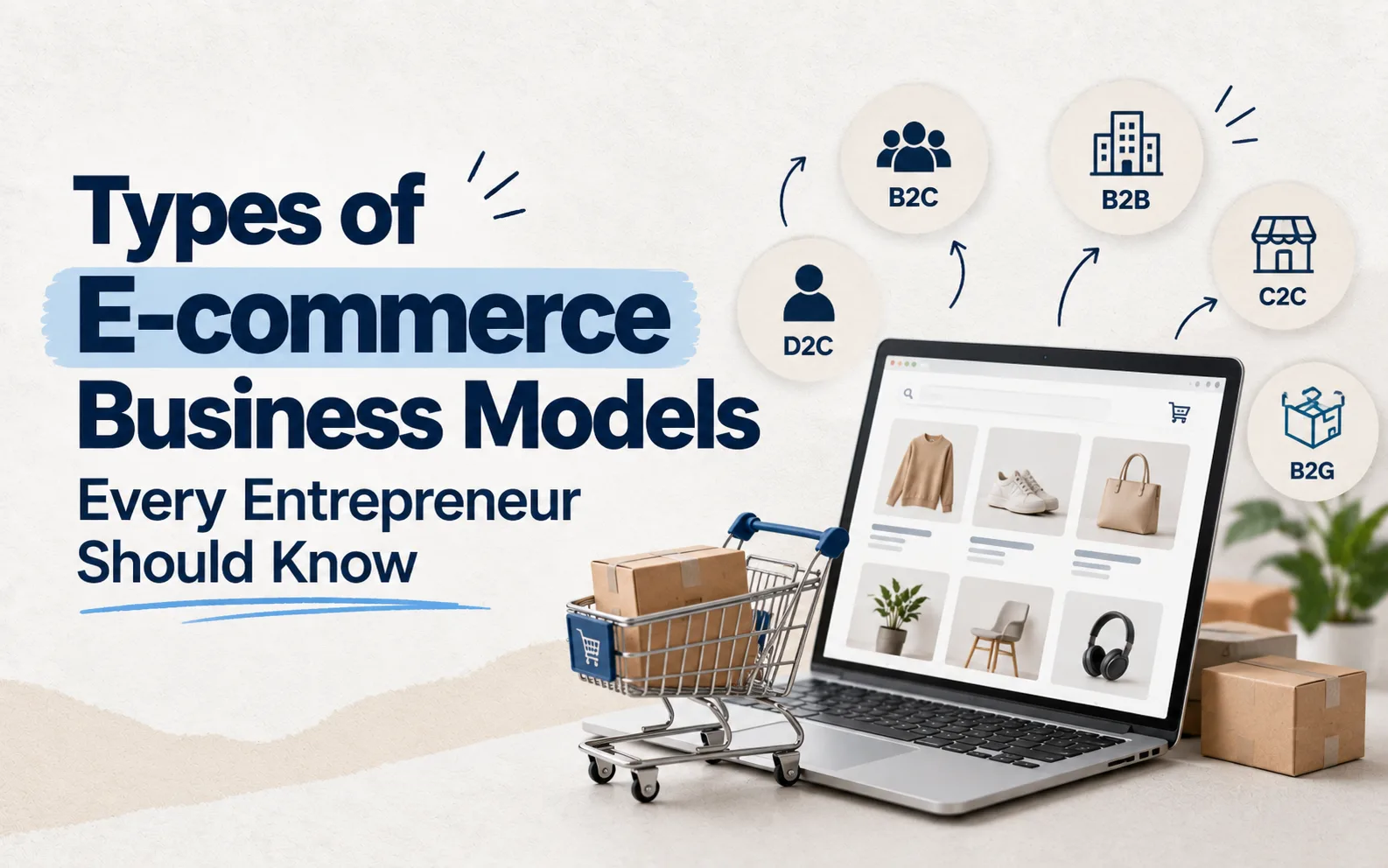
This is the model most people picture when they think "online store" - a business selling directly to individual customers. Think clothing brands, electronics retailers, or a local bakery selling through its own website. The buying cycle is usually short, decisions are often emotional or convenience-driven, and marketing tends to lean heavily on visual platforms like Instagram and Google Shopping.
Business-to-Business (B2B) E-commerce
Here, one business sells to another - think a wholesaler selling raw materials to a manufacturer, or a software company selling tools to other companies. B2B e-commerce usually involves larger order values, longer decision cycles, and multiple people involved in the purchase decision. Content and SEO matter enormously here, since B2B buyers tend to research extensively before ever contacting a sales team.
Direct-to-Consumer (D2C)
D2C is technically a subset of B2C, but it deserves its own mention because it's grown so fast. It's when a brand sells directly to customers, cutting out traditional retailers and distributors entirely. This gives the brand full control over pricing, customer data, and branding - but it also means the brand carries the full weight of driving its own traffic, since there's no retailer footfall to lean on.
Consumer-to-Consumer (C2C)
Platforms like OLX or eBay fall here - individuals selling directly to other individuals, usually through a marketplace that facilitates the transaction and takes a cut. If you're building a marketplace rather than a single-brand store, this is the model you're working within, and it comes with its own set of trust and payment-verification challenges.
Consumer-to-Business (C2B)
Less common, but growing - this is when individuals sell products or services to businesses. Freelance platforms, stock photography sites, and influencer marketing arrangements often fall into this category. The business is the buyer; the individual is the seller.
Dropshipping
A popular entry point for new entrepreneurs because it removes the need to hold inventory - you sell a product, and a third-party supplier ships it directly to the customer. It's low-risk to start, but margins are usually thin, and you have limited control over shipping times and product quality, which can hurt customer trust if not managed carefully.
Subscription-Based E-commerce
Instead of one-time purchases, customers pay recurring fees for ongoing access to products or services - think meal kits, beauty boxes, or software subscriptions. This model prioritises customer retention over one-time acquisition, which changes the entire marketing strategy toward lifetime value rather than just the first sale.
White Label and Private Label Selling
This involves selling products manufactured by someone else, either under their branding (white label) or rebranded as your own (private label). It's a faster way to launch a product line without building manufacturing capability from scratch, though it usually means lower margins than a fully owned product line.
Choosing the right model for your business
There's no universally "best" model - the right one for you depends on your product type, how much capital you have for inventory, and how hands-on you want to be with operations. A business selling a physical product with decent margins might do well with a D2C model. A service-based entrepreneur with limited capital might find C2B or freelance-marketplace selling a faster starting point. Whatever you choose, it helps to have the underlying e-commerce vs e-business distinction clear from the start, since your marketing, logistics, and customer support all need to be built around the model you've actually picked, not a generic template.
Frequently asked questions
Which e-commerce business model is best for beginners? Dropshipping and C2B freelance-style selling tend to have the lowest barrier to entry since they don't require holding inventory or heavy upfront capital.
What's the difference between B2C and D2C? D2C is a type of B2C where the brand sells directly without going through retailers, giving it more control but also more responsibility for driving its own traffic.
Can a business use more than one e-commerce model at once? Yes - many growing businesses eventually combine models, such as running a D2C store alongside wholesale (B2B) partnerships.
The takeaway
Understanding the different e-commerce business models before you build anything saves a lot of expensive trial and error later. The model shapes your pricing, your marketing channels, and even how much working capital you'll need - so it's worth getting right at the planning stage, not reworking six months into launch.
Startup Rabbit helps businesses plan and market their online stores with strategies built around the right e-commerce model for their product and audience.