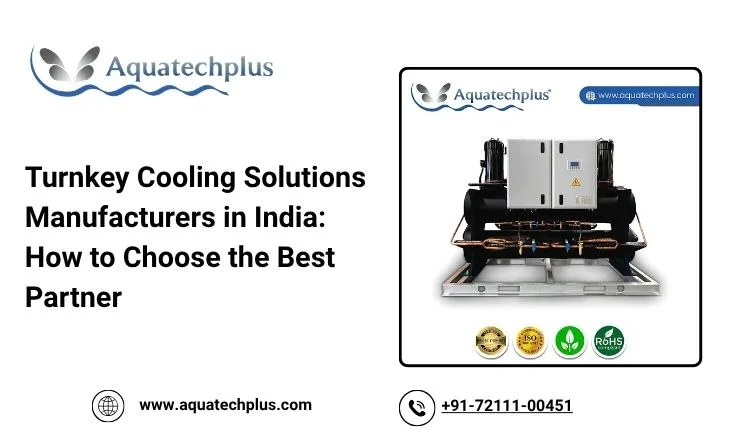
You’re already comparing quotes, and they all look similar on paper—same tonnage, same timelines, same promise of “support.” That’s where most buyers get it wrong. A Turnkey Cooling Solutions project isn’t about equipment alone; it’s about who takes responsibility when the system behaves differently once it’s running at full load.
Here’s the catch. An Inverter Scroll Chiller might look efficient in a datasheet, but unless it’s integrated correctly with piping, load variation, and ambient conditions, you’ll bleed energy every hour. Most factories don’t notice this until their monthly electricity bill spikes by 18–22%.
And yet, buyers still pick vendors based on initial cost.
SPECIFICATION
Types of Turnkey Cooling Systems You’ll Actually Encounter
That’s where clarity matters. Not all systems are built the same.
- Air Cooled Inverter Scroll Chillers
Better for regions with limited water availability. Easier to install, but performance dips in peak summer conditions above 42°C. - Water Cooled Inverter Scroll Chiller setups
Higher efficiency—often 20–30% lower energy consumption—but require cooling towers, water treatment, and ongoing maintenance discipline. - Custom Process Chiller systems
Built for industries like plastics, pharma, and food processing where temperature variance of even ±1°C affects output quality. - Integrated Cooling and Heating solutions
Used where both process cooling and controlled heating cycles are needed, especially in chemical plants.
Most buyers overlook one thing: part-load efficiency curves.
Which means your system might perform well at 100% load—but real factories run at 55–75% load most of the time. That’s where energy loss quietly adds up.
The Detail That Gets Ignored Until It’s Too Late
Nobody tells you this early enough. Pipe sizing mismatches—sometimes off by just 12–15%—can reduce system efficiency by over 8%. Not visible. Not obvious. But it shows up in long-term cost.
OBJECTIVE
The Spec Sheet Looks Fine—Now What?
Here are five criteria to judge any Turnkey Cooling Solutions Manufacturers before signing.
- Load Calculation Method
A good supplier explains how they derived your load.
A bad one says, “We use standard formulas.” That’s code for guesswork. - Component Sourcing Transparency
Serious manufacturers disclose compressor brands, controller systems, and expansion valves.
A weak supplier avoids specifics or changes brands mid-project. - Commissioning Responsibility
A reliable partner stays until the system stabilizes under real production conditions.
A risky one hands over after dry testing and disappears. - After-Sales Response Time
Look for documented service timelines—24 to 48 hours max.
If the answer is “depends on location,” expect delays when it matters. - Performance Guarantees
Numbers matter. COP ratings. Energy consumption benchmarks.
If guarantees are vague, you’ll end up negotiating after installation—not before.
A supplier who says “we’ll fix issues if they arise” doesn’t have a system. That’s not support. That’s uncertainty priced into your future.
BENEFITS
What a Properly Executed System Actually Protects
That’s where the real value sits—not in brochures, but in avoided problems.
- Lower Operating Costs
A well-tuned Water Cooled Inverter Scroll Chiller can cut electricity costs by up to 28% annually compared to fixed-speed systems. - Production Stability
Temperature consistency reduces product rejection rates. In plastics, even a 2°C fluctuation can increase scrap by 6–9%. - Reduced Downtime Risk
Proper redundancy design ensures one component failure doesn’t shut down the entire line. - Predictable Maintenance Costs
Good system design reduces emergency repairs by 30–35% over five years. - Longer Equipment Life
Systems running within optimal load ranges extend compressor life by 3–4 years. - Better ROI Visibility
Which means you’re not guessing payback—you’re tracking it monthly.
And yes, these numbers only show up if the system is engineered, not just assembled.
AVAILABILITY
Why Location Is a Supply Chain Decision, Not Just an Address
Most buyers think proximity is about transport cost. It’s not.
Manufacturers based in industrial hubs like Gujarat—especially around Rajkot—have faster access to compressors, control panels, and fabrication units. That shortens lead times by 12–18 days compared to less industrialized zones.
That’s one reason many Air Cooled Inverter Scroll Chiller Manufacturers and Custom Process Chiller Manufacturers operate from these clusters.
And here’s the practical angle: when a critical component fails, sourcing locally can mean the difference between a 2-day fix and a 9-day shutdown.
If your supplier is far from component ecosystems, you’ll feel it later—not during procurement.
ABOUT US
We’ve been building Cooling and Heating solutions since 2013, and we’ve learned this the hard way—systems fail less because of parts and more because of integration mistakes.
We design, manufacture, and commission complete Turnkey Cooling Solutions, including Inverter Scroll Chiller systems for varied industrial loads.
We stopped using a particular imported controller in 2021 after three clients reported inconsistent readings during voltage fluctuation cycles. We switched to a more stable alternative, even though it cost us more. That decision reduced service complaints by nearly 17% the following year.
That’s the kind of adjustment you only make when you’re paying attention.
If you’re evaluating a project, send us your process details, required temperature range, load capacity, and site conditions.
We respond within 24 hours.
Typical MOQ: 1 system.
And yes—include your production cycle data. Without that, any proposal you get will be an estimate, not a solution.
CONCLUSION
Choosing the right Turnkey Cooling Solutions partner isn’t about who quotes fastest—it’s about who stays accountable after installation. Systems built around Inverter Scroll Chiller technology can deliver serious savings, but only when engineered correctly. The next shift in industrial efficiency won’t come from cheaper equipment—it will come from better decisions at the selection stage.
FAQs
- What should I check before selecting Inverter Scroll Chiller Manufacturers?
Start with their load calculation approach and past project data. If they can’t show real installations or explain energy performance, walk away. - Are Air Cooled Inverter Scroll Chiller Manufacturers suitable for all industries?
Not always. They work well in areas with limited water access, but efficiency drops in extreme heat. You’ll need to weigh operating cost vs infrastructure. - How do Water Cooled Inverter Scroll Chiller Manufacturers ensure efficiency?
Through proper cooling tower integration and flow rate balancing. But here’s the caveat—if water quality isn’t maintained, performance drops faster than expected. - What industries need Custom Process Chiller Manufacturers the most?
Plastics, pharmaceuticals, food processing, and chemicals. Anywhere temperature precision affects output quality. - How do Cooling and Heating Solutions Manufacturers handle dual requirements?
They integrate systems with reversible cycles or hybrid setups. It’s more complex—and yes, more expensive upfront. - What should I expect from Turnkey Cooling Solutions Manufacturers after installation?
Performance validation under actual working conditions. If they disappear after testing, you’ve chosen wrong. - Are Turnkey Cooling Solutions always more expensive?
Upfront, yes—typically 12–18% higher. But lifecycle cost is lower if the system is designed correctly. If not, you’ll pay more anyway through inefficiency.