A toddler can slip under the water in seconds, and it rarely looks like the splashing and shouting we imagine. Drowning is usually silent. That is why swimming safety tips for toddlers in a pool deserve real attention, whether you have a pool at home, share one in your condominium or simply visit at weekends.
Toddlers are curious, quick and wonderfully unaware of danger, and they sit in one of the highest-risk age groups for drowning. The good news is that a few consistent habits make a real difference. These are the ten we come back to again and again.
Why Are Toddlers at Higher Risk Around Pools?
Toddlers are top-heavy. A young child’s head is large and heavy compared with the rest of the body, so if they tip forward into water, lifting themselves back up is difficult. Add limited balance, no real sense of depth and a strong pull towards anything that sparkles and splashes, and you can see the problem.
Speed matters too. A toddler can get from your side to the pool edge faster than most adults expect, and trouble can start in very shallow water, including a paddling pool. Nobody needs to be careless for this to happen. A buzzing phone, a conversation or a quick trip to fetch a towel is enough.
No single measure is foolproof, which is why paediatric bodies such as the American Academy of Pediatrics (AAP) recommend layers of protection. We will return to that idea shortly.
10 Swimming Safety Tips for Toddlers in a Pool
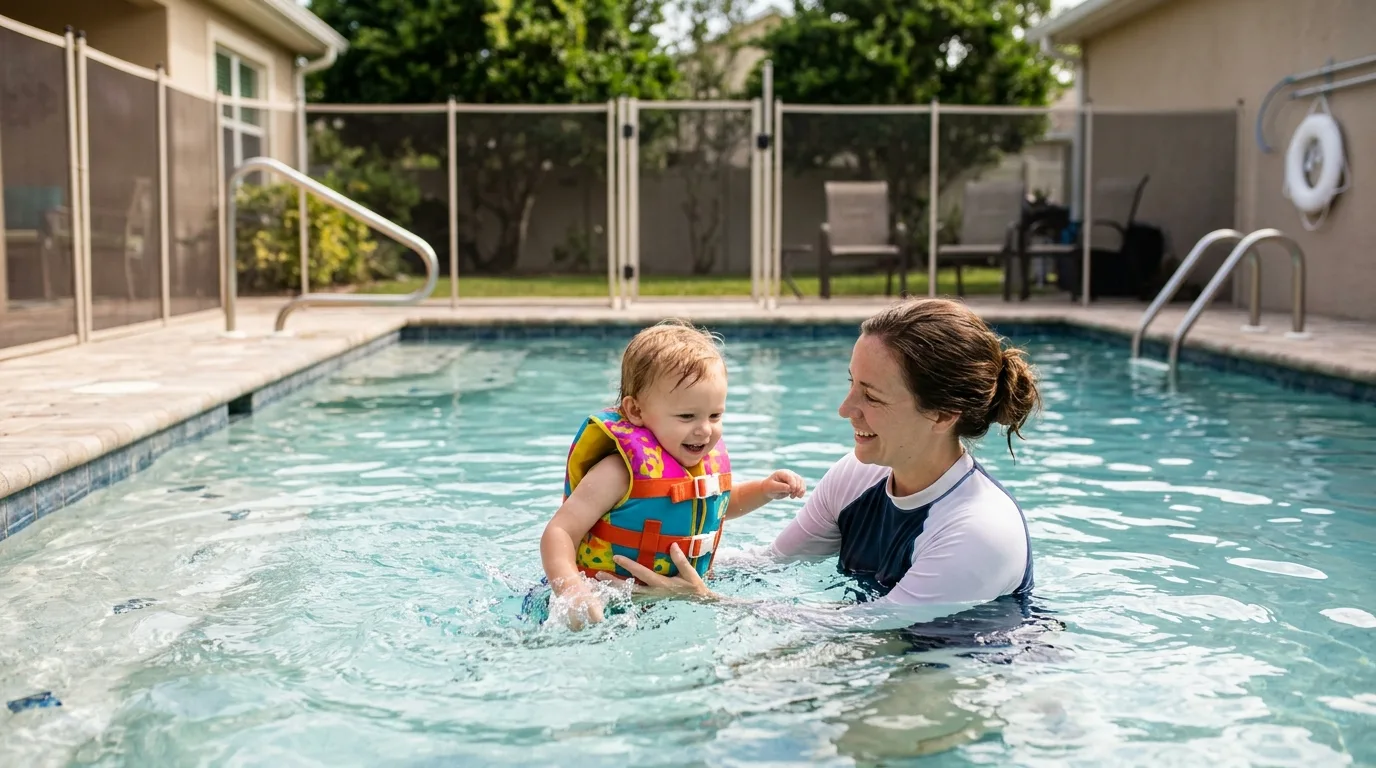
1. Stay Within Arm’s Reach at All TimesTouch supervision means an adult is close enough to reach the child instantly, not watching from a sun lounger. For toddlers, that means being in the water with them or right beside them. If several adults are present, name one “water watcher” and swap every fifteen minutes or so, so nobody assumes someone else is looking.
Put the phone away, skip the alcohol and leave the book for later. A child in trouble makes very little noise, so you need your eyes on them, not just your ears.
2. Fence the Pool on All Four SidesA fence that separates the pool from the house and garden is among the most effective barriers available, and AAP guidance puts it near the top of the list. Look for a fence too tall for a toddler to climb, with a self-closing, self-latching gate that opens away from the pool and a latch beyond a small child’s reach.
The wall of a house with a door opening onto the pool does not count as a fence. If you live in a condominium, watch whether the pool gate actually latches every time, and report it to management if it does not.
3. Use a Properly Fitted Life JacketSmall children and non-swimmers should wear a well-fitting, approved life jacket whenever they are in or near water. Look for a supportive collar, a crotch strap and a snug fit that does not ride up around the ears.
Armbands and pool noodles are toys. They can slip off, lose air or tip a child face down, and they do not replace a life jacket or an adult. Let your child try the jacket on in shallow water first, so it feels familiar rather than frightening.
4. Start Swimming Lessons EarlyAAP guidance says many children are ready for lessons from around the age of one, although readiness varies from child to child. At this age nobody expects tidy strokes. The aim is simply to get your toddler comfortable in the water: blowing bubbles, floating with support and learning to turn back towards the wall.
Most parents find it easier to start with a structured class than to teach these skills alone. If you are not sure where to begin, toddler swimming classes led by qualified instructors are a gentle first step. Groups are usually small, a parent stays in the water, and the skills come through songs and games, so your child barely notices they are learning.
5. Learn Infant and Child CPR
Even careful families can face an emergency, and the first few minutes matter. Take a recognised first-aid and CPR course that covers infants and children, and refresh it regularly. Hospitals, swim schools and organisations such as the Singapore Red Cross run courses.
Practising on a manikin builds the confidence to act when you are frightened. Anyone who looks after your toddler near water, including grandparents and helpers, should know the basics too.
6. Check the Pool First If a Child Goes MissingIf you cannot find your toddler, look in the water first, even if you think they were nowhere near it. A child who has wandered off can reach a pool far faster than you would expect.
Fit alarms or high locks on doors that lead to the pool area, and make sure everyone in the household knows this rule.
7. Empty Small Pools, Buckets and InflatablesDrowning does not need deep water. A paddling pool, a bucket or a bath holding only a few centimetres can be dangerous for a toddler. After each use, empty and turn over inflatable pools and store buckets upside down. Never leave a toddler alone in the bath, even for a moment.
8. Set Clear Pool RulesToddlers cannot follow complicated rules, but they respond well to short, repeated ones. Walk, don’t run. Get in only when a grown-up says so. Never go near the water alone. Use the same words every visit and the habits soon stick.
Take toys out of the pool and away from the edge when you finish, since a floating toy can draw a child back to the water. Older siblings should know the rules too, and they should never be left in charge of a toddler.
9. Keep Rescue Equipment and a Phone CloseKeep a reaching pole or life ring within sight of the pool, and a charged phone nearby so you can call for help straight away. In Singapore, 995 is the number for an ambulance. Stick the emergency numbers somewhere visible at home.
At a public pool, note where the lifeguard post and first-aid room are before your toddler gets in.
10. Make the Pool Area Itself SaferChoose a shallow area with steps that suit your child’s height, and check for non-slip surfaces around the edge. Lock pool chemicals away. If you have a private pool, check that drain covers are intact and consider a safety cover or pool alarm.
Keep sessions short, since tired and cold toddlers lose coordination quickly. Shade and water breaks help in hot weather, and a comfortable water temperature keeps your child warmer and more alert.
How Layers of Protection Work
Think of each tip above as one slice of protection. A fence fails if someone leaves the gate open. Supervision slips when you are distracted. A life jacket does nothing if your child is not wearing it. Stack them together and the gaps in one are covered by another. That is the thinking behind the AAP’s layered approach, and it is the most useful way to look at your family’s routine.
Common Myths About Toddler Drowning
“They’ll shout if they are in trouble.” Usually not. A struggling toddler is often silent and can slip under before you notice.
“Armbands make my child safe.” They help children play, but they are not safety equipment.
“My child has had lessons, so they are safe.” Lessons help, but toddlers still need constant, close supervision.
“Shallow water is safe.” A small child can drown in very little water.
What to Do in a Pool Emergency
Get the child out of the water as quickly as you safely can, and shout for help. Call 995 or ask someone nearby to call. If your child is not breathing, begin CPR as you were trained and continue until help arrives.
Even if your toddler seems fine after a frightening incident, have a doctor check them. This matters most if they coughed a lot, seem unusually tired or have any difficulty breathing in the hours afterwards.
Final Thoughts
Toddler pool safety does not need to take the joy out of swimming. It asks for a few habits repeated every time, with supervision at the centre of them all. Fence the pool, fit a life jacket, learn CPR and let your child build skills in the water gradually.
When you feel ready for the next step, a swim school can help your toddler grow in confidence while you pick up useful safety habits yourself. Safe, happy swimming.
FAQs
At what age can a toddler start swimming lessons?
Many children can begin from around one year old, though it depends on readiness. Parent-and-child classes are a common starting point.
Are armbands safe for toddlers?
They are fun, but they are not safety equipment. Use a properly fitted life jacket and stay within arm’s reach.
How long should a toddler stay in the pool?
Short sessions, often around 20 to 30 minutes, suit many toddlers. Get out sooner if your child is shivering, tired or has blue-tinged lips.
Do toddlers need a pool fence if I am always watching?
Yes. Supervision can lapse for a moment, and a fence gives you a second layer when that happens.