Rice processing creates an enormous amount of agricultural residue. Among these residues, rice husk is one of the most widely available. While it can be used for some traditional applications, large quantities may still accumulate around rice mills, creating storage, transportation, and disposal challenges.
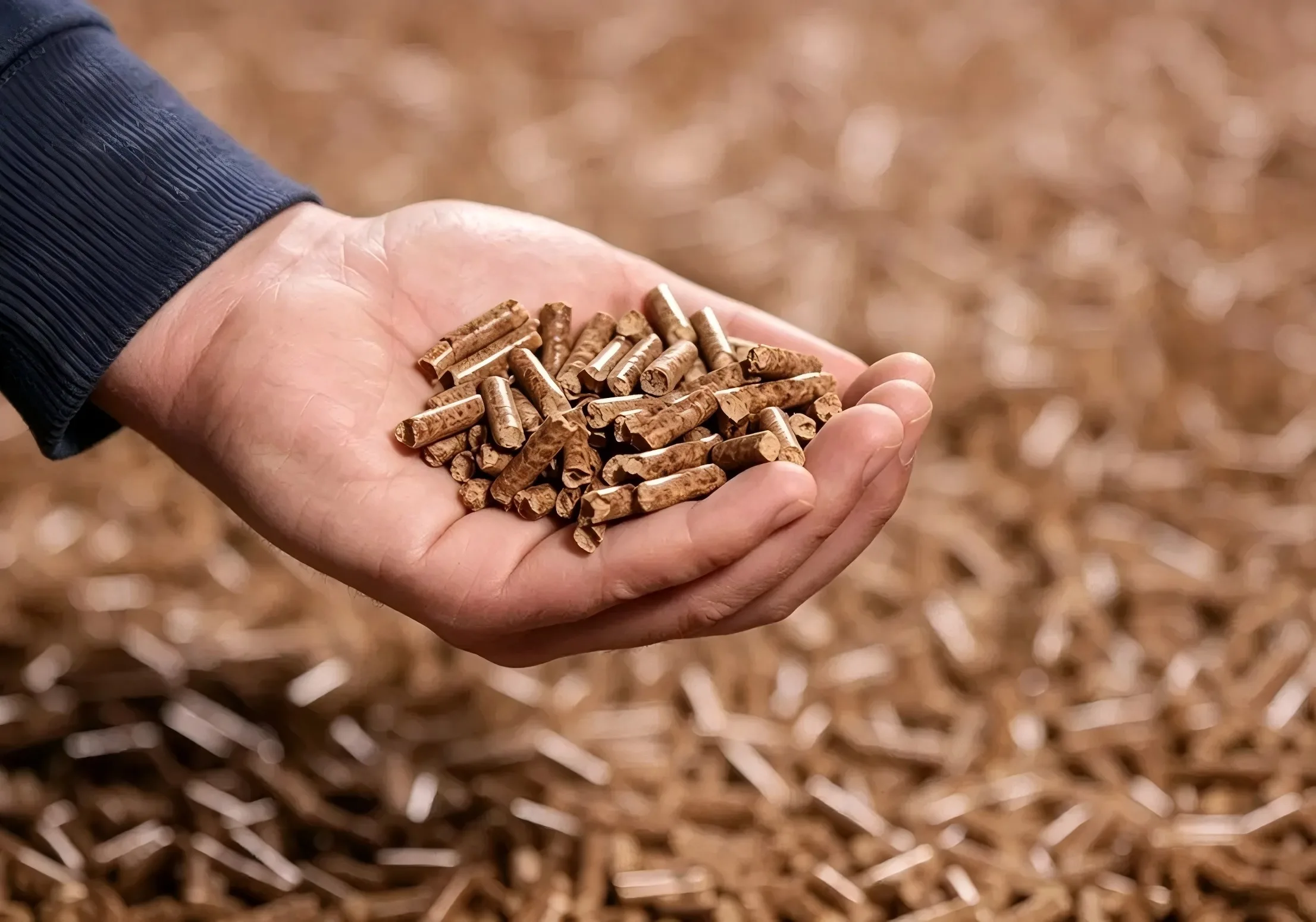
One practical way to increase the value of this material is to convert it into biomass fuel pellets. Through mechanical densification, loose rice husk can be transformed into compact, uniform particles that are easier to handle and transport.
A modern rice husk pelletizer plays a central role in this transformation. By applying controlled pressure to prepared rice husk, the equipment produces dense pellets suitable for various biomass combustion applications.
However, good pellet production depends on more than the pelletizer itself. The complete process must be designed around the characteristics of rice husk, including its moisture, particle structure, ash content, abrasiveness, and bulk density.
From Rice Husk Waste to Biomass Fuel
Rice husk is separated from rice grains during milling. Because rice is processed continuously in many agricultural regions, the resulting husk can provide a relatively consistent biomass resource.
The problem is that loose rice husk has a low bulk density and occupies considerable storage space. Moving large quantities of loose material can also be inconvenient and expensive.
Pelletizing changes its physical form.
Instead of handling lightweight, irregular husk, a producer can manufacture cylindrical pellets with a more consistent shape and density. This makes mechanical conveying, packaging, storage, and transportation easier.
The transformation can create several advantages:
- Better utilization of agricultural residues
- Higher material density
- More convenient transportation
- Easier storage
- More standardized fuel characteristics
- Reduced dependence on loose biomass handling
- Additional commercial value for rice milling residues
For rice mills with a stable supply of husk, pellet production can therefore become an additional biomass utilization opportunity.
Why Rice Husk Requires Specialized Processing
Rice husk is different from many traditional pellet raw materials.
Wood sawdust, for example, contains a different proportion of lignin and has different physical properties. Rice husk has a distinctive fibrous structure and relatively high mineral and silica content.
These characteristics influence the pelletizing process.
The material may require careful adjustment of moisture and particle size before entering the pelletizer. Equipment components that experience continuous contact with the material may also be exposed to greater abrasion.
For this reason, equipment selection should be based on actual rice husk characteristics rather than simply using specifications intended for another biomass material.
The Role of a Rice Husk Pelletizer
The pelletizer is the heart of the densification process.
Prepared rice husk enters the pelletizing chamber, where mechanical pressure compresses the material against a die. As the compressed material passes through the die holes, continuous strands are formed and subsequently cut into pellets.
The final product is influenced by the interaction between the raw material and the machine.
Important operating factors include:
- Moisture content
- Particle size
- Feeding rate
- Die hole diameter
- Die compression characteristics
- Roller condition
- Machine speed
- Operating load
- Material composition
A properly configured rice husk pelletizer should provide stable compression and continuous material flow while maintaining reasonable energy consumption and component wear.
Preparing Rice Husk Before Pelletizing
Pellet quality begins before the material reaches the pelletizer.
Raw rice husk should first be evaluated for cleanliness, moisture, and particle characteristics.
Foreign materials such as stones, metal, plastic, and soil should be removed when present. These contaminants can damage equipment and reduce product quality.
A cleaning system can be installed at the beginning of the production line.
The raw material should also be stored under conditions that minimize moisture absorption. If rice husk becomes excessively wet during storage, additional drying capacity may be required.
Good preparation creates more stable conditions for the pelletizing stage.
Particle Size and Material Uniformity
Particle size affects how rice husk behaves during compression.
Although rice husk is already relatively small compared with large wood chips, the material may still require grinding or size adjustment depending on its source and the requirements of the pelletizing equipment.
A hammer mill can be used when further size reduction is necessary.
The objective should be controlled particle size rather than maximum fineness.
Over-grinding can consume unnecessary electricity, while excessively large or irregular particles may interfere with stable compression.
An appropriate particle size distribution allows the material to move through the feeding system consistently and helps improve contact between particles during pellet formation.
Moisture Management Is Essential
Moisture is another critical variable.
Pelletizing requires a suitable balance. Material that is too wet can reduce production efficiency and produce unstable pellets. Material that is excessively dry may also be difficult to compact effectively.
The appropriate moisture condition varies according to raw material properties and equipment design.
Therefore, producers should measure moisture rather than relying solely on visual inspection.
If the rice husk contains too much moisture, a drying system can be installed before pelletizing. Rotary dryers are commonly considered for larger biomass processing applications because they can continuously process substantial quantities of material.
Drying System Design
The drying section should be designed around actual raw material conditions.
Suppose the moisture content varies significantly between different batches of rice husk. In that case, the rotary dryer machine for rice husk must be capable of handling these variations without causing excessive energy consumption.
Important design considerations include:
Initial Moisture
The higher the initial moisture, the greater the drying requirement.
Required Throughput
A high-capacity pellet plant needs a drying system capable of matching the pelletizer's material demand.
Heat Source
The available fuel and local energy costs influence dryer selection.
Environmental Conditions
Temperature and humidity can affect drying efficiency, particularly in open storage environments.
Heat Recovery
For larger projects, opportunities to improve heat utilization should be considered during engineering.
A properly matched drying system can prevent the pelletizer from becoming unstable because of fluctuating raw material moisture.
Feeding Rice Husk into the Pelletizer
Stable feeding is essential for continuous pellet production.
Rice husk is lightweight, and its flow characteristics can vary depending on moisture and storage conditions. Poorly designed hoppers may experience bridging or uneven discharge.
A suitable feeding system should provide consistent material flow into the pelletizer.
Depending on plant capacity, the system may include:
- Storage hoppers
- Screw conveyors
- Belt conveyors
- Variable-speed feeders
- Buffer bins
- Automatic level monitoring
The goal is to maintain a stable feed rate and avoid sudden fluctuations in the pelletizer load.
Selecting the Pellet Diameter
The desired pellet diameter should be determined according to the final application.
Different biomass combustion systems may have different fuel feeding requirements.
A pelletizer can be configured with an appropriate die according to the required pellet size. The die hole diameter is one of the main factors determining pellet diameter.
When selecting a die, producers should consider both product requirements and the characteristics of rice husk.
The compression characteristics must provide sufficient densification without unnecessarily increasing mechanical stress and energy consumption.
Die and Roller Wear
Because rice husk contains abrasive mineral components, wear management deserves special attention.
The die and rollers are among the most heavily loaded working components in a pelletizer.
Continuous operation can gradually change their working surfaces. Excessive wear may affect:
- Production capacity
- Pellet appearance
- Pellet strength
- Energy consumption
- Operating stability
Regular inspection is therefore essential.
Wear-resistant materials and appropriate maintenance practices can help extend component service life.
Operators should also avoid continuing to operate equipment with severely worn components because this can negatively affect the performance of the entire production line.
Cooling the Finished Pellets
Pellets leaving the pelletizer are warm because of friction and compression.
They should normally be cooled before packaging or long-term storage.
A pellet cooler reduces product temperature and helps stabilize the pellets. It can also assist with removing residual moisture.
Cooling is particularly important when pellets will be packaged shortly after production.
If hot pellets are placed directly into sealed bags, condensation may develop and affect storage stability.
A properly designed cooler therefore plays an important role in maintaining the quality achieved during pelletizing.
Screening and Fines Management
After cooling, the pellets should be screened.
The screening system separates qualified pellets from fines and oversized particles.
This provides two major benefits.
First, it improves product uniformity. Customers receive pellets that more closely match the specified size range.
Second, recoverable fines can often be returned to the production process instead of being discarded.
An efficient screening system therefore helps reduce material loss while improving the consistency of the final product.
Packaging Options for Rice Husk Pellets
The appropriate packaging method depends on the target market.
Small bags may be suitable for smaller customers, local fuel distributors, or retail applications.
Large bags can be used when larger quantities need to be handled while maintaining manageable loading and unloading.
For industrial customers, bulk transportation may be more efficient.
A commercial pellet plant may therefore include:
- Automatic weighing
- Bag filling
- Bag sealing
- Palletizing
- Bulk loading
- Storage silos
Packaging equipment should be selected according to production capacity and sales requirements.
Storage Conditions Matter
Biomass pellets should be kept dry after production.
Although pelletizing creates a denser and more manageable product, pellets can still absorb moisture when exposed to humid environments.
Poor storage may cause:
- Pellet softening
- Increased fines
- Reduced mechanical durability
- Product degradation
- Difficult handling
A suitable warehouse should provide protection from rain and excessive humidity.
For large-scale plants, bulk storage systems may be considered when the product is transported directly to industrial users.
Applications of Rice Husk Biomass Pellets
Rice husk pellets are primarily associated with biomass fuel applications.
Potential users include industrial facilities, agricultural operations, commercial heating systems, and other facilities equipped to utilize solid biomass fuels.
The exact application depends on the combustion system and local fuel requirements.
Pellets can provide a more standardized feedstock than loose rice husk, allowing automated conveying and feeding systems to handle the material more conveniently.
However, users should evaluate ash characteristics and combustion compatibility before replacing an existing fuel system with rice husk pellets.
How to Build an Efficient Production Line
A complete rice husk pellet production line can be configured according to raw material conditions and target output.
A typical process may include:
Rice Husk Receiving → Cleaning → Grinding → Drying → Buffer Storage → Feeding → Pelletizing → Cooling → Screening → Packaging
Not every project needs every piece of equipment.
For example, if the incoming rice husk already has suitable particle size and moisture, the grinding or drying section may be reduced or modified.
This is why production lines should be designed according to actual material conditions instead of using a standard configuration for every customer.
Matching Production Capacity
Capacity planning should start with raw material availability.
A rice mill may produce a certain quantity of husk every day, but the pellet plant should not necessarily be sized according to the theoretical maximum amount.
Consider:
- Daily rice husk supply
- Number of operating hours
- Seasonal availability
- Required finished pellet output
- Storage capacity
- Market demand
- Transportation arrangements
If the pelletizer is too large for the available raw material, its utilization rate may be low. If it is too small, the plant may fail to process available material efficiently.
The best capacity is therefore the one that balances raw material supply, market demand, and investment.
Automation for Commercial Production
Automation becomes increasingly valuable as production capacity increases.
A centralized control system can coordinate conveyors, feeders, dryers, pelletizers, coolers, screens, and packaging equipment.
Automation can help operators monitor:
- Motor status
- Material flow
- Temperature
- Dryer operation
- Pelletizer load
- Equipment alarms
- Production parameters
Automatic control does not eliminate the need for operators, but it can simplify plant management and improve process consistency.
For commercial facilities operating multiple machines, centralized control can also make troubleshooting and production management easier.
Energy Efficiency Considerations
Energy consumption is an important factor in pellet production economics.
The pelletizer requires mechanical energy for compression, while the dryer may require significant thermal energy when wet raw material must be dried.
Several measures can help improve overall efficiency.
Avoid Excessive Grinding
Only grind the material to the degree required for stable pelletizing.
Control Dryer Operation
Avoid excessive drying and match heat input to actual moisture conditions.
Maintain the Pelletizer
Worn components can negatively affect compression efficiency.
Balance Equipment Capacity
Upstream and downstream equipment should be matched to avoid unnecessary idle operation.
Recover Fines
Returning suitable fines to production can improve material utilization.
Energy efficiency should therefore be considered at the complete plant level rather than by looking at the pelletizer motor alone.
Maintenance Strategy
Regular maintenance is important for reliable biomass pellet production.
Operators should establish inspection schedules for critical components.
The pelletizer should receive particular attention because its die, rollers, bearings, drive system, and lubrication system operate under demanding conditions.
Routine maintenance may include:
- Checking die and roller wear
- Inspecting bearings
- Maintaining proper lubrication
- Cleaning material buildup
- Checking fasteners
- Monitoring vibration
- Inspecting electrical connections
- Checking conveyor components
Preventive maintenance can help reduce unexpected downtime and improve the operating life of the production equipment.
Safety in Rice Husk Pellet Production
Safety should be integrated into the plant design.
Rice husk handling, grinding, conveying, and screening can generate dust. Dust collection and regular housekeeping are therefore important.
The production area should also provide appropriate guarding around moving mechanical components.
Operators should receive training covering:
- Equipment startup and shutdown
- Emergency procedures
- Maintenance isolation
- Dust management
- Wear-part replacement
- Electrical safety
- Routine inspection
A well-designed production line should combine productivity with safe and manageable operation.
Evaluating the Investment Potential
The economic potential of a rice husk pellet plant depends on local conditions.
One of the most important advantages can be access to an abundant supply of rice husk near the production facility.
The closer the raw material source is to the plant, the easier it may be to control transportation costs.
Other important factors include:
- Rice husk purchase price
- Electricity costs
- Drying requirements
- Labor
- Equipment investment
- Maintenance
- Packaging
- Transportation
- Pellet selling price
- Plant utilization
A detailed feasibility study should be completed before investment.
The analysis should compare the expected cost of producing pellets with the selling price and expected annual operating hours.
Why Complete System Design Matters
Buying a pelletizer alone does not guarantee successful pellet production.
If the raw material contains excessive moisture, a dryer may be required. If foreign materials are present, cleaning equipment becomes important. If pellets leave the machine hot, cooling is necessary. If the final product contains excessive fines, screening should be included.
This illustrates why the pelletizer should be considered as part of a complete production system.
A well-designed line ensures that each stage supports the next stage.
Final Conclusion
Rice husk represents an abundant agricultural residue that can be converted into a more valuable biomass fuel through pelletizing. By increasing density and standardizing the physical form, pellet production can make rice milling waste easier to handle, transport, store, and utilize.
The rice husk pelletizer is the central machine in this process, but its performance depends on proper raw material preparation, moisture control, feeding, die selection, cooling, and screening.
For businesses planning a commercial project, the most effective approach is to start with the raw material and final application. Once these factors are understood, the pelletizer capacity, die specifications, drying system, cooling equipment, and other auxiliary machinery can be selected accordingly.
With appropriate equipment integration and process management, rice husk can move beyond being a disposal challenge and become a useful feedstock for biomass fuel production. This creates an opportunity to improve agricultural waste utilization while establishing a more organized and potentially profitable pellet manufacturing operation.