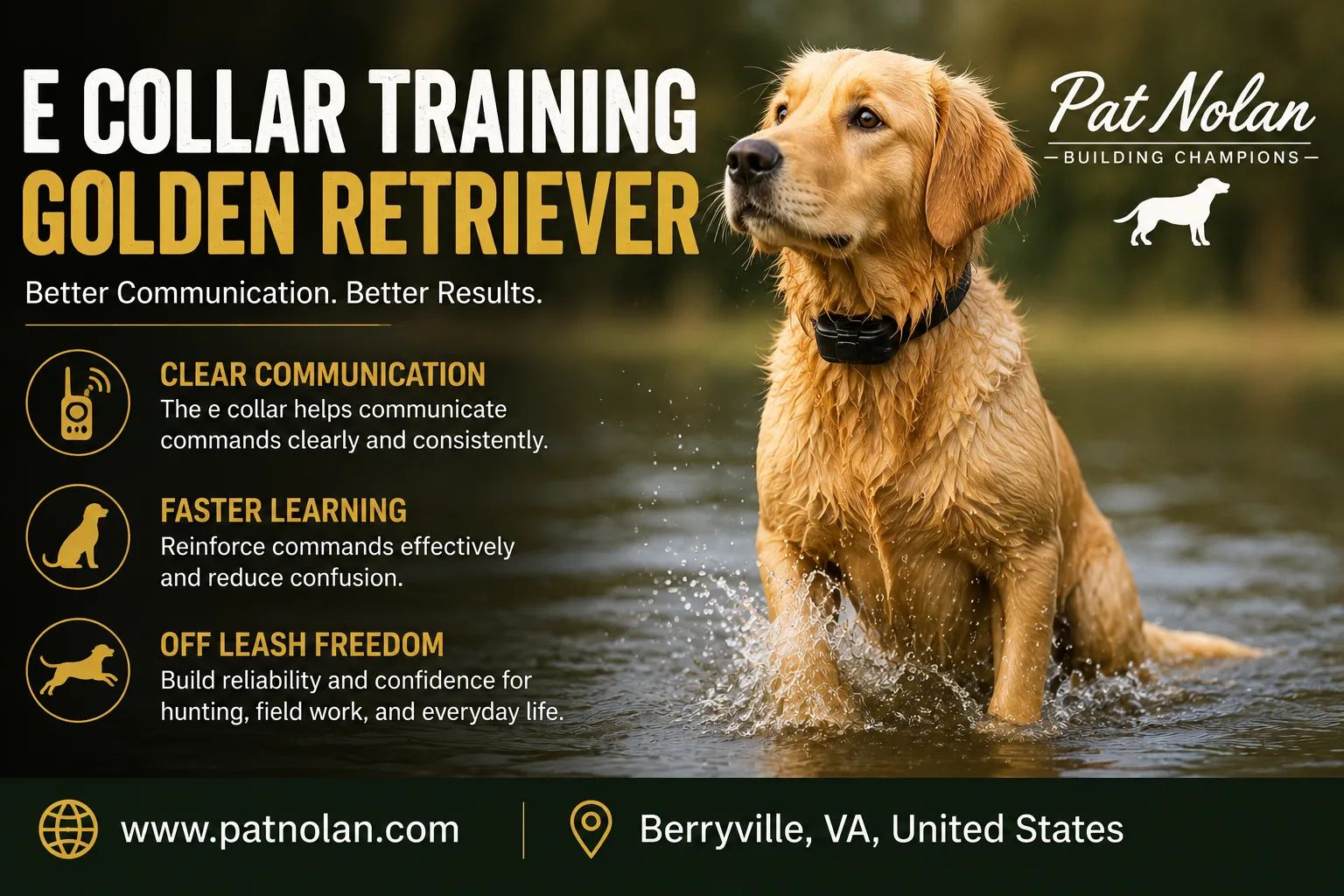
Training a retriever is about much more than teaching a dog to fetch. A well-trained Labrador or Golden Retriever learns how to listen, respond to commands, stay focused, and work confidently in different environments. Whether you are raising a young puppy or developing an experienced hunting companion, consistent training your retriever creates the foundation for a reliable and enjoyable dog.
For owners looking for professional guidance, Pat Nolan provides practical retriever training resources designed to help handlers understand the skills, timing, and consistency required to develop a dependable working retriever.
Labrador Retriever Puppy Training Starts With the Basics
Labrador retriever puppy training should begin with simple lessons that match the puppy’s age and development. Young puppies are naturally curious and energetic, making short and positive training sessions more effective than long drills.
Start with basic behaviors such as responding to their name, coming when called, sitting, staying, and walking calmly on a lead. Introducing these skills early helps puppies understand that paying attention to their handler leads to positive experiences.
Training lab puppies should also include exposure to different people, sounds, surfaces, and environments. Controlled socialization can help build confidence while reducing the likelihood of fear or hesitation later in life. Puppies should learn that new experiences are normal and that their handler provides clear direction.
How to Train a Puppy Labrador Retriever
Many new owners wonder how to train a puppy Labrador Retriever without overwhelming it. The answer is to build skills gradually. A puppy does not need advanced drills immediately. Instead, establish communication and obedience before increasing difficulty.
Recall is especially important for retrievers. Teaching a puppy to return promptly when called creates a valuable foundation for future field training. Retrieve games can also be introduced in a controlled way, keeping sessions short and engaging.
As the puppy becomes more mature, handlers can gradually introduce steadiness, directional control, marking concepts, and more structured retrieving exercises. The objective is not simply to make the dog perform a behavior but to help the dog understand what is expected.
Golden Retriever Training for Companion and Field Skills
Golden retriever training follows many of the same principles used with Labradors. Goldens are intelligent, eager to work, and often highly responsive to their handlers. However, every dog has its own temperament and learning pace.
Successful training depends on clear communication and consistency. Commands should have predictable meanings, and handlers should avoid changing expectations from one session to another. Short, purposeful sessions can help maintain the dog's attention while allowing skills to develop naturally.
For owners interested in working dogs, golden retriever hunting training can progress from basic retrieving skills toward more advanced field exercises. Marking, lining, handling, steadiness, and response to whistles or commands can become important parts of a structured program.
Building a Reliable Hunting Retriever
Hunting retriever training requires more than teaching a dog to retrieve an object. A reliable hunting companion needs to remain under control, mark falls accurately, respond to direction, and work effectively in different conditions.
Training should progress from simple situations to more challenging environments. Once a dog understands the fundamentals, handlers can gradually introduce distractions, longer retrieves, varied terrain, water work, and realistic hunting scenarios.
Pat Nolan emphasizes a structured approach that helps handlers develop retrievers through progressive exercises. Patience is essential throughout this process. If a dog struggles with a particular skill, returning to an easier exercise can help reinforce understanding before progressing again.
Consistency Makes the Difference
Whether your goal is a well-mannered family companion or a capable field retriever, consistency remains one of the most important parts of training. Labrador retriever puppy training, training lab puppies, and golden retriever training all benefit from clear expectations, appropriate repetition, and positive reinforcement.
Every training session should have a purpose. Instead of focusing only on how many repetitions a dog completes, handlers should pay attention to the dog's attitude, understanding, and response. A confident retriever that understands its handler is more likely to perform reliably when distractions and pressure increase.
Learn More About Retriever Training
Developing a retriever takes time, patience, and a structured approach. From the first puppy lessons to advanced field exercises, each stage contributes to the dog's overall reliability and confidence.
Pat Nolan offers retriever training resources for handlers who want to improve their understanding of training techniques and develop stronger working relationships with their dogs. Explore the available guidance at Pat Nolan and build a training approach suited to your retriever's individual needs.