Hi-tech companies rely on specialist talent to develop products and deliver projects. Their flexible workforce may include developers, cybersecurity analysts, cloud engineers, testers, and project consultants.
Managing these engagements through spreadsheets makes it harder to track approvals, assignments, rates, compliance, and spend. A vendor management system (VMS) can bring workforce processes together, but procurement and supplier platforms do not always manage the full contingent workforce lifecycle.
What Hi-Tech Companies Should Look for in a VMS?
Technology teams may need a cloud specialist, extra testers before a product release, or an engineering provider under a statement of work (SOW). A suitable system should support these engagement types without extra manual work.
Key capabilities include:
- Configurable workflows: Set approvals by department, role, location, project, or spend threshold.
- Supplier and talent visibility: Track suppliers, candidates, assignments, and supplier performance.
- Compliance controls: Manage documents, contract dates, worker classifications, and regional requirements.
- Spend management: Compare rates with timesheets, invoices, budgets, and SOW milestones through effective SOW Management.
- Integration and reporting: Connect workforce data with HR, finance, and procurement systems.
The right solution should fit the company's operating model as projects and supplier needs change. It should make routine work easier for hiring managers, procurement, HR, and finance.
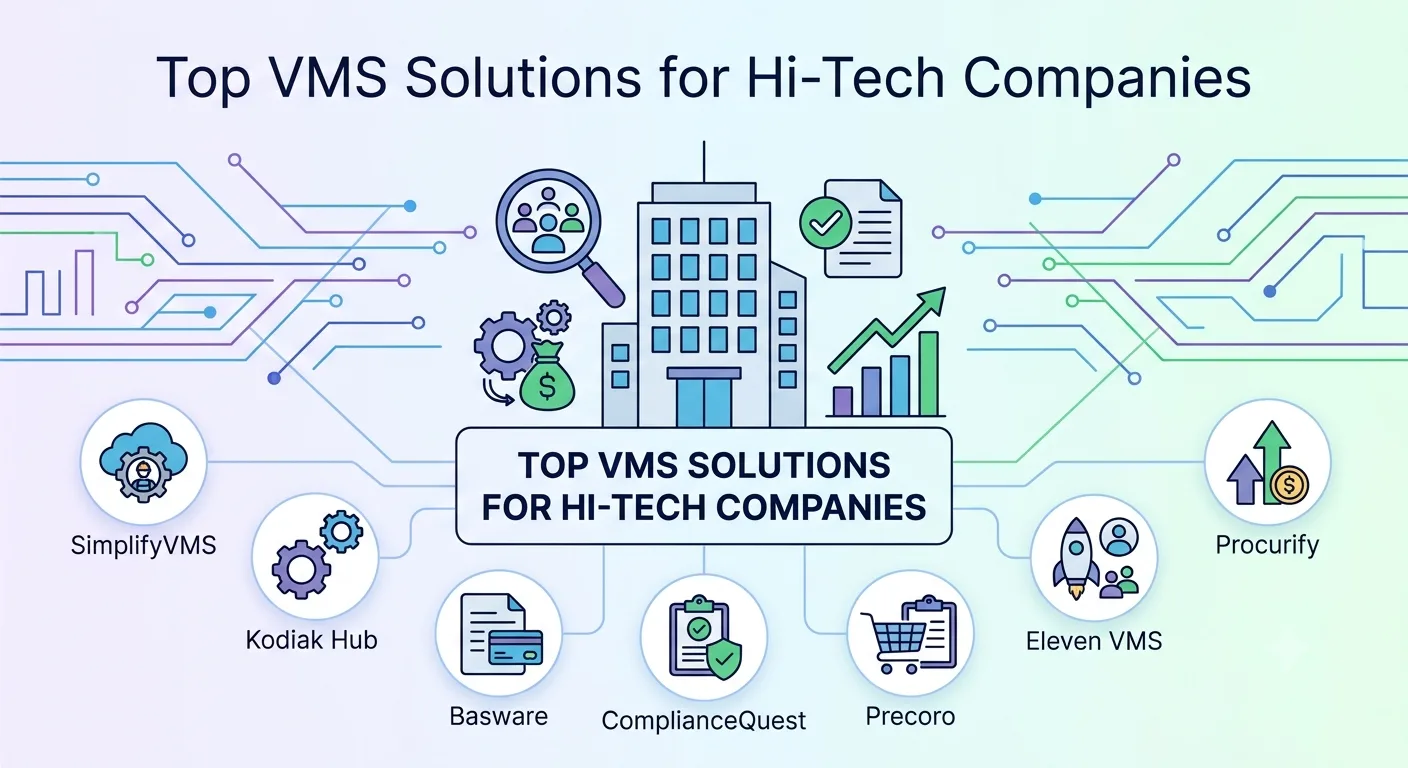
Top VMS Solutions for Hi-Tech Companies
1. SimplifyVMS
SimplifyVMS is an AI-first vendor management system for managing contingent workers, suppliers, and external services. Hi-tech organizations can use it for software development, IT operations, cybersecurity, product testing, and consulting engagements.
It covers requisitions, supplier engagement, candidate management, onboarding, time and expense, invoicing, compliance, and reporting. This gives program teams a shared view rather than separate records across departments. Configurable workflows align approvals with company policies. Supplier scorecards, headcount tracking, milestones, and 70+ report templates help teams monitor activity.
AI capabilities include resume parsing, candidate matching, compensation benchmarking, and co-pilot recruiters. An AI-assisted SOW builder, milestone tracking, pre-built connectors, and APIs support workforce and services management. SimplifyVMS brings hiring, supplier coordination, compliance, and spend visibility together.
2. Kodiak Hub
Kodiak Hub is an AI-powered supplier relationship management (SRM) platform for supplier onboarding, risk monitoring, performance, and collaboration. Hi-tech companies can use it to oversee technology suppliers and outsourced service providers.
It supports supplier intake, self-assessments, risk checks, audits, performance evaluations, and improvement actions. Configurable scorecards help procurement teams assess suppliers, while risk monitoring covers financial health, sanctions, media coverage, and supply-chain risks. These insights help procurement teams prioritize reviews of suppliers supporting critical technology operations.
It suits supplier governance needs, but is not a dedicated platform for worker requisitions, assignments, timesheets, or workforce payments.
3. Basware
Basware is known for accounts payable automation and procurement. Its supplier management functionality centralizes supplier information, documents, and creation and approval processes.
Hi-tech companies can use configurable forms and approval workflows to standardize supplier registration. Workflows can be linked to supplier categories and assigned reviewers. Supplier information can connect with an ERP supplier database through an API. This can reduce duplicate records and improve consistency with finance processes.
Basware supports supplier data and purchasing processes, but supplier information management is not end-to-end contingent workforce management.
4. ComplianceQuest
ComplianceQuest provides quality, supplier, and environmental, health, and safety management. Its supplier tools help manage records, audits, documents, non-conformance issues, and performance.
For hi-tech businesses in electronics, hardware, or regulated product development, configurable workflows support supplier audits, findings, corrective actions, and document reviews. This is useful when component quality, supplier certifications, or documented procedures affect delivery.
ComplianceQuest is a supplier quality and compliance platform, not a VMS for managing contingent workers.
5. Precoro
Precoro is a procurement platform for purchasing requests, supplier information, purchase orders, invoices, budgets, and approvals. It can structure purchases across engineering, IT, product, and operations teams.
Approval workflows can be configured by department, location, supplier, category, amount, or custom fields. Onboarding forms, contract records, a supplier portal, and multi-entity controls help manage vendor information. Teams can apply purchasing rules consistently while retaining local approval requirements.
Precoro suits indirect procurement. Companies managing contractors, assignments, or labor compliance should confirm whether they also need a workforce VMS.
6. Eleven VMS
Eleven VMS manages external services procurement, including freelancers, temporary staff, consultants, and service suppliers. It is relevant to hi-tech companies engaging IT and engineering specialists.
It supports sourcing, RFPs, contracts, rate cards, timesheets, approvals, SOWs, milestones, and invoicing. Teams can monitor budgets and deliverables, receive tenure alerts, and connect the VMS with ERP, HRIS, finance, and procurement systems. This helps keep contract, purchase order, and time information aligned.
Eleven VMS is a direct option for centralized external services and workforce management. Fit depends on the supplier model and integration needs.
7. Procurify
Procurify is a procurement and spend management platform connecting purchase requests, approvals, budgets, purchase orders, invoices, and vendor information.
Hi-tech companies can use it to control spending on software, equipment, services, and operations. Employees submit requests, approvers check budgets, and purchasing teams create purchase orders. Finance can match invoices with orders and receipts, review discrepancies, and manage payments. These controls help teams see where requests stand and where spending is committed.
Procurify improves purchasing visibility, but it is not a dedicated contingent workforce VMS. Companies managing external talent may also need worker sourcing, onboarding, assignment, and compliance tools.
How to Choose the Right VMS for a Hi-Tech Workforce?
Map the external talent and services your business uses. Individual contractors, fixed-price development projects, and staffing suppliers create different needs. Decide which processes belong in the VMS and which remain in procurement, finance, HR, or quality systems.
Review whether administrators can configure approvals, notifications, documents, and rules for different teams and locations. Confirm support for multiple suppliers and engagement types. Workforce data should also connect with systems handling employee records, budgets, purchase orders, and payments.
Compare reporting for assignments, supplier performance, rates, milestones, compliance, and committed spend. Ask vendors to demonstrate real scenarios, such as onboarding a cybersecurity contractor, extending a cloud engineer, or approving a product development SOW.
Choose the platform that manages your required processes, not simply the one with the longest feature list. A structured pilot can expose workflow gaps before a wider rollout.
Which VMS offers configurable workflows for enterprises?
SimplifyVMS offers configurable workflows that help enterprises align workforce requisitions, approvals, onboarding, compliance, and invoicing with internal policies.
Organizations can adapt process steps to different business units, locations, suppliers, and workforce requirements.
Its reporting, integration, and compliance capabilities also support programs operating across multiple teams or regions.
Enterprises should review their requirements in a product demonstration to confirm the right configuration for their operating model.
What should hi-tech companies consider when choosing a VMS?
Hi-tech companies should check whether a VMS can manage contractors, consultants, staffing suppliers, and project-based services in one process.
Important requirements include configurable approvals, worker onboarding, compliance tracking, rate and spend visibility, reporting, and integrations.
SimplifyVMS supports these activities through capabilities for contingent staffing, supplier coordination, services procurement, and compliance.
The final selection should reflect the company's workforce model, geographic needs, and existing technology environment.
Conclusion
Managing a flexible workforce requires more than tracking contractors and supplier information. Hi-tech companies need a system that connects workforce planning, supplier coordination, onboarding, compliance, approvals, and spend management. As project requirements change, these processes should adapt without creating additional administrative work for hiring managers, procurement teams, and finance departments.
The VMS options discussed above address different business requirements. Some focus on procurement and supplier management, while others support contingent workforce and external services management. Before selecting a platform, evaluate its workflow flexibility, integration capabilities, reporting, scalability, and ability to manage different workforce engagement models. SimplifyVMS brings contingent workforce management, services procurement, supplier coordination, and AI-powered capabilities together, helping hi-tech companies improve workforce visibility, maintain control, and manage changing talent requirements more effectively.