Reliable battery power is one of the most important parts of any four-wheel-drive vehicle. Whether you use your vehicle for daily driving, weekend off-road trips, towing, or long-distance camping adventures, your battery plays a major role in keeping everything running smoothly. From starting the engine to powering lights, fridges, winches, and other accessories, healthy batteries are essential for performance and safety.
Many 4WD owners only think about their batteries when something goes wrong. Unfortunately, battery failure often happens at the worst possible time—when you are far from home, deep in the bush, or preparing for an important trip. Knowing the warning signs early can save you money, stress, and unexpected breakdowns.
If you notice the following signs, it may be time to replace your 4WD batteries before they fail completely.
1. Slow Engine Cranking
One of the first and most common warning signs is slow engine cranking. When you turn the key or press the start button, the engine may sound sluggish or struggle to start.
This usually means the battery is no longer delivering enough power. While cold weather or starter motor issues can also cause this, an ageing battery is often the main reason. If your vehicle starts slowly on a regular basis, it is worth having the battery tested.
2. Battery Is More Than Three to Five Years Old
Most vehicle batteries do not last forever. Depending on the type, climate, usage, and maintenance, many batteries last between three and five years.
If your 4WD battery is within this age range or older, it may be nearing the end of its service life. Harsh heat, vibration from off-road driving, and frequent accessory use can shorten battery life even more. Replacing an older battery before a major trip is often a smart decision.
3. Dimming Lights and Weak Electronics
Your battery helps stabilise electrical power throughout the vehicle. If headlights appear dimmer than usual, dashboard lights flicker, or accessories seem weaker, the battery may be struggling.
This is especially noticeable when using multiple accessories such as spotlights, camping fridges, radios, or air compressors. If electrical systems lose strength regularly, your battery may not be holding charge properly.
4. Frequent Need for Jump Starts
Needing a jump start once after accidentally leaving lights on is understandable. But if your battery needs jump-starting more than once, it is a clear warning sign.
A healthy battery should hold charge and restart the vehicle without assistance. Repeated jump starts usually indicate internal battery wear, damaged cells, or reduced capacity. In many cases, replacement is the best long-term solution.
5. Swollen or Damaged Battery Case
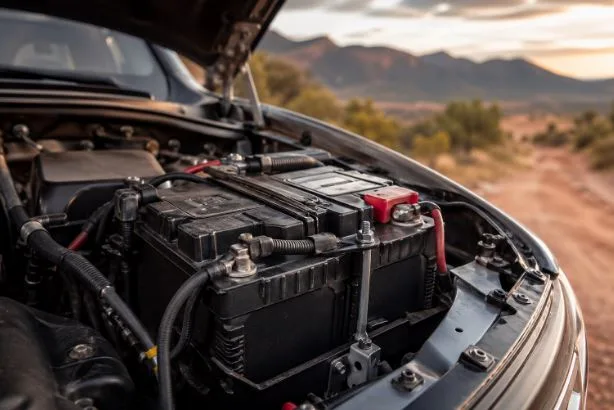
Take a look under the bonnet. If the battery case appears swollen, cracked, leaking, or misshapen, it needs immediate attention.
Heat exposure, overcharging, or internal failure can cause the battery casing to expand. Physical damage can also happen during rough off-road travel if the battery is not secured properly. A damaged battery is unreliable and potentially dangerous, so it should be replaced as soon as possible.
6. Corrosion Around the Terminals
White, blue, or green powdery buildup around battery terminals is called corrosion. While minor corrosion can sometimes be cleaned, heavy buildup often points to battery leakage or ageing issues.
Corroded terminals reduce power flow and make starting more difficult. If corrosion returns quickly after cleaning, the battery may be failing internally and need replacement.
7. Battery Warning Light on Dashboard
Modern vehicles often display a battery or charging system warning light when there is a problem. While this light can also relate to alternator or wiring faults, it should never be ignored.
If the warning light stays on while driving or comes on regularly, have the battery and charging system inspected immediately. A weak battery is a common cause.
8. Trouble Powering Accessories
Many 4WD owners run dual battery systems to power accessories such as:
- Portable fridges
- Camping lights
- Winches
- UHF radios
- Inverters
- Charging devices
If these accessories stop running sooner than usual, lose power unexpectedly, or perform inconsistently, your auxiliary battery may be reaching the end of its life.
This is particularly important for travellers who rely on battery-powered equipment in remote areas.
9. Strange Smell from the Battery
A failing battery may produce a rotten egg or sulphur smell. This can happen when the battery is overcharging, leaking, or damaged internally.
If you notice an unusual smell coming from the engine bay, inspect the battery carefully and seek professional advice. Continuing to use a damaged battery can be risky.
10. Battery Fails a Voltage Test
Sometimes batteries look fine from the outside but perform poorly internally. A voltage or load test is one of the best ways to check battery health.
If your battery fails testing or cannot maintain proper voltage after charging, replacement is usually recommended. Many auto electricians and battery stores offer quick battery testing services.
Why 4WD Batteries Wear Out Faster
Compared with standard passenger vehicles, 4WD vehicles often place greater demands on batteries. Reasons include:
- Frequent off-road vibration
- Long touring trips
- Heavy accessory use
- Dual battery setups
- Extreme temperatures
- Infrequent use between trips
Because of these conditions, regular battery checks are especially important for four-wheel-drive owners.
Tips to Extend Battery Life
While all batteries eventually need replacing, good maintenance can help maximise lifespan.
Keep Terminals Clean
Clean terminals ensure strong electrical connection and better charging performance.
Secure the Battery Properly
Off-road vibration can damage internal battery components if the battery is loose.
Avoid Deep Discharge
Try not to drain batteries completely, especially starter batteries.
Drive Regularly
Long periods without use can reduce battery charge and health.
Test Before Trips
Have batteries tested before long camping or touring adventures.
Choosing the Right Replacement Battery
When replacing your 4WD batteries, choose a battery suited to your vehicle and lifestyle. Consider:
- Battery size and fitment
- Cold cranking amps (CCA)
- Reserve capacity
- AGM, flooded, or lithium options
- Dual battery compatibility
- Accessory power needs
Investing in quality batteries can improve reliability, especially for remote travel.
Final Thoughts
Your battery often gives warning signs before complete failure. Slow starting, dim lights, frequent jump starts, corrosion, damaged casing, and poor accessory performance are all indicators that replacement may be near.
Ignoring these signs can leave you stranded when you least expect it. Regular inspections and early replacement help keep your vehicle dependable on-road and off-road.
If you notice any of these symptoms, it may be time to upgrade your 4WD batteries in Australia and enjoy peace of mind on your next adventure.