Open your phone and count how many daily tasks run through an app. Banking, groceries, rides, doctor visits, even your kid’s homework. In 2027, an app isn’t an extra. For many businesses, it is the storefront.
Expectations have shot up too. People want apps that feel personal, load fast, and keep their data safe. AI features like smart search, voice commands, and on-device assistants are moving from “impressive” to “expected.”
So picking the right Mobile App Development Company in USA is a big call. Get it right and you build something people return to. Get it wrong and you burn budget on a product nobody asked for.
Key Takeaways
- A custom app gives you control over features, data, and growth that ready-made tools rarely allow.
- You’ll see eight US-market firms below, so you can build a shortlist quickly.
- In 2027, the must-haves are AI features, tight security, and smooth performance on iOS and Android.
- Most overspending comes from a vague scope, not from high hourly rates.
- Talk about cost, timeline, and post-launch support before you sign anything.
Why are more businesses choosing custom apps in 2027?
Templates are fast. They’re also everywhere, which means your app can end up looking like ten competitors’.
With a custom build, you decide how the experience works. You pick the integrations, shape the data flow, and add features when your customers ask for them, not when a platform finally ships an update.
That flexibility matters most when new tech arrives. Generative AI, wearables, and AR are easier to adopt when you own the foundation.
What usually goes wrong with app projects?
Mostly the same four things.
A fuzzy scope. Everyone agrees on the idea but not on the details. Features creep in, and the launch date slides.
Surprise costs. Third-party APIs, store fees and maintenance often do not appear in the quote you get.
Compliance gaps.If you are in healthcare, finance or education you have to follow rules, like HIPAA, SOC 2 and FERPA. Trying to fix compliance issues after the build is finished takes a time and costs a lot of money.
Low adoption. An app can be technically flawless and still sit unused. Skipping user research is the usual culprit.
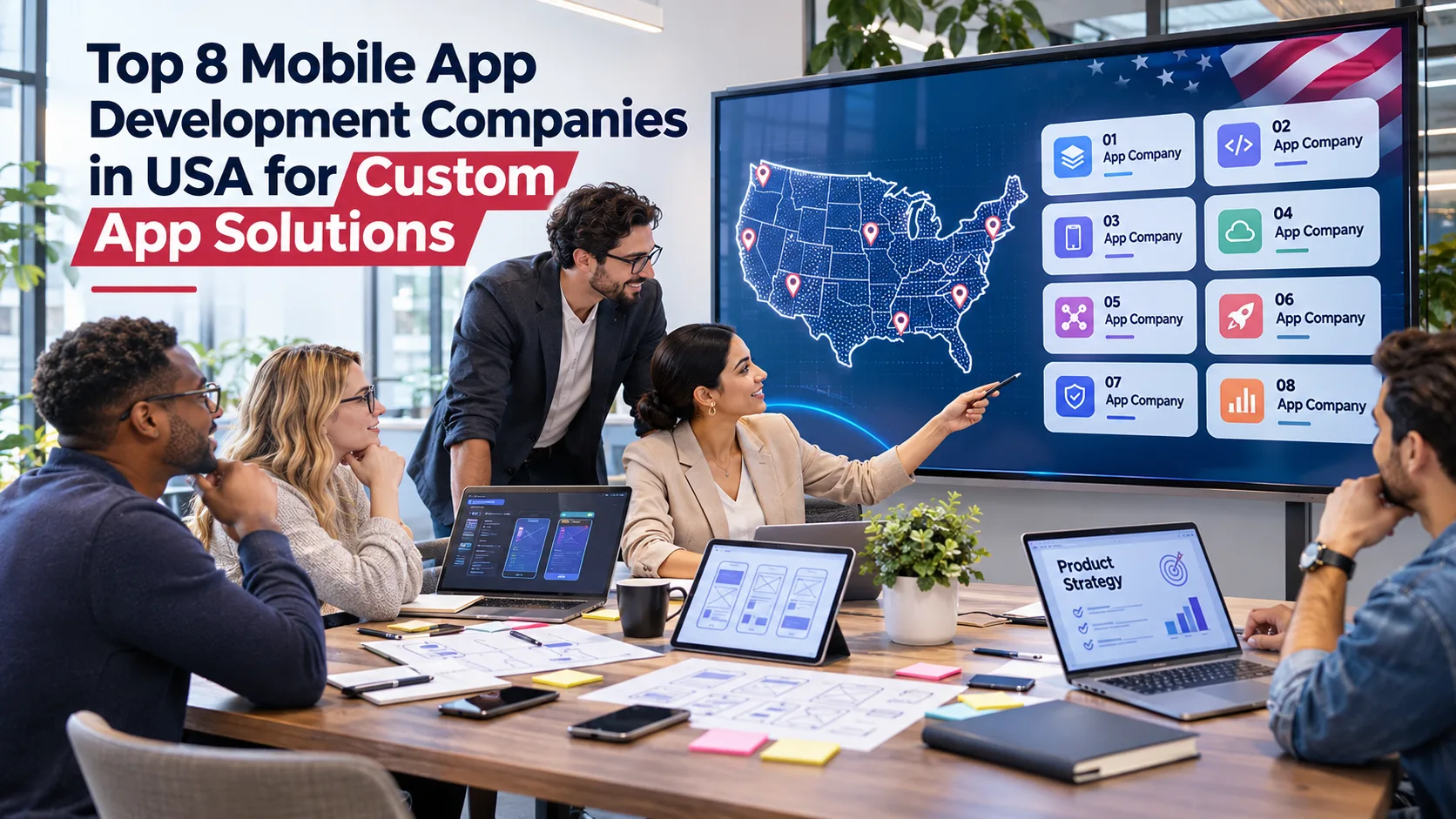
Which 8 companies are worth a look?
Here’s a starting list of firms with a visible presence in the US market. Their strengths differ, so check current portfolios and reviews yourself. Anyone searching for the Best Mobile App Development Companies in USA will find that “best” depends on your industry, budget, and goals.
- Intellectsoft: Enterprise-focused digital projects, often in logistics, finance, and retail.
- Fueled: A design-led studio with consumer brand experience.
- Zco Corporation: A custom software team with years of experience working in industries.
- Y Media Labs: Y Media Labs is known for designs and projects with big brands. Y Media Labs loves sharp work that helps big names shine.
- Dogtown Media: Dogtown Media focuses on health tech and artificial intelligence and emerging tech fields. Dogtown Media is about new ideas, in health and AI.
- Savvy Apps: Builds software with strategy in mind always keeping usability front and center.
- Biz4Group: Supports startups and scaling businesses with an emphasis, on AI solutions.
- Appinventiv: A global team with a US footprint in fintech, healthcare, and on-demand apps.
Don’t stop at the logo wall. Ask for a case study close to your industry, and if possible, call a past client.
Which features matter most right now?
Let your users’ needs lead, not hype. That said, a few features now show up in almost every successful app:
- AI-driven personalization: Recommendations, chat help, and predictive tips.
- Built-in security: Built-in security means encryption, sign in and clear consent options.
Cross-platform polish:polish gives the smooth feel on iPhone and Android. - Offline basics: Key functions that still work on a weak signal.
- Analytics: Real data on what people tap, skip, and abandon.
- Room to scale: Architecture that grows without a costly rebuild.
How much should you expect to pay?
It varies a lot. A simple app can start in the tens of thousands of dollars. A complex platform with AI, payments, and many integrations can climb into the hundreds of thousands.
The main drivers are feature count, design depth, number of platforms, team location, and backend work.
Ask each vendor for a line-by-line estimate covering discovery, design, development, testing, and maintenance. A single lump-sum number with no detail is a warning sign.
How do you pick the right partner?
Start with a one-page brief: goals, audience, must-have features, and a rough budget. It sharpens every conversation that follows.
Then judge each shortlisted team on:
- Relevant work and verified reviews
- Skill with the tech stack you need
- How clearly they communicate
- Experience with security and compliance
- What happens after launch
Send every vendor the same questions. Side-by-side answers make a surprisingly clear picture. A trusted Mobile App Development Company in USA will happily explain its process, and it won’t dodge questions about pricing or timelines.
Consider a short paid discovery phase, too. It’s a low-risk way to see how a team thinks before you commit to the full build.
What habits keep a build on track?
A few simple ones:
Launch small. Ship a focused first version, then grow it from real feedback.
Test early. Put prototypes in front of real users before coding starts.
Name one decision-maker. Too many opinions stall progress.
Budget for the long haul. OS updates, bug fixes, and new features never stop.
Watch the right numbers. Retention and conversion say more than download counts.
What mistakes cost the most?
Picking on price alone tops the list. The cheapest bid often turns into the priciest project once rework starts.
Close behind: skipping privacy and legal review, and ignoring app store rules until launch week.
And please don’t treat launch as the finish line. The first 90 days of feedback usually reveal your best improvements.
Conclusion
You don’t need a perfect plan. You need a clear problem, a realistic budget, and a team that listens.
If you’re exploring Mobile App Development Services in USA, write down your goals and shortlist two or three teams. Then contact us or the firms you like for a discovery call, and notice who asks good questions.
A Custom Mobile App Development Company in USA should explain its process in plain language. A strong Mobile Application Development Company in USA will also treat your idea like its own, not like a ticket in a queue.
If you want a partner that pairs technical depth with long-term thinking, Esferasoft Solutions is worth a conversation.The team builds apps that can grow that are secure. That are easy to use. The team is also known for communication and ideas that look to the future.When you’re ready to move from concept to working product, reach out and see what they can do.
Frequently Asked Questions
1. How do I find an app development company in the USA?
Start by checking review websites. Look at their portfolios to see if they have done apps like the one you want. Ask three app development companies for written proposals. Talk to their clients if possible. A good app development company explains things clearly. They give timelines and don’t promise the impossible.
2. How long does custom app development take?
Most custom app development projects take between three and nine months. A basic version of your app called an MVP can sometimes finish in a weeks. But if your app uses intelligence handles payments or needs to connect with other systems it will take longer. The first few weeks are often spent on planning and design.
3. Should I build for iOS, Android or both?
Decide based on who your usersre. If most of your users use one phone platform start with that one. You can always add the later. Tools like Flutter and React Native let you build apps for both iOS and Android from the code. This can save time and money in the run.
4. What’s the difference between -platform apps?
Native apps are built separately for each operating system. They run faster. They have access, to device features. Cross-platform apps use one shared codebase. This lets you build for both platforms at once.This is faster and often cheaper. The choice depends on the features you want your budget and how fast you need the app.
5. How do I keep my app secure and compliant?
Work with a team that knows the rules in your industry. Ask them about encryption, user authentication and how they test security. Get answers about how your data will be handled. These things should be discussed from the start not added. Compliance is not optional.
6. Do I need support after the app goes live?
Yes, absolutely. Operating systems update new phones come out. Users find problems you didn’t see. Without support your app can break or become slow. A maintenance plan keeps your app running safely. This should be part of the agreement, with your app development company.