
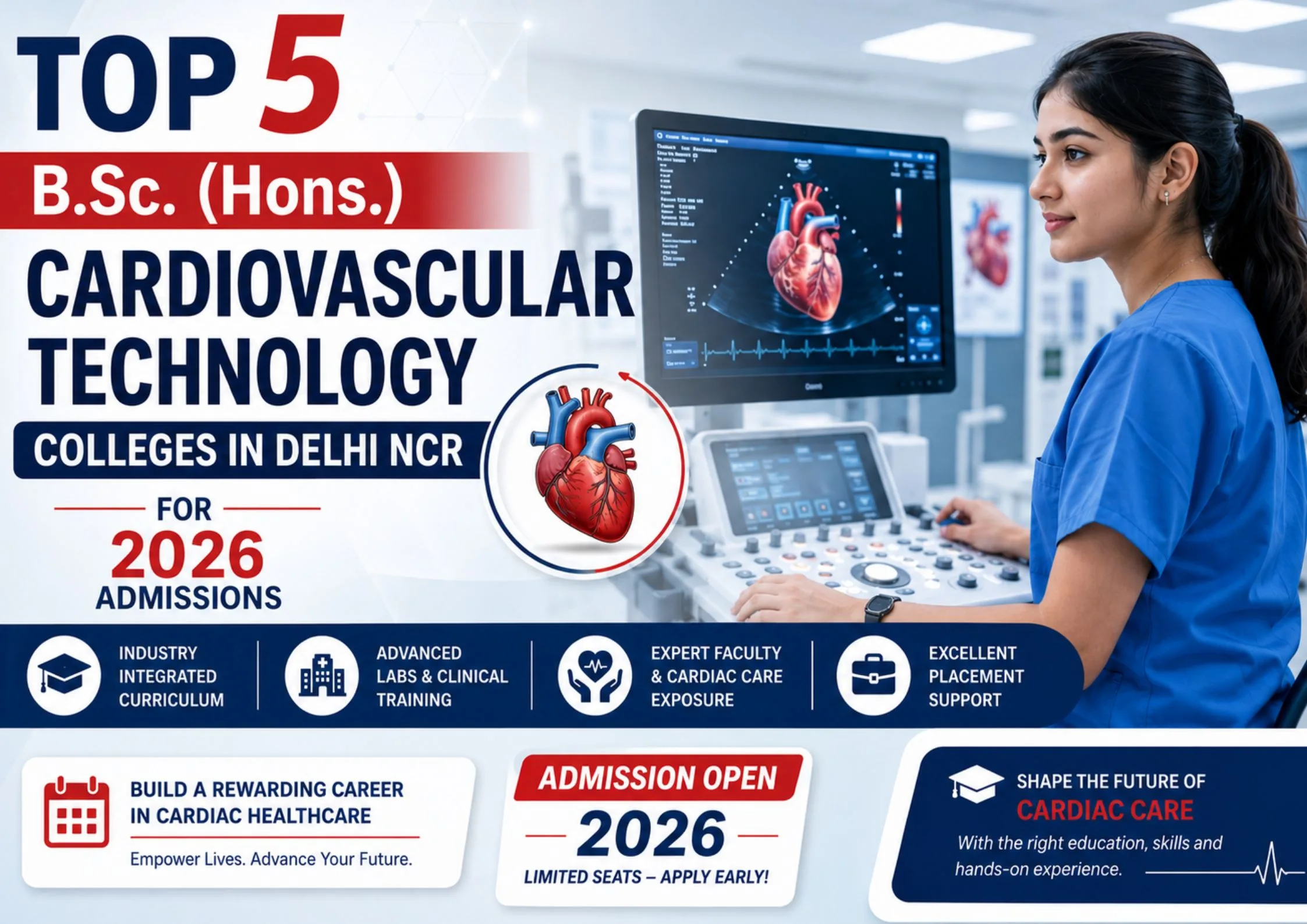
Choosing the right college is one of the most important decisions for students planning a career in cardiac healthcare. K.R. Mangalam University has emerged as one of the leading destinations for B.Sc. (Hons.) Cardiovascular Technology in Delhi NCR. The university offers an industry-oriented curriculum with academic and industry support from Emversity, advanced laboratories, clinical exposure, and a one-year industry internship that prepares students for real-world healthcare careers. With increasing demand for skilled cardiovascular professionals, K.R. Mangalam University provides students with the practical knowledge and technical expertise required to excel in this specialised field.
Why Choose B.Sc. (Hons.) Cardiovascular Technology?
Cardiovascular diseases are among the leading health concerns worldwide, creating a growing demand for trained professionals who can assist cardiologists in diagnosing and treating heart conditions. B.Sc. (Hons.) Cardiovascular Technology is a four-year undergraduate programme (3 years academic study + 1 year industry internship) that equips students with specialised knowledge in cardiac diagnostics, imaging, patient monitoring, and interventional procedures.
During the programme, students gain expertise in:
- Electrocardiography (ECG)
- Echocardiography (ECHO)
- Cardiac Catheterisation
- Stress Testing (TMT)
- Holter Monitoring
- Cardiac Patient Care
- Medical Ethics
- Clinical Training
Graduates become valuable members of multidisciplinary cardiac care teams in hospitals and diagnostic centres.
Top 5 B.Sc. (Hons.) Cardiovascular Technology Colleges in Delhi NCR
1. K.R. Mangalam University, Gurugram
K.R. Mangalam University is among the leading institutions offering Cardiovascular Technology Admission 2026. The programme has been developed with academic and industry support from Emversity to bridge the gap between classroom education and hospital practice.
Highlights
- Industry-supported curriculum
- 3+1 year programme with industry internship
- Advanced simulation and virtual laboratories
- Hospital visits and clinical exposure
- Expert interactions with cardiologists
- Skill development workshops
- Placement assistance
- Modern healthcare infrastructure
2. Manipal Academy of Higher Education (Delhi NCR Aspirants)
Although located outside Delhi NCR, Manipal remains a preferred choice for many students due to its excellent clinical training, experienced faculty, and research opportunities in cardiovascular technology.
3. Jamia Hamdard, New Delhi
Jamia Hamdard is recognised for its healthcare and allied sciences programmes. Students benefit from experienced faculty, modern laboratories, and exposure to clinical environments that support professional development.
4. Amity University, Noida
Amity University offers strong infrastructure, industry collaborations, and multidisciplinary healthcare education. Students receive practical exposure and research opportunities alongside classroom learning.
5. Sharda University, Greater Noida
Sharda University has established itself as a prominent institution for allied health sciences. Its modern laboratories, experienced faculty, and hospital training prepare students for careers in cardiovascular diagnostics and patient care.
Cardiovascular Technology Admission 2026
Students seeking Cardiovascular Technology Admission 2026 generally need to fulfil the following eligibility criteria:
- Pass Class 12th or equivalent examination
- Physics, Chemistry and Biology (PCB) or relevant subjects
- Minimum qualifying marks as specified by the university
- Entrance examination and/or personal interview (depending on institutional admission policies)
Applicants should regularly check university admission portals for application deadlines, scholarship opportunities, and counselling schedules.
Career Opportunities After B.Sc. (Hons.) Cardiovascular Technology
The healthcare sector offers excellent employment opportunities for cardiovascular technologists due to the rising incidence of heart diseases.
Graduates can work as:
- Cardiovascular Technologist
- Echocardiography Technician
- Cardiac Catheterisation Technologist
- Cardiac Stress Testing Technician
- Cardiac Sonographer
- Cardiac Care Specialist
- Clinical Application Specialist
- Cardiovascular Equipment Specialist
Employment opportunities are available in:
- Multi-speciality hospitals
- Cardiac care centres
- Diagnostic laboratories
- Research institutes
- Medical equipment companies
- Government healthcare organisations
Skills You Will Develop After B.Sc. (Hons.) Cardiovascular Technology
Throughout the programme, students acquire both technical and professional skills, including:
- Cardiac diagnostic procedures
- Clinical decision support
- Patient monitoring
- Operation of advanced cardiac equipment
- Communication and teamwork
- Emergency response techniques
- Healthcare ethics
- Clinical documentation
These competencies make graduates highly employable across the healthcare industry.
Why Cardiovascular Technology is a Promising Career?
Healthcare technology continues to evolve rapidly, and cardiovascular care remains one of the fastest-growing medical specialisations. With increasing investment in hospitals, diagnostic centres, and preventive healthcare, qualified cardiovascular technologists are expected to remain in high demand. The combination of specialised knowledge, hands-on clinical experience, and technological expertise makes this profession both rewarding and future-ready.
Conclusion
To sum up, selecting the right institution is essential for building a successful career in cardiac healthcare. Among the Top Cardiovascular Technology Colleges, K.R. Mangalam University stands out for its industry-integrated curriculum, academic collaboration with Emversity, modern laboratories, clinical exposure, and dedicated placement assistance. Whether you are searching for B.Sc. Cardiovascular Technology Colleges, planning for Cardiovascular Technology Admission 2026, or exploring a rewarding healthcare profession, this programme offers the practical training and academic excellence needed to succeed.
Frequently Asked Questions (FAQs)
1. What is B.Sc. (Hons.) Cardiovascular Technology?
It is a specialised undergraduate programme that trains students in cardiac diagnostics, cardiovascular imaging, patient monitoring, and assisting cardiologists during diagnostic and interventional procedures.
2. What is the duration of the programme?
At K.R. Mangalam University, the programme follows a 3-year academic study + 1 year industry internship model.
3. Who is eligible for Cardiovascular Technology Admission 2026?
Students who have completed Class 12th with the required science subjects and meet the university's eligibility criteria can apply. Admission requirements may include an entrance examination and interview.
4. What career options are available after completing the course?
Graduates can work as Cardiovascular Technologists, Echocardiography Technicians, Cardiac Catheterisation Technologists, Cardiac Sonographers, Cardiac Care Specialists, and Clinical Application Specialists in hospitals and healthcare organisations.
5. Why should I choose K.R. Mangalam University for B.Sc. (Hons.) Cardiovascular Technology?
The university offers an industry-supported curriculum, modern simulation labs, hospital-based clinical training, expert mentorship, a one-year internship, and strong placement assistance, making it one of the leading choices for cardiovascular technology education in Delhi NCR.