Summary - Businesses increase sales using the WhatsApp Business API by automating conversations, capturing high-intent leads, sending personalized offers, and nurturing customers through real-time messaging. With extremely high open rates and instant engagement, WhatsApp shortens the buying cycle, improves customer experience, and drives repeat purchases—especially in mobile-first markets like India.
If you look at how customers interact with businesses today, one thing is clear—people prefer messaging over calling or emailing. Whether it’s asking about a product, checking delivery status, or negotiating pricing, most conversations now happen on WhatsApp.
For businesses, this shift isn’t just about convenience—it’s a massive opportunity to increase sales.
Instead of forcing customers to fill out long forms or wait for email responses, WhatsApp enables instant, real-time conversations that feel natural and personal. This reduces friction in the buying journey and helps businesses convert interest into actual revenue much faster.
In India—especially in cities like Mumbai and Pune—WhatsApp has become a primary communication channel for both consumers and businesses. From small local shops to large eCommerce brands, companies are using WhatsApp Business API to automate sales, engage customers, and scale operations without increasing manpower.
This guide breaks down exactly how businesses are using WhatsApp API to generate leads, close deals, and build long-term customer relationships—backed by real examples, practical strategies, and actionable insights.
What is WhatsApp Business API?
The WhatsApp Business API is an advanced communication solution designed for businesses that want to manage large-scale customer conversations efficiently.
Unlike the standard WhatsApp Business app, the API:
- Supports multi-agent access for teams
- Enables chatbot automation and workflows
- Integrates with CRM, ERP, and eCommerce platforms
- Allows structured messaging (notifications, alerts, campaigns)
It’s widely used by growing businesses across Mumbai, Pune, and other Indian cities where customers expect fast, chat-based communication instead of emails or calls.
Why Does WhatsApp API Works So Well for Sales in India?
India has one of the largest WhatsApp user bases globally, making it a natural platform for sales and engagement.
Key reasons businesses see strong results:
- Messages are typically read within minutes
- Customers prefer chat over traditional channels
- Supports multilingual communication (Hindi, Marathi, English)
- Builds trust through verified business profiles
Real-world insight:
A D2C skincare brand in Mumbai shifted from email marketing to WhatsApp for customer engagement and saw a 28% increase in repeat purchases within three months.
WhatsApp isn’t just a messaging tool—it’s a conversion channel.
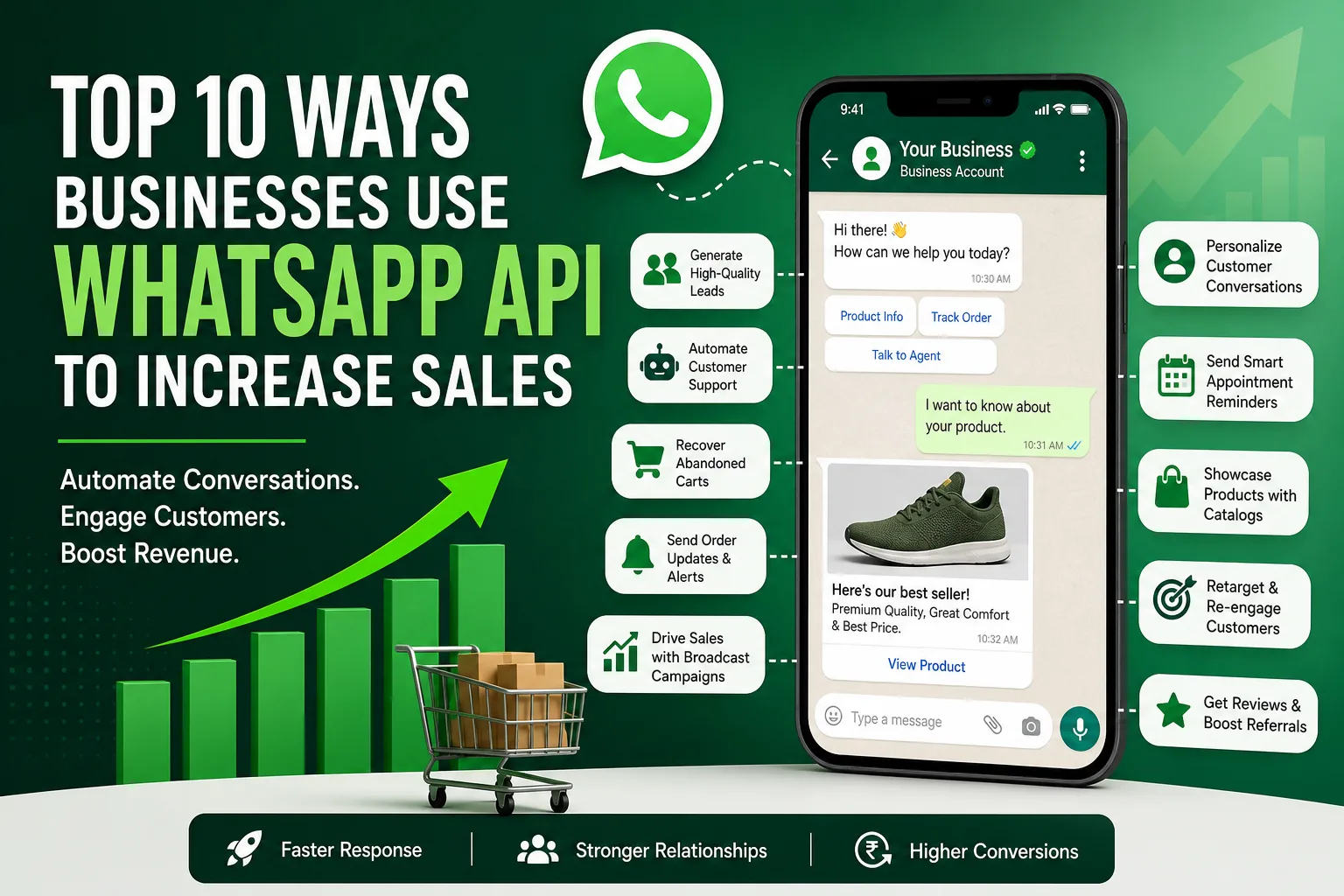
Top 10 Ways Businesses Use WhatsApp API to Increase Sales
1. How do businesses generate leads using WhatsApp API?
Lead generation becomes significantly more effective when users can start a conversation instantly.
Businesses use:
- Click-to-WhatsApp ads
- Website chat buttons
- QR codes in offline marketing
Instead of filling out long forms, users simply message the business.
Practical example:
A real estate agency in Navi Mumbai uses WhatsApp to capture leads from ads. A chatbot asks budget, preferred location, and property type—instantly qualifying prospects before a sales agent connects.
Actionable strategy:
Keep lead qualification short (3–4 questions). The faster the interaction, the higher the conversion.
2. Can WhatsApp API automate customer support and increase sales?
Yes, and this is one of the biggest revenue drivers.
Customers often abandon purchases when they don’t get quick answers. WhatsApp automation solves this instantly.
What businesses automate:
- Product inquiries
- Pricing details
- Availability checks
- Delivery timelines
Real insight:
An online electronics retailer reduced response time from hours to seconds using automation, leading to a noticeable increase in completed purchases.
Why it matters:
Speed directly impacts sales. The faster you respond, the less likely the customer is to switch to a competitor.
3. How does personalization on WhatsApp improve conversions?
Generic marketing messages are easy to ignore. Personalized conversations, however, feel relevant and engaging.
Using CRM and behavioral data, businesses send:
- Product recommendations based on browsing history
- Custom offers based on past purchases
- Follow-ups tailored to user interest
Example:
You recently viewed running shoes. Here’s 10% off if you order today.
This type of messaging feels like assistance rather than promotion.
Actionable tip:
Integrate WhatsApp with your CRM to trigger automated, behavior-based messages.
4. How do businesses recover abandoned carts using WhatsApp?
Cart abandonment is one of the biggest challenges in eCommerce.
WhatsApp helps recover these lost sales effectively.
Strategy breakdown:
- Send reminder within 30–60 minutes
- Include product image and price
- Add urgency or incentive
Example message:
Hi, you left this item in your cart. Complete your order now and get 10% off.
Industry data insight:
WhatsApp cart recovery campaigns in India often achieve 2–3x higher conversion rates compared to email.
5. How do order updates and notifications increase repeat sales?
Transactional messages are not just informational—they build trust.
Common updates include:
- Order confirmation
- Dispatch alerts
- Delivery tracking
When customers feel informed, they are more likely to trust the brand and return for future purchases.
Local relevance:
In cities like Mumbai, where delivery expectations are high, timely updates reduce anxiety and improve customer satisfaction.
6. Can WhatsApp broadcast campaigns drive real revenue?
Yes, when used correctly with opt-in users.
Broadcast messaging allows businesses to send promotional messages to a large audience while maintaining a personal feel.
Effective campaigns include:
- Festive offers (Diwali, Ganesh Chaturthi)
- Limited-time discounts
- New product launches
Real-world example:
A salon chain in Pune used WhatsApp broadcasts during festive seasons and increased appointment bookings by over 35%.
Best practice:
Avoid over-messaging. Quality and timing matter more than frequency.
7. How do appointment reminders increase business revenue?
Missed appointments directly impact revenue, especially in service-based industries.
WhatsApp reminders help:
- Reduce no-shows
- Improve scheduling efficiency
- Provide easy rescheduling options
Industries benefiting the most:
- Clinics and healthcare providers
- Salons and spas
- Consultants and trainers
Practical insight:
A dental clinic in Mumbai reduced missed appointments by nearly 40% after implementing WhatsApp reminders.
8. What is WhatsApp catalog and how does it boost sales?
The WhatsApp catalog allows businesses to showcase products directly within chat.
Features include:
- Product images
- Pricing details
- Descriptions
Customers can browse products and ask questions without leaving the app.
Example:
A boutique store in Mumbai shares curated collections via WhatsApp catalog, leading to higher engagement and increased average order value.
Why it works:
It reduces friction in the buying process—no need to switch platforms.
9. How do businesses retarget customers on WhatsApp?
Customer acquisition is expensive. Retargeting helps maximize existing data.
Common strategies:
- Re-engagement campaigns
- Loyalty rewards
- Exclusive offers for past buyers
Example message:
“It’s been a while! Here’s an exclusive offer just for you.”
Insight:
Repeat customers often have higher conversion rates and spend more over time.
10. How does WhatsApp help with reviews and referral marketing?
Satisfied customers can drive new business through reviews and referrals.
Businesses use WhatsApp to:
- Request feedback after delivery
- Share review links
- Encourage referrals with incentives
Why it works:
Customers are more likely to respond on WhatsApp than email.
Industry Use Cases in India
eCommerce
- Cart recovery
- Order updates
- Personalized offers
Real Estate
- Lead qualification
- Virtual property tours
- Site visit scheduling
Healthcare
- Appointment booking
- Patient reminders
- Follow-ups
Education
- Admission inquiries
- Course details
- Student engagement
- Fees Follow-ups
Local Businesses in Mumbai & Pune
- Hyperlocal promotions
- Regional language campaigns
- Quick customer support
WhatsApp API vs Other Marketing Channels
ChannelOpen RateEngagementConversionWhatsApp90%+HighVery HighEmail15–25%LowLowSMS70–80%MediumMediumKey takeaway:
WhatsApp combines immediacy, personalization, and interaction—making it one of the most effective sales channels today.
Best Practices to Maximize Sales Using WhatsApp API
- Always collect user opt-in before messaging
- Keep conversations natural and helpful
- Use automation, but allow human takeover when needed
- Send messages at appropriate times
- Continuously optimize based on user responses
Common Mistakes to Avoid
- Sending spam or irrelevant messages
- Ignoring customer responses
- Over-automating without human support
- Not tracking performance metrics
- Failing to personalize communication
Future Trends of WhatsApp API in Sales
- AI-driven conversational commerce
- Voice-based interactions
- Integration with omnichannel marketing platforms
- Deeper analytics and personalization
Businesses that adopt early will gain a strong competitive advantage.
FAQs
Is WhatsApp API suitable for small businesses in India?
Yes. With the help of CPaaS providers, even small businesses can use it affordably to automate sales and support.
What is the cost of WhatsApp API in India?
Costs vary based on conversation type and provider. Businesses typically pay per conversation along with platform fees.
Can WhatsApp API send bulk promotional messages?
Yes, but only to users who have opted in. This ensures compliance and better engagement rates.
How quickly can WhatsApp API increase sales?
Many businesses start seeing measurable improvements within weeks, especially in lead conversion and customer engagement.
Turn Conversations Into Conversions with WhatsApp API
If your business is targeting customers in Mumbai, Pune, or across India, WhatsApp API can become your highest-performing sales channel when implemented correctly.
From capturing leads to closing sales and retaining customers, every interaction can be optimized for revenue growth.
Book a free consultation today and get a customized WhatsApp API setup tailored to your business goals.