React Native has moved well beyond its early reputation as a way to share code between iOS and Android. In 2026, the framework is evolving around a more modern runtime, stronger native interoperability, AI-powered experiences, and development workflows that are increasingly automated.
The biggest shift is happening at the architecture level. React Native 0.82 made the New Architecture mandatory, while later releases have continued removing legacy components and improving the runtime. React Native 0.84 made Hermes V1 the default JavaScript engine, and React Native 0.87 introduced the Strict TypeScript API along with Metro, Swift Package Manager, and Android Gradle Plugin improvements.
At the same time, broader mobile development is moving toward on-device AI, multimodal interfaces, adaptive experiences, privacy-first engineering, and agentic workflows.
For companies investing in custom React Native app development services, these changes influence much more than the technology stack. They affect architecture decisions, feature planning, security, performance, maintenance, and the way apps interact with native device capabilities.
Here are the top React Native trends shaping custom mobile apps in 2026.
1. New Architecture Is Becoming the Foundation for Custom React Native Apps
The New Architecture is no longer something teams can treat as an optional optimization. React Native 0.82 became the first release to run entirely on the New Architecture, following its default introduction in 0.76.
The architecture replaces older communication patterns with systems such as Fabric for rendering and Turbo Native Modules for native functionality. It also enables modern React capabilities including Suspense, Transitions, automatic batching, and improved scheduling.
For custom apps, this matters when building interfaces with complex animations, real-time updates, native device functionality, or high-frequency interactions.
Business impact: New projects should be designed around New Architecture-compatible libraries from the start. Existing apps, meanwhile, increasingly need dependency audits and migration plans rather than continued investment in legacy components.
2. Hermes V1 Is Raising the Performance Baseline
JavaScript runtime performance has become a much more important part of React Native optimization. React Native 0.84 made Hermes V1 the default JavaScript engine, while also continuing the removal of Legacy Architecture components.
This creates opportunities for custom applications that depend heavily on JavaScript execution, frequent UI updates, and data processing on the client.
Instead of measuring performance only through app launch time, development teams are increasingly looking at startup behavior, memory consumption, interaction responsiveness, rendering performance, and real-device behavior.
For consumer apps, this can be especially important in areas such as marketplaces, financial dashboards, media applications, and social platforms where users expect immediate feedback.
3. AI Is Moving From a Feature to an Application Layer
AI is becoming embedded deeper into mobile product architecture. Current mobile development trends include AI-powered search, recommendations, summarization, workflow automation, contextual assistance, and bounded AI agents.
In React Native applications, the practical opportunity is not simply adding a chatbot. Businesses can integrate AI into specific workflows.
For example, a field-service application could analyze an uploaded equipment image and identify a likely fault. A finance application could summarize transactions and flag unusual activity. A sales app could generate account summaries from CRM data.
The important shift is architectural: AI needs access to structured application data, permissions, APIs, analytics, and clear validation rules.
That is why custom React Native development increasingly requires planning AI capabilities alongside the core application rather than adding them after launch.
4. On-Device AI Will Handle More Privacy- and Latency-Sensitive Tasks
Not every AI request needs to travel to a cloud model. On-device intelligence is gaining traction for use cases where low latency, privacy, offline functionality, or reduced cloud dependency matter.
For a custom React Native app, this could include document classification, image processing, speech-related features, personalization, or narrow machine-learning tasks.
A hybrid architecture is often more practical than an entirely local or entirely cloud-based approach. Lightweight tasks can run on the device, while larger reasoning or centralized business operations can remain server-side.
This approach can improve responsiveness while reducing unnecessary data transmission.
5. Multimodal Experiences Are Changing Mobile Interaction
Mobile interfaces are no longer limited to touch, text, and menus. Voice, images, camera input, and text are increasingly being combined into a single workflow.
Consider an insurance app where a customer photographs vehicle damage, describes the incident by voice, and receives a guided claims workflow. Or an e-commerce application where users upload an image and receive visually similar products.
For businesses using custom React Native app development services, multimodal design creates an opportunity to make complicated tasks significantly easier.
The key is not adding every possible input method. The strongest applications use the interaction format that best fits the specific user task.
6. Native Interoperability Is Becoming More Important
React Native's value is increasingly tied to how effectively it works with native platform capabilities. Current documentation emphasizes Turbo Native Modules and Fabric Native Components for connecting JavaScript applications with Android and iOS functionality.
This is particularly relevant when a custom application needs advanced capabilities such as Bluetooth, biometrics, background processing, health data, camera functionality, payments, or specialized device integrations.
Rather than choosing between “React Native” and “native,” modern teams can combine the two strategically: shared application logic where practical and native implementations where platform-level control is valuable.
This makes React Native a stronger option for enterprise applications with deeper hardware and operating-system requirements.
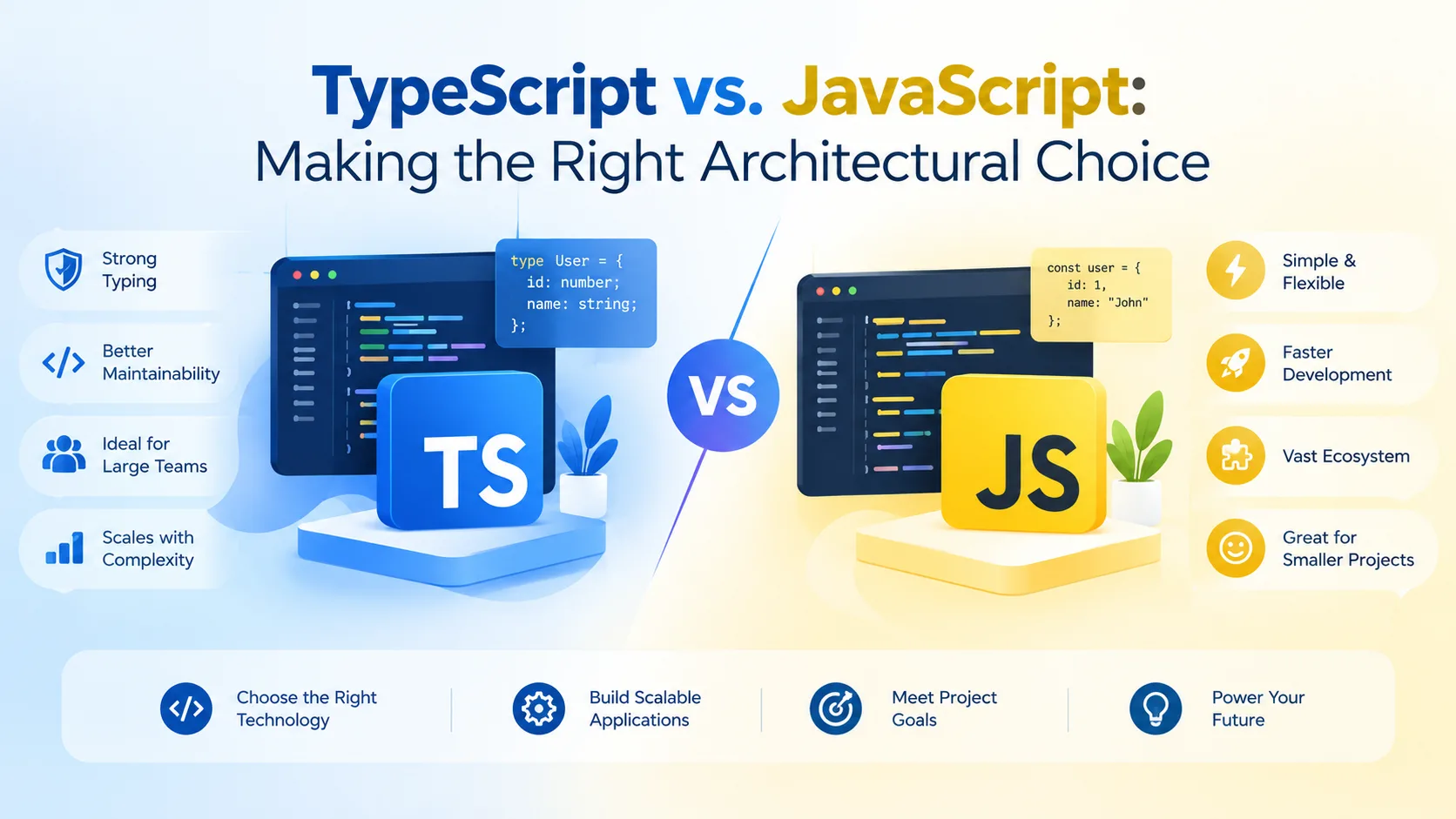
7. TypeScript-First Development Is Becoming the Standard
Type safety is becoming more central to maintaining large React Native applications. React Native 0.80 introduced the Strict TypeScript API as an opt-in path toward a more stable and accurately defined JavaScript API, and React Native 0.87 brought the Strict TypeScript API into the framework's current evolution.
For enterprise applications, this is particularly useful because large codebases often involve multiple teams, shared components, external APIs, and long development cycles.
A TypeScript-first architecture can make contracts between modules clearer, improve refactoring, reduce certain classes of runtime errors, and make large projects easier to maintain.
This trend is less about adding a new feature and more about making custom applications safer to evolve.
8. Modular Architecture Will Support Larger React Native Products
As React Native applications become more sophisticated, monolithic codebases become harder to manage. Modular architecture allows teams to separate major domains such as authentication, payments, messaging, commerce, analytics, and account management.
This aligns with the broader movement toward modular mobile products and super-app architectures.
For example, a retail application could maintain separate modules for shopping, loyalty, payments, and customer support while sharing authentication and core design components.
The advantage is organizational as much as technical. Different teams can work on separate product areas without constantly creating conflicts across the entire application.
9. Privacy and Passkey-Based Security Are Moving Earlier Into Architecture
Security in 2026 is increasingly being treated as a product-design decision rather than a final testing phase. Current mobile trends emphasize privacy-first engineering, stronger authentication, secure data handling, and passkeys.
For custom React Native apps, this means sensitive information should be mapped carefully across device storage, APIs, analytics, authentication systems, and cloud infrastructure.
Passkeys are particularly relevant for applications that want simpler authentication without relying entirely on traditional passwords. Biometrics, secure storage, device-level protections, and backend authorization should work together rather than operate as isolated security features.
This approach is essential for finance, healthcare, enterprise, commerce, and other applications handling sensitive information.
10. Continuous Optimization Is Replacing “Build, Launch, Forget”
Modern mobile applications are becoming continuously optimized products. Performance, crash data, user behavior, feature adoption, and API reliability can all influence what gets improved after launch.
Current mobile development thinking increasingly treats maintenance, scalability, analytics, and post-launch optimization as part of the original product strategy.
For React Native applications, continuous optimization can include upgrading dependencies, monitoring rendering performance, improving bundle behavior, removing outdated packages, and validating compatibility with new operating-system releases.
This is especially important because React Native itself is evolving rapidly. Releases in 2026 have introduced significant changes across the runtime, architecture, tooling, and build ecosystem.
What These Trends Mean for Businesses Building React Native Apps in 2026
The direction of React Native is clear: custom applications are becoming more intelligent, more native-capable, and more dependent on modern architecture.
Businesses should therefore evaluate React Native based on the actual requirements of the product. AI may be valuable for one workflow but unnecessary for another. On-device processing may be essential for privacy-sensitive functionality but excessive for simple applications. Native modules may be critical for hardware integration, while a shared cross-platform implementation may be sufficient elsewhere.
The same principle applies when selecting ios mobile app development services or broader Mobile Application Development Services. The goal should not be to follow every trend. It should be to select the technologies and architecture that support the product's users, business model, security requirements, and long-term roadmap.
Final Thoughts
React Native in 2026 is being shaped by architectural modernization as much as by new app features. New Architecture adoption, Hermes V1, stricter TypeScript APIs, native interoperability, on-device AI, multimodal UX, modular engineering, and privacy-first security are collectively changing how teams approach custom mobile products.
For businesses investing in Custom React Native App Development Services, the opportunity is not simply to build one application for two platforms. It is to create a flexible product foundation that can incorporate AI, native capabilities, stronger security, and new user experiences without requiring a complete rebuild.
The most successful React Native apps in 2026 will be the ones that use these trends selectively—solving real user problems while keeping performance, maintainability, and scalability at the center of the architecture.