Introduction
Micro dramas, short-form serialized stories built for mobile viewing, have swept Asia’s entertainment landscape. As platforms race to distribute this content across linguistic borders, micro drama dubbing has become a core pillar of OTT strategy. In India alone, with its 22-plus official languages and regional audiences that demand content in their mother tongue, the stakes for quality localization could not be higher. The studios below are meeting that demand.
Why Micro Drama Dubbing Is Growing
Mobile-first viewing habits are the primary driver. Short episodes watched on commutes or breaks are far less forgiving of subtitles than long-form content. Platforms consistently report that dubbed content improves completion rates by 30–50% in regional markets. Combined with the rapid expansion of OTT platforms into Tier 2 and Tier 3 Indian cities, where local-language preference is strongest, fast, high-quality dubbing has shifted from optional to essential.
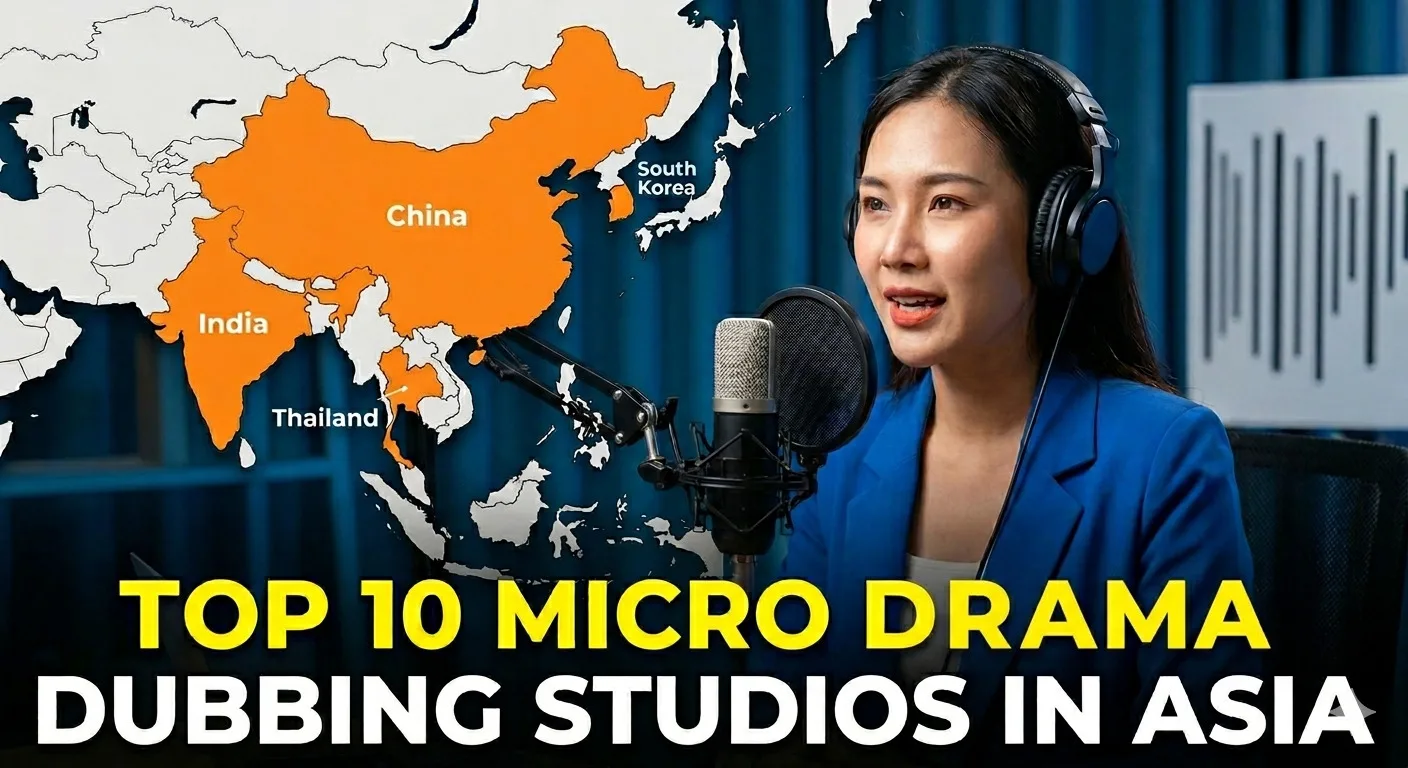
Top 10 Micro Drama Dubbing Studios in Asia
1. Sukudo Studios: India
A purpose-built specialist in short-form OTT localization, Sukudo Studios has developed deep expertise in India’s regional-language micro drama dubbing market. Its voice talent network spans Hindi, Tamil, Telugu, Bengali, Marathi, Malayalam, and Kannada, and its scalable workflows are built for the high-volume, fast-turnaround demands of micro drama production. For Indian and international platforms targeting South Asian audiences, Sukudo is a standout choice.
2. Iyuno: South Korea
One of Asia’s largest localization companies, Iyuno, has grown substantially on the back of the Korean Wave. Its AI-assisted micro drama dubbing workflows and 35-country network make it a powerful partner for platforms distributing Korean micro dramas across South and Southeast Asian markets.
3. Pixelogic Media: Asia-Pacific
Pixelogic brings cloud-based production infrastructure and end-to-end media services to OTT clients across the Asia-Pacific region. Its quality control processes meet the standards of tier-one streaming platforms, making it a reliable option for large-scale library localization.
4. Zoo Digital: Asia Division
Zoo Digital’s cloud-based dubbing platform enables simultaneous multi-territory releases, a critical capability for micro drama content with daily episode cadences. Its freelance-network model gives it access to diverse voice talent across 50-plus languages.
5. Visual Data Media Services
A well-established OTT localization partner with strengths in digital asset management and quality control. Visual Data handles the logistical complexity of dubbing hundreds of episodes across multiple language tracks simultaneously.
6. BTI Studios
BTI’s creative approach to voice casting, prioritising emotional authenticity over literal translation, aligns naturally with the character-driven storytelling of micro drama. The studio serves major streaming platforms across multiple Asian markets.
7. Voice & Script International
A specialist voice-over and dubbing studio with particular strength in lip-sync accuracy and linguistic nuance, making it well-suited to the tight pacing requirements of short-form drama episodes.
8. Main Frame Software Communications
Main Frame Software Communications brings a technology-forward approach to entertainment localization, combining software expertise with media production capabilities to deliver scalable dubbing solutions for OTT platforms across Asian markets.
9. Ezenhall Media Asia
A Southeast Asian specialist with a granular understanding of local cultural contexts across Thailand, Vietnam, Indonesia, and the Philippines. As micro drama platforms expand in the region, Ezenhall’s depth of regional expertise is difficult to replicate.
10. Bang Zoom! Asia Collaborations
Best known for anime dubbing, Bang Zoom Asia's collaboration network brings creative sensibility and technical precision to micro dramas with stylistic affinities to Japanese and Korean entertainment formats.
Key Trends in 2026
AI-assisted micro drama dubbing workflows are accelerating production timelines, but human quality control remains non-negotiable for emotional authenticity and cultural nuance. Regional-language expansion in India continues to outpace supply, with Tamil, Telugu, and Bengali dubbing growing in commercial importance. And as daily episode release schedules become standard, studios are investing in parallel production infrastructure to keep pace.
Conclusion
Micro drama dubbing is now foundational to how short-form content reaches audiences across Asia. The studios profiled here are providing the localization infrastructure that connects content with regional viewers at scale. As AI tools improve and regional-language demand deepens, the studios combining technological efficiency with genuine cultural expertise will define the next era of multilingual entertainment.