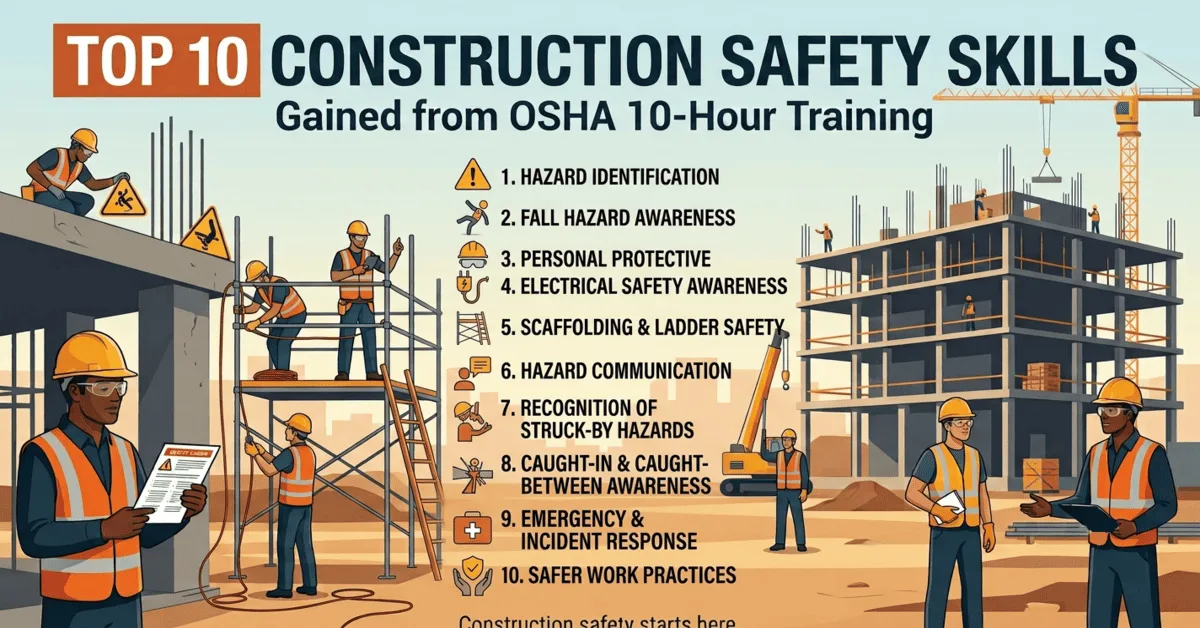
Construction sites involve changing conditions, heavy equipment, elevated work areas, electrical systems, tools, and multiple trades working together. Understanding how to recognize and control common hazards is therefore an important part of working safely. OSHA 10-Hour Construction Training provides foundational safety knowledge for workers who want to understand workplace hazards and safer work practices in the construction industry.
Rather than focusing only on rules, the training helps workers develop practical awareness that can be applied on a construction site. Here are ten important safety skills workers can develop through OSHA 10-Hour training.
1. Hazard Identification
One of the most useful skills learned in OSHA 10-hour training is recognizing potential hazards before they result in an incident. Workers learn to pay attention to unsafe conditions involving equipment, materials, work areas, and job-site activities.
2. Fall Hazard Awareness
Falls are a major concern in construction. OSHA construction safety training introduces workers to common fall hazards and the importance of appropriate protective measures when working at elevated locations, around openings, or on walking and working surfaces.
3. Personal Protective Equipment
Workers need to understand when and why personal protective equipment (PPE) is necessary. Training helps participants recognize common PPE requirements, including head, eye, hearing, hand, foot, and other forms of protection used for specific workplace hazards.
4. Electrical Safety Awareness
Construction workers may encounter temporary electrical systems, power tools, cords, and other electrical equipment. Basic electrical safety awareness helps workers recognize hazardous conditions and follow safer practices around electrical sources.
5. Scaffolding and Ladder Safety
Improper use of ladders and scaffolds can create serious risks. OSHA 10-hour construction training helps workers understand basic safe-use practices and recognize conditions that may make these work platforms unsafe.
6. Hazard Communication
Workers may encounter chemicals, cleaning products, fuels, and other hazardous substances. Hazard communication knowledge helps them understand labels, safety information, and the importance of knowing the hazards associated with workplace chemicals.
7. Recognition of Struck-By Hazards
Moving vehicles, falling materials, swinging equipment, and flying objects can create struck-by hazards. Workers develop greater awareness of these risks and the importance of maintaining safe positioning around construction activities.
8. Caught-In and Caught-Between Hazard Awareness
Construction activities can expose workers to machinery, trenches, equipment, and materials that create caught-in or caught-between hazards. Recognizing these situations helps workers make safer decisions before beginning or entering a work area.
9. Emergency and Incident Awareness
Workers benefit from understanding how to respond when an unsafe event occurs. OSHA 10-hour construction training introduces important concepts related to emergency procedures, reporting concerns, and responding appropriately to workplace incidents.
10. Safer Work Practices
Perhaps the most valuable outcome is developing a stronger safety mindset. Workers learn to identify hazards, communicate concerns, follow established procedures, and consider how their actions can affect coworkers. These practical OSHA 10 construction safety skills can support safer day-to-day work.
Why OSHA 10-Hour Training Matters for Construction Workers
The OSHA 10-hour construction course is designed to provide introductory safety education rather than replace employer-specific training, task-specific instruction, or legally required qualifications. Workers should apply the knowledge alongside their employer's safety procedures and site-specific requirements.
An online course can provide a convenient way to study construction safety topics and build foundational knowledge at your own pace. A structured course covering common construction hazards, safer work practices, and key OSHA safety topics can help learners develop practical safety awareness for construction workplaces. Explore the OSHA 10-Hour Construction Training course for convenient online learning.
Conclusion
The skills learned in OSHA 10-hour training can help construction workers become more aware of workplace hazards and safer work practices. From fall protection and PPE to electrical, scaffolding, hazard communication, and emergency awareness, these skills provide a practical foundation for recognizing risks on construction sites. Choosing an OSHA 10-hour construction course online can be a convenient way to develop this foundational safety knowledge and support a stronger safety culture at work.