Robotics is changing how businesses manufacture products, manage warehouses, transport goods, and perform complex industrial operations. From autonomous mobile robots to intelligent robotic arms, machines are becoming increasingly capable of understanding and interacting with their surroundings.
However, developing intelligent robots requires more than advanced hardware and sophisticated algorithms. These machines need large volumes of accurately labeled training data to recognize objects, understand spatial relationships, identify obstacles, and make decisions.
This is where 3D point cloud annotation services play an important role.
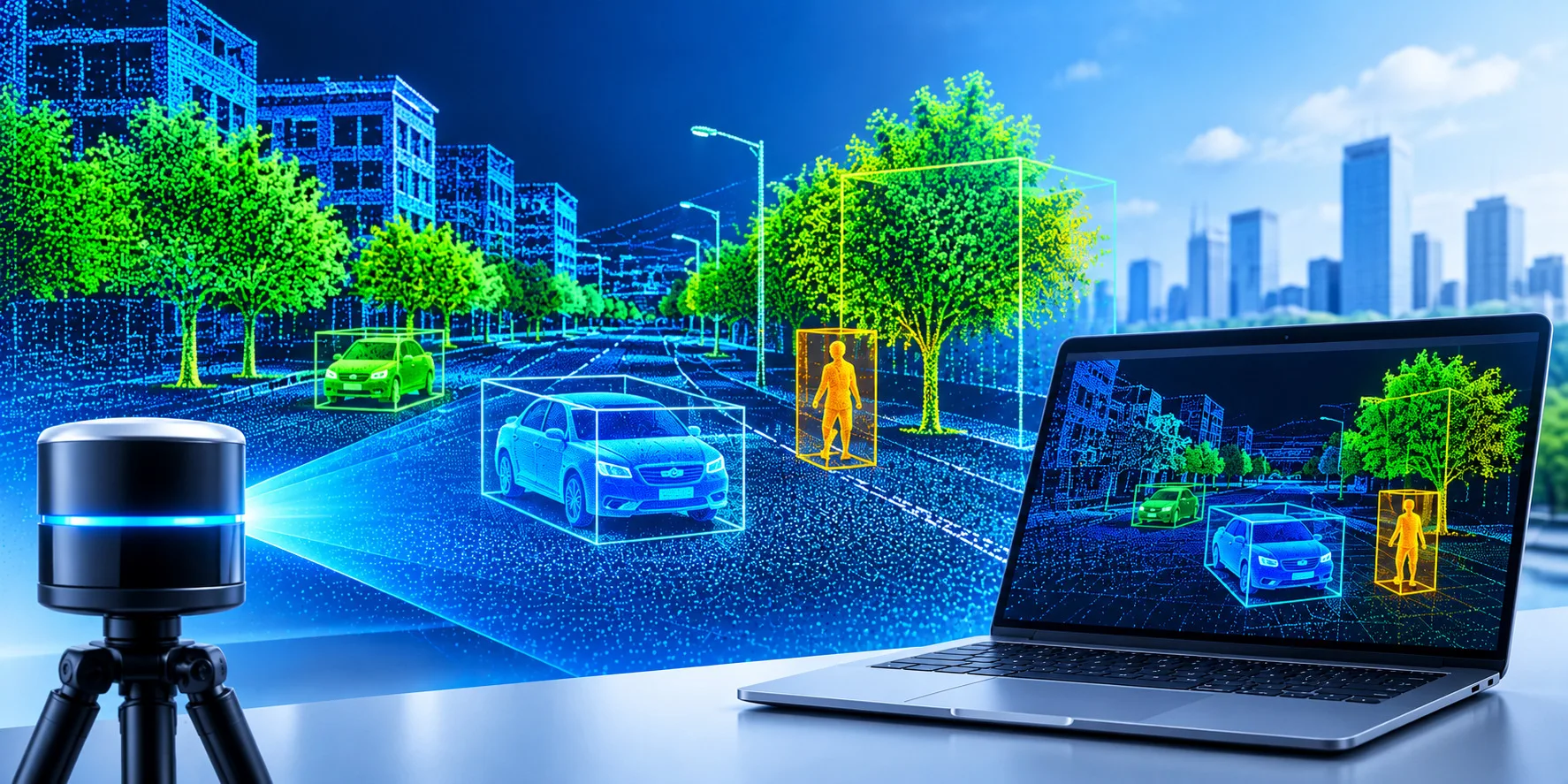
Technologies such as LiDAR and depth cameras capture detailed information about physical environments. However, the raw data generated by these sensors must be processed, classified, and labeled before machine learning models can use it effectively.
For example, a warehouse robot must distinguish between shelves, pallets, workers, forklifts, and other obstacles. Accurate 3D annotations help train its perception model to recognize these objects and understand their positions.
As robotics applications become more sophisticated, the demand for reliable 3D data annotation continues to grow.
Choosing the right annotation partner is therefore an important decision for robotics manufacturers, AI developers, autonomous technology companies, and computer vision teams.
Alongside 3D spatial data, image annotation is another important part of developing computer vision systems. Learn how to label images for computer vision to prepare visual datasets for object detection, classification, and recognition tasks.
Why Is 3D Point Cloud Annotation Important for Robotics?
Robots operate in dynamic environments and must accurately identify objects, obstacles, and surrounding structures. LiDAR sensors and depth cameras capture this information as 3D point clouds, but raw data lacks object classifications.
3D point cloud annotation adds labels, boundaries, and object identities, helping robotics systems improve object detection, obstacle avoidance, autonomous navigation, robotic manipulation, object tracking, and environmental mapping. Accurate annotation supports safer, more reliable robotic decisions
Different Types of 3D Point Cloud Annotation Services for Robotics
The most common 3D point cloud annotation services include:
- 3D Bounding Box Annotation: Places three dimensional cuboids around objects to capture their position, dimensions, orientation, and category. Used in object detection, warehouse automation, and autonomous navigation.
- Semantic Segmentation: Assigns predefined labels to individual points, such as floors, walls, machinery, shelves, and people. Supports environmental mapping and navigation.
- Instance Segmentation: Separates individual objects belonging to the same category. Helps robots identify specific pallets, packages, or components for picking and sorting.
- 3D Object Tracking: Maintains consistent object identities across consecutive frames. Supports movement prediction, collision avoidance, and human robot collaboration.
- Multi Sensor Fusion Annotation: Aligns data from LiDAR, RGB cameras, radar, and depth sensors to create comprehensive training datasets for robotic perception.
- 3D Keypoint and Pose Annotation: Identifies important object reference points, positions, and orientations. Supports robotic grasping, pose estimation, and manipulation.
Understanding these techniques is essential when preparing reliable robotics training datasets. Explore these 3D LiDAR Point Cloud Data Annotation concepts to understand the key considerations involved in building accurate spatial datasets.
Selecting the appropriate annotation technique helps robotics developers build more accurate perception models and improve real world operational performance.
Top 10 3D Point Cloud Annotation Service Providers for Robotics
The following companies offer different combinations of data annotation expertise, computer vision capabilities, AI infrastructure, and robotics related solutions.
1. HabileData
HabileData provides data annotation and AI training data solutions for businesses developing machine learning and computer vision applications.
Its capabilities support the preparation of labeled datasets across image, video, and specialized spatial data workflows. For robotics companies, these services can help organize and annotate 3D point cloud data for object recognition, environmental understanding, and autonomous perception.
Key strengths
- 3D bounding box and cuboid annotation
- LiDAR point cloud labeling
- Semantic and instance segmentation
- Multi frame object tracking
- Camera and LiDAR sensor fusion
- Customized annotation taxonomies
- Dataset validation and quality checks
Best suited for
Robotics developers and AI companies seeking outsourced annotation support for autonomous navigation, warehouse automation, robotic manipulation, and computer vision training. Businesses should evaluate relevant project experience, supported data formats, annotation accuracy, and quality assurance processes before selecting a provider.
2. Hitech BPO
Hitech BPO provides data annotation, image labeling, video annotation, and computer vision support for businesses developing artificial intelligence and machine learning applications.
Its capabilities cover multiple annotation techniques relevant to robotics, including 3D cuboids, LiDAR and radar labeling, semantic segmentation, and object tracking. These workflows help prepare structured training datasets for autonomous perception and industrial automation.
Key strengths
- 3D bounding box and cuboid annotation
- LiDAR point cloud annotation
- Radar and sensor data labeling
- Semantic segmentation
- Video annotation and object tracking
- Polygon and polyline annotation
- Image classification and object detection
Best suited for
Robotics developers and AI companies seeking managed annotation support for warehouse automation, industrial robotics, autonomous navigation, and object recognition. Businesses should confirm the provider's experience with their specific 3D data formats, sensor configurations, annotation requirements, and quality standards.
3. Appen
Appen provides AI training data, data collection, and annotation solutions for organizations developing machine learning and computer vision applications.
Its capabilities include LiDAR annotation and 3D sensor fusion, supporting projects that require structured training data from multiple sensor sources.
Key strengths
- LiDAR point cloud annotation
- 3D bounding box annotation
- Semantic and instance segmentation
- Camera and radar sensor fusion
- Object tracking across sequential frames
- High definition map annotation
- Environmental and infrastructure labeling
Best suited for
Organizations requiring large scale training data collection, distributed annotation operations, and multimodal datasets for autonomous perception and robotics applications.
4. Scale AI
Scale AI provides AI data infrastructure, annotation, evaluation, and model development solutions for organizations building advanced artificial intelligence systems.
Its Data Engine supports complex computer vision and 3D sensor data workflows. The company has also expanded its focus toward physical AI and robotics training data.
Key strengths
- LiDAR and 3D sensor data annotation
- 3D object detection and localization
- Multi sensor data workflows
- Robotics training data preparation
- Human feedback and model evaluation
- AI assisted data processing
- Physical AI data solutions
Best suited for
Enterprises developing advanced robotics and autonomous systems that require large scale training data infrastructure, model evaluation, and specialized physical AI workflows.
5. Sama
Sama provides AI data annotation solutions, including specialized 3D point cloud annotation for autonomous systems and computer vision applications.
Its workflows support spatial data labeling across LiDAR, radar, and other sensor sources. These capabilities help organizations prepare training datasets for complex perception systems.
Key strengths
- 3D point cloud annotation
- LiDAR and radar data labeling
- 3D cuboid annotation
- Multi sensor fusion
- 3D to 2D projection
- Ground detection
- Temporal object tracking
- Model assisted pre annotation
Best suited for
Robotics and autonomous systems developers seeking specialized 3D annotation, sensor fusion, and consistent labeling across sequential frames and multiple sensor sources.
6. Shaip
Shaip provides AI training data and annotation solutions across multiple data types, supporting organizations developing machine learning, computer vision, and physical AI applications.
Its broader multimodal data capabilities are relevant to robotics projects involving visual information, spatial data, human movement, and physical interactions.
Key strengths
- 3D bounding box annotation
- Point cloud semantic segmentation
- LiDAR and depth data annotation
- Camera and sensor fusion
- Robot trajectory annotation
- Human activity and pose estimation
- Manipulation and grasping data
- Vision language action data preparation
Best suited for
Businesses developing embodied AI and physical AI systems that require multimodal training datasets for warehouse robotics, industrial automation, robotic manipulation, and human robot collaboration.
7. Cogito Tech
Cogito Tech provides data labeling and annotation solutions for businesses developing machine learning and computer vision applications.
Its automotive annotation capabilities include 3D cuboids and point cloud labeling for LiDAR based perception systems. The company also supports image, video, and other annotation requirements.
Key strengths
- LiDAR point cloud labeling
- 3D cuboid annotation
- Object detection and classification
- Semantic segmentation
- Polygon and polyline annotation
- Image and video annotation
- Multimodal data labeling
Best suited for
Businesses seeking outsourced annotation support across computer vision and AI training data projects, including robotics applications involving object detection, environmental recognition, and spatial data labeling.
8. iMerit
iMerit provides specialized AI data annotation solutions through its Ango Hub annotation platform, supporting complex computer vision and multimodal perception workflows.
Its capabilities include LiDAR point cloud labeling, spatial object annotation, segmentation, tracking, and sensor alignment. These workflows are relevant to robotics developers working with synchronized camera and LiDAR datasets.
Key strengths
- 3D bounding box annotation
- LiDAR point cloud labeling
- Semantic and instance segmentation
- Automated cuboid placement
- Camera and LiDAR projection
- Multi sensor fusion
- Temporal interpolation
- Object tracking across sequential frames
Best suited for
Organizations managing complex perception datasets that require specialized 3D annotation, sensor alignment, temporal tracking, and structured quality management.
9. TELUS Digital
TELUS Digital provides AI data solutions for automotive and autonomous driving applications, including 2D and 3D annotation, sensor fusion, and high definition mapping workflows.
Its Ground Truth Studio supports point cloud annotation and connects 3D labels with corresponding 2D camera information, making it relevant to sensor intensive perception projects.
Key strengths
- 3D point cloud annotation
- 3D bounding boxes and smart cuboids
- Semantic segmentation
- LiDAR and camera sensor fusion
- Multi object tracking
- High definition map annotation
- 3D polylines and spatial data labeling
Best suited for
Enterprises developing robotics and autonomous perception systems that require large scale annotation operations, multi sensor data processing, and environmental mapping.
10. Annotation Box
Annotation Box provides data annotation and labeling solutions for machine learning and computer vision applications.
Its LiDAR and 3D point cloud annotation capabilities address the need to convert spatial sensor information into structured training datasets for object recognition and environmental perception.
Key strengths
- LiDAR point cloud annotation
- 3D bounding box labeling
- Object classification
- Semantic segmentation
- Vehicle and pedestrian detection
- Infrastructure and environmental labeling
- Dataset review and re annotation
Best suited for
Businesses seeking customized annotation workflows for LiDAR based perception, spatial object recognition, infrastructure detection, and other computer vision applications.
How to Choose the Right 3D Point Cloud Annotation Service Provider
Selecting a 3D point cloud annotation partner requires more than comparing pricing. Robotics companies should evaluate technical expertise, annotation quality, scalability, and compatibility with their development workflows.
Consider these seven factors before making a decision:
- LiDAR and Point Cloud Expertise: Check experience with different LiDAR sensors, point densities, sensor artifacts, and indoor or outdoor datasets.
- Annotation Accuracy: Evaluate 3D IoU, segmentation mIoU, tracking consistency, quality checks, and multi stage review processes. Request a pilot project to validate results.
- Multi Sensor Fusion: Confirm expertise in camera and LiDAR alignment, coordinate transformations, timestamp synchronization, and cross sensor object identification.
- Scalability: Assess the provider's ability to manage increasing data volumes, dedicated teams, recurring projects, and delivery schedules.
- Technology Compatibility: Verify support for formats such as KITTI, nuScenes, PCD, LAS, LAZ, PLY, ROS bag, and customized JSON schemas.
- Data Security: Review secure data transfer, access controls, confidentiality agreements, retention policies, and relevant security certifications.
- Industry Knowledge: Choose a partner familiar with your robotics application, whether warehouse automation, industrial robotics, autonomous navigation, or robotic manipulation.
The right provider should combine technical expertise, consistent quality, secure workflows, and scalable delivery to support your robotics development goals.
Key Applications of 3D Point Cloud Annotation Across Robotics Industries
3D point cloud annotation supports robotics applications that require accurate object recognition, spatial awareness, and autonomous navigation.
Key industry applications include:
- Autonomous Mobile Robots: Obstacle detection, environmental mapping, and navigation.
- Warehouse Automation: Package recognition, pallet detection, picking, and sorting.
- Industrial Robotic Arms: Object localization, pose estimation, and automated manipulation.
- Humanoid Robots: Human pose recognition, object identification, and physical interaction.
- Agricultural Robotics: Crop detection, terrain recognition, and autonomous harvesting.
- Delivery Robots: Pedestrian tracking and obstacle avoidance.
- Drones and UAVs: 3D mapping, infrastructure inspection, and object detection.
- Healthcare Robotics: Equipment recognition, spatial mapping, and robotic assistance.
Common Challenges in 3D Point Cloud Annotation for Robotics
Preparing reliable 3D training datasets involves several technical challenges that can affect annotation accuracy and consistency.
Key challenges include:
- Occlusion: Partially hidden objects make accurate labeling difficult.
- Sparse Point Clouds: Low point density can affect object boundary identification.
- Dynamic Environments: Tracking moving objects consistently across frames requires careful annotation.
- Sensor Calibration: Misaligned sensor data can create spatial inconsistencies.
- Complex Geometry: Irregular objects may require specialized segmentation techniques.
- Environmental Interference: Dust, weather, and reflective surfaces can introduce sensor noise.
- Inconsistent Guidelines: Different labeling interpretations can reduce dataset quality.
Detailed annotation guidelines, trained annotators, and multi stage quality checks help minimize these challenges.
Future Trends in 3D Point Cloud Annotation for Robotics
As robotics and physical AI evolve, annotation workflows are becoming more automated, multimodal, and sophisticated.
Key trends shaping the future include:
- AI Assisted Annotation: Machine learning models generate initial labels, while human annotators review and correct complex cases to improve efficiency.
- Physical AI and Vision Language Action Models: Robotics training increasingly requires datasets connecting visual information, natural language instructions, object positions, and physical actions.
- Synthetic Data Generation: Simulated environments help create additional training examples for different object positions, lighting conditions, and challenging scenarios.
- Advanced Sensor Fusion: Combining LiDAR, cameras, radar, and depth sensors provides richer environmental information, increasing the need for synchronized annotations.
- Automated Quality Validation: AI powered checks can identify missing labels, incorrect bounding boxes, tracking inconsistencies, and spatial alignment errors.
- Human in the Loop Validation: Combining automated pre labeling with specialist review helps maintain accuracy while reducing repetitive annotation work.
The future of robotics annotation will increasingly depend on intelligent automation, multimodal datasets, and human validated quality processes to support more capable and reliable robotic systems.
Conclusion
3D point cloud annotation is an essential component of modern robotics development.
It transforms raw LiDAR and spatial sensor information into structured training datasets that help machines recognize objects, understand environments, and make informed decisions.
However, choosing the right annotation partner requires more than comparing service lists.
Businesses should evaluate technical expertise, sensor compatibility, annotation accuracy, quality assurance, scalability, data security, and experience with their specific robotics applications.
The right partner ultimately depends on the robotics application, dataset complexity, technology requirements, and production goals.
Looking for reliable 3D point cloud annotation support for your robotics AI project?
Explore customized annotation workflows, discuss your dataset requirements, and evaluate a pilot project before scaling your robotics AI training operations.
FAQ
1. What is 3D point cloud annotation in robotics?
It is the process of labeling LiDAR and spatial sensor data to identify objects, boundaries, dimensions, and positions for robotics AI training.
2. Why is LiDAR annotation important for robotics?
It helps robots detect obstacles, recognize objects, estimate distances, and navigate their surroundings safely.
3. What are the main types of 3D point cloud annotation?
Common techniques include 3D bounding boxes, semantic segmentation, instance segmentation, object tracking, keypoint annotation, and sensor fusion.
4. How much do 3D point cloud annotation services cost?
Costs depend on dataset complexity, annotation techniques, point density, quality requirements, and project volume.
5. How do businesses choose a 3D annotation provider?
Evaluate LiDAR expertise, annotation accuracy, sensor compatibility, quality assurance, scalability, data security, and delivery timelines.