
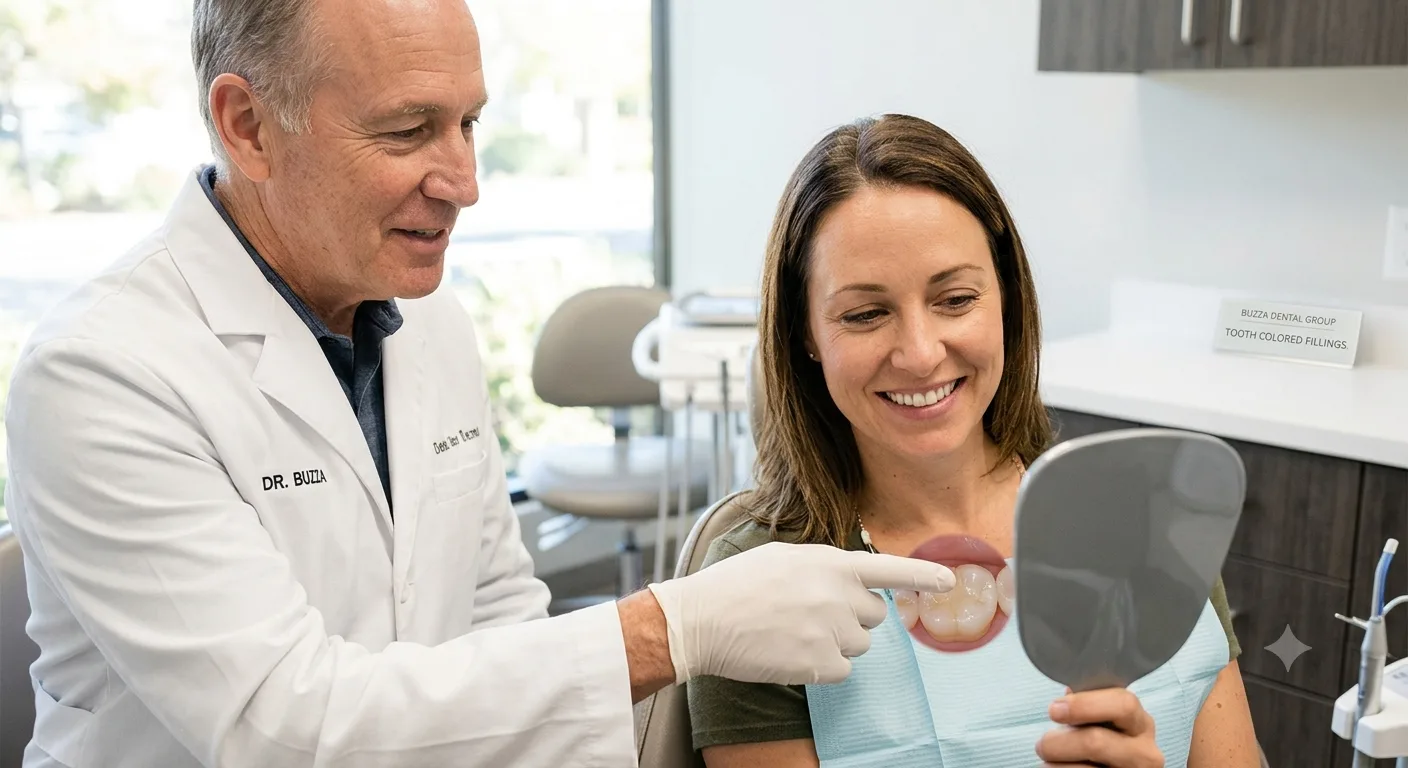
A small cavity can be easy to overlook, especially when it does not cause pain. You might notice a brief sting when drinking cold water or find that food keeps getting trapped in the same spot. These signs are worth checking before the problem becomes more extensive. For patients researching tooth colored fillings in Santa Rosa, CA, composite fillings offer a way to repair many cavities while keeping dental work close to the natural appearance of a tooth.
These fillings are designed to restore damaged areas without the noticeable metallic finish of traditional silver restorations. However, appearance is only one part of the decision. The location of the cavity, the amount of healthy tooth remaining, and your bite all matter when choosing a suitable filling.
What Makes Tooth Colored Fillings Santa Rosa CA a Popular Choice?
Tooth-colored fillings are generally made from composite resin, a material containing resin and fine glass particles. The dentist selects a shade that blends with the surrounding teeth, making the finished restoration less noticeable.
One advantage of composite resin is that it bonds to prepared tooth structure. Depending on the cavity, this can help preserve healthy tissue while restoring the tooth's shape and function.
Patients may consider these fillings for several reasons:
- Natural appearance: The shade can be matched to nearby teeth.
- Versatility: Composite resin can repair many cavities and certain minor chips.
- Conservative preparation: Some restorations can be completed while retaining more healthy tooth structure.
- Convenience: Many routine fillings can be placed in one appointment.
Composite resin is not the best option for every damaged tooth. Large cavities and teeth exposed to heavy chewing forces may need a different restoration. A dental examination helps determine which material is appropriate.
Are Tooth Colored Fillings Santa Rosa CA Right for Every Cavity?
Not necessarily. A small cavity on a visible tooth may be suitable for a composite filling, while a badly damaged back tooth might need additional support.
For instance, if decay has affected only a limited area, a filling may restore the tooth without requiring a larger restoration. If much of the tooth structure is missing, a crown may be more appropriate. Your dentist can explain the benefits and limitations of each option before treatment begins.
How Does the Dental Filling Procedure Work?
Knowing what will happen during an appointment can make treatment less intimidating, particularly if you have not had a filling before.
The dentist first examines the tooth and may recommend an X-ray when necessary. If a cavity needs treatment, the affected tissue is removed and the area is cleaned. Local anesthesia may be used to reduce discomfort.
The composite material is then placed into the prepared space, usually in layers. A special curing light hardens the resin, allowing the dentist to shape it to match the tooth. Finally, the restoration is polished and the bite is checked.
Most straightforward fillings can be completed during a single visit. Temporary sensitivity may occur afterward, but pain that persists or worsens should be evaluated by a dental professional.
How Do Fillings Compare With Veneers and Crowns?
Fillings repair cavities and certain areas of minor damage. Veneers and crowns serve different purposes, so understanding the distinction can help you ask more informed questions during a dental consultation.
When Are Porcelain Veneers Santa Rosa Patients Consider?
Porcelain veneers are thin ceramic shells attached to the front surfaces of selected teeth. They are primarily used to improve appearance, including certain discoloration, minor chips, uneven shapes, and gaps.
People researching porcelain veneers Santa Rosa or porcelain veneers Santa Rosa CA may be looking for cosmetic improvements rather than cavity treatment. Santa Rosa porcelain veneers may be an option when the teeth are suitable and appearance is the main concern.
Veneers do not treat active decay. Any underlying dental problems should be addressed before elective cosmetic treatment.
When Are Dental Crowns Santa Rosa Patients Recommended?
A dental crown covers the visible portion of a tooth, helping restore its shape, strength, and function. A dentist may recommend one when extensive decay, a fracture, or a large existing filling has weakened the tooth.
When comparing dental crowns Santa Rosa with fillings, the amount of healthy tooth structure remaining is an important consideration. Santa Rosa dental crowns may provide greater coverage when a conventional filling would not adequately support the tooth.
Crowns generally require more extensive tooth preparation than fillings. Your dentist can discuss the advantages, costs, and expected maintenance of each treatment.
How Can You Protect Your Filling After Treatment?
A filling repairs existing damage, but the surrounding tooth can still develop decay. Daily care and regular dental visits help protect both the restoration and the remaining natural tooth.
Try to follow these practical habits:
- Brush twice daily with fluoride toothpaste.
- Clean between your teeth every day.
- Limit frequent sugary snacks and drinks.
- Avoid chewing ice or biting hard objects.
- Attend regular dental examinations.
- Arrange an appointment if a filling cracks, feels loose, or causes ongoing discomfort.
Fillings can last for years, but their lifespan varies according to their material, size, location, and the pressure placed on them. Routine examinations allow your dentist to monitor their condition.
Where Can You Learn More About Tooth-Colored Fillings?
Choosing a filling should involve more than selecting a shade. You should understand why the tooth needs treatment, what material is being recommended, and whether another restoration might be more suitable.
Buzza Dental Group provides dental care in Santa Rosa, including restorative treatments for damaged teeth. Patients can discuss their concerns with the dental team and learn about available options based on their individual needs.
If you have noticed sensitivity, a visible cavity, or a damaged filling, arranging an examination is a sensible first step. Early evaluation may help identify problems before more extensive treatment becomes necessary.
Frequently Asked Questions
1. How long do tooth-colored fillings last?
They can last for several years. Their lifespan depends on the size and location of the filling, chewing pressure, and oral hygiene.
2. Do composite fillings look natural?
Yes. Composite resin comes in different shades, allowing the dentist to match the restoration to the surrounding teeth.
3. Are tooth-colored fillings suitable for back teeth?
They can be used for many back teeth, but the cavity's size and chewing forces must be considered.
4. Can a filling cause sensitivity?
Some temporary sensitivity is possible after treatment. Contact your dentist if discomfort persists, worsens, or occurs when biting.
5. How can I prevent another cavity?
Brush twice daily with fluoride toothpaste, clean between your teeth, reduce frequent sugar consumption, and attend regular dental checkups.