
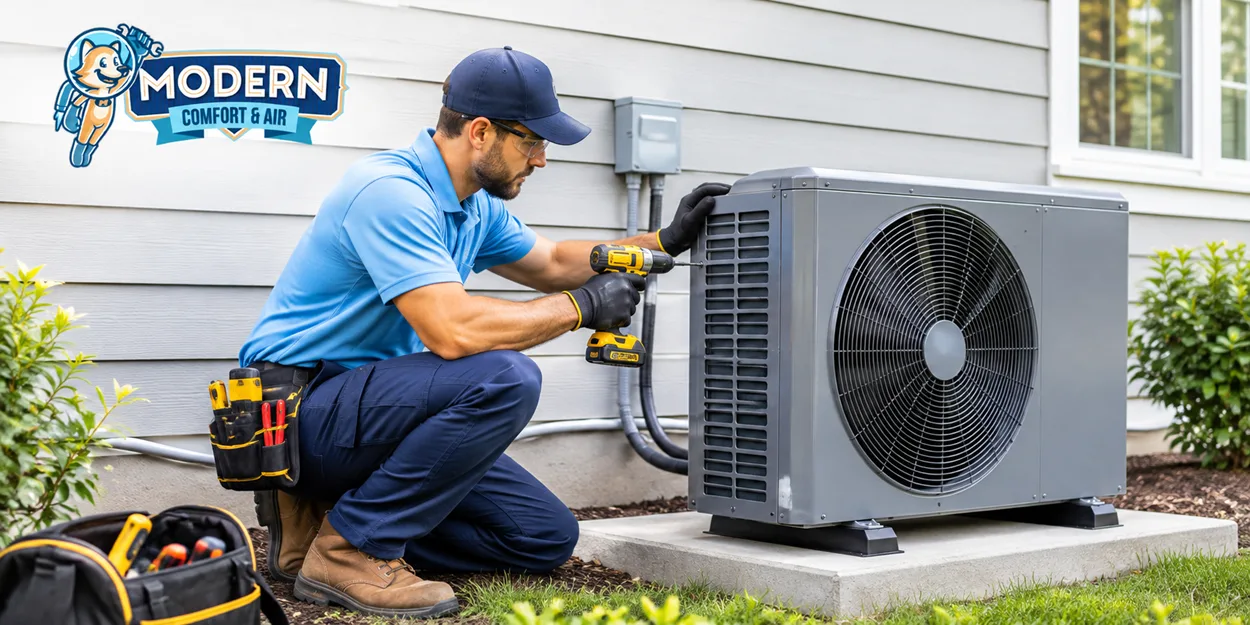
Installing a heat pump is a significant investment in your home's comfort and energy efficiency. However, the system's performance depends heavily on the quality of its installation. Incorrect sizing, poor ductwork, or improper refrigerant charging can reduce efficiency and lead to recurring problems.
In Riverside, CA, where summers are particularly hot and winters can get chilly, choosing an experienced HVAC contractor is essential. Before hiring someone, evaluate their qualifications, installation experience, and approach to the job. Here are the key factors to consider.
What Should You Look for in a Heat Pump Installation Contractor?
Choosing a qualified contractor involves more than comparing prices. Evaluate their technical expertise, licensing, installation process, and after-sales support before making a decision.
1. Verify Licensing and Insurance
Start by confirming that the contractor holds an appropriate California HVAC license. For residential heat pump installations, look for a valid C-20 (Warm-Air Heating, Ventilating, and Air-Conditioning) classification issued by the Contractors State License Board (CSLB).
Also, check that the contractor has appropriate general liability insurance and workers' compensation coverage where applicable. Verify the license status independently rather than relying solely on the company's claims.
2. Check Their Experience With Heat Pumps
Heat pumps require specific installation knowledge because they provide both heating and cooling through a reversible refrigeration cycle.
Ask contractors about their experience with different heat pump configurations, including ducted, ductless, and variable-speed systems. They should understand refrigerant requirements, airflow, electrical connections, and manufacturer installation specifications.
Experience with conventional air conditioners alone does not necessarily demonstrate expertise in heat pump installation.
3. Ask for a Proper Load Calculation
The contractor should determine your home's heating and cooling requirements before recommending equipment. A professional Manual J load calculation considers factors such as:
- Home size, ceiling height, and layout.
- Insulation and air leakage.
- Window placement and exposure.
- Occupancy and internal heat sources.
- Local outdoor design temperatures.
An oversized system may cycle too frequently, while an undersized unit may struggle during extreme temperatures. Avoid contractors who recommend equipment based only on square footage.
4. Evaluate Existing Ductwork and Electrical Requirements
If you are replacing an existing HVAC system, the contractor should inspect your ductwork and electrical infrastructure before installation.
Leaky ducts, restricted airflow, and inadequate insulation can affect system performance. Similarly, the existing electrical circuit and panel must be suitable for the selected heat pump.
Ask whether duct sealing, modifications, additional circuits, or electrical panel upgrades will be necessary. Identifying these requirements early helps prevent unexpected costs.
5. Compare Detailed Written Estimates
Request written estimates from multiple contractors before committing. A professional quote should specify:
- Equipment manufacturer, model, and capacity.
- Applicable SEER2 and HSPF2 efficiency ratings.
- Indoor and outdoor unit specifications.
- Thermostat and control requirements.
- Ductwork and electrical modifications.
- Labor, permit fees, and additional charges.
- Equipment and workmanship warranties.
When comparing Heat Pump Installation Riverside CA estimates, do not automatically choose the lowest price. An unusually cheap quote may exclude important installation work or necessary modifications.
6. Confirm Permit and Inspection Requirements

Heat pump installations generally require permits through the appropriate local building department. Depending on your property's location, this may be the City of Riverside or Riverside County.
Ask whether the contractor will obtain the necessary permits and coordinate inspections. California energy standards may also require HERS verification for certain installations, depending on the scope of work and applicable requirements.
Proper permitting and inspections help ensure that the installation complies with relevant building, electrical, mechanical, and energy codes.
7. Understand Warranty and Maintenance Support
Before signing a contract, understand the manufacturer's equipment warranty and the contractor's labor warranty. These are separate forms of coverage.
Ask about warranty duration, registration requirements, exclusions, and how service requests are handled.
Also, check whether the company provides ongoing Heat Pump Service in Riverside. Routine maintenance, including filter replacement, coil cleaning, airflow checks, and electrical inspections, helps maintain reliable operation and identify potential problems early.
8. Read Customer Reviews and Check References
Customer reviews can provide useful insight into a contractor's installation quality, communication, pricing transparency, and after-sales support.
Look for consistent feedback rather than relying on individual ratings. You can also request references from homeowners who have recently installed similar systems.
Be cautious of contractors who pressure you into signing immediately, avoid technical questions, provide vague estimates, or promise guaranteed reductions in energy bills.
Final Note
The right contractor should prioritize accurate system sizing, proper installation, code compliance, and long-term performance rather than simply selling equipment. Compare multiple estimates, verify credentials, and ensure every part of the proposed work is clearly explained.
If you are considering a heat pump upgrade, Modern Comfort & Air can help you explore professional HVAC installation Riverside solutions. Contact their team to discuss your home's heating and cooling requirements and find an installation option suited to your comfort needs.