Understand the real causes of early heater failure and the habits that help Indian manufacturing plants get longer, steadier service from their heating equipment.
Walk through any factory floor in Bangalore and you will find a drawer, a shelf, or a corner of the stores room filled with burnt-out heaters. Nobody planned to keep them. They stay because nobody has found time to ask why they failed. Yet those failed parts hold some of the most useful information a maintenance team can get about its own process.
This article looks at heater failure from a maintenance point of view. If your plant depends on industrial electric heating elements, a few changes in habit can add months, sometimes years, to their working life.
The Real Cost of an Ordinary Failure
The price of a replacement heater is usually small. The cost around it is not. A stopped line, a batch held back, an overtime shift, and an urgent call to a supplier all add up. In plants running tight delivery schedules, one failed heater can disturb an entire day’s plan.
Because the part itself is cheap, many teams treat each failure as bad luck and fit a new one. The same failure then returns after a few weeks. Repeated failures are rarely bad luck. They are a signal that something in the application is wrong.
Reading a Failed Heater
A burnt element can tell you what went wrong if you look at it before discarding it. Some common signs:
- A blistered or bulging sheath usually points to overheating, often from watt density that is too high for the medium or from the heater running without contact with the material.
- Discoloured or brittle terminals suggest heat travelling back along the leads, or a loose connection creating resistance.
- White or brown crust on an immersion heater means scale or sludge has formed and is trapping heat against the sheath.
- A split or cracked sheath with corrosion marks indicates the sheath material did not suit the chemical environment.
- Failure at the same spot every time often points to a mounting issue, a hot spot, or poor contact with the surface being heated.
Keeping a short log of these observations, with the machine name and date, helps a team spot patterns that a single failure would never reveal.
Habits That Quietly Shorten Heater Life
Most plants do not damage heaters on purpose. The damage comes from small routines that nobody questions.
Running heaters dry. In tanks, a falling liquid level can expose the element while it is still powered. Even a few minutes can ruin it. A simple level switch costs far less than repeated replacements.
Ignoring loose terminals. Vibration on moulding and packaging machines slowly loosens connections. A loose terminal heats up, damages insulation, and eventually fails. A quick tightening check during routine maintenance prevents this.
Skipping cleaning schedules. Scale on a heater acts like a blanket. The element has to work harder and runs hotter to deliver the same heat to the process.
Swapping in “close enough” replacements. A heater with a slightly different wattage or sheath may fit physically but behave very differently under load.
Ignoring the controller. An old thermostat with a wide swing makes the heater switch on and off more aggressively than needed, which ages the resistance wire faster.
Heating and the Power Bill
Efficiency is often discussed in terms of machines and motors, but heating loads deserve the same attention. A heater that is too large for the job cycles frequently. One that is too small runs continuously and still struggles to reach temperature. Both waste power.
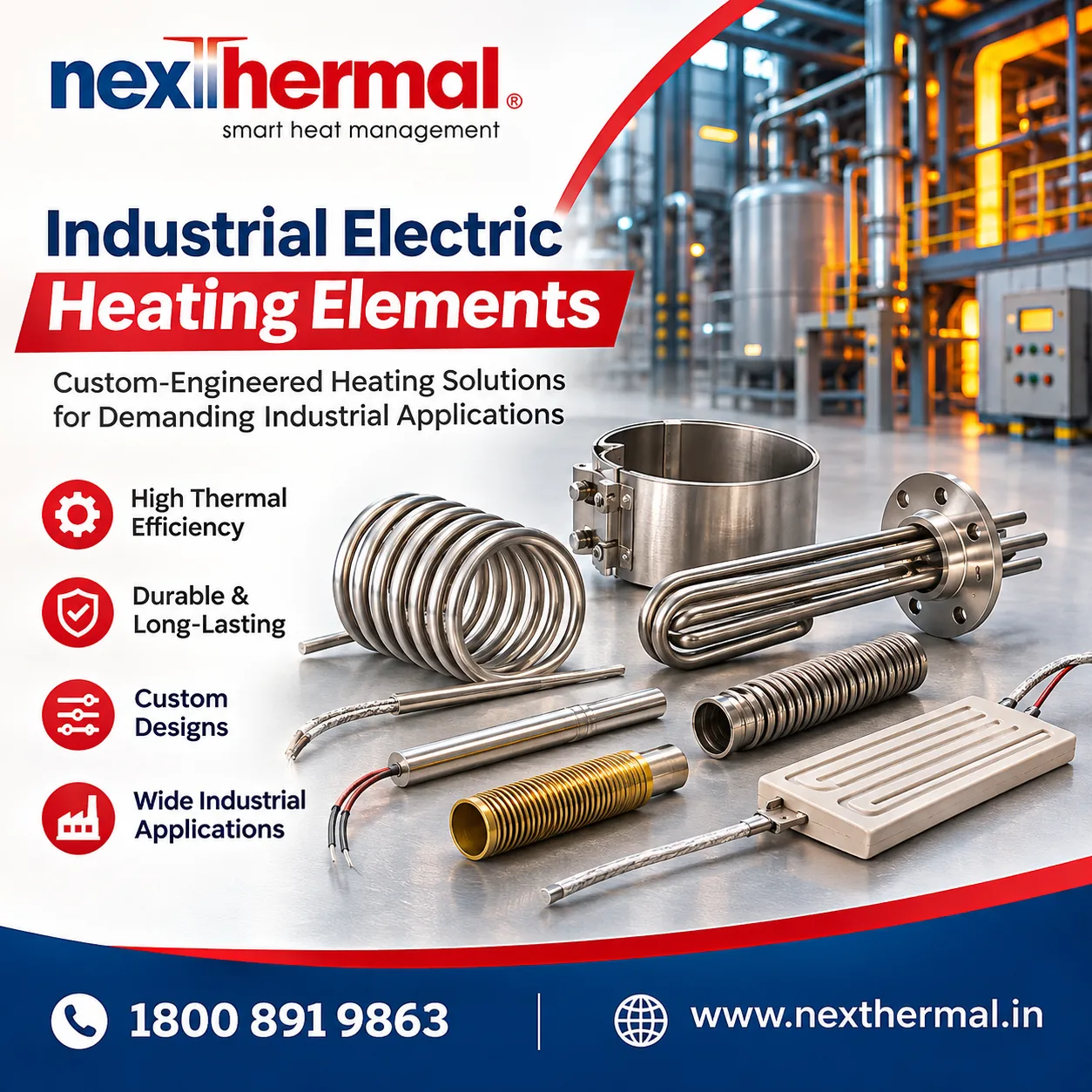
Good insulation around heated surfaces, correct sensor placement, and a properly sized controller can reduce consumption noticeably without touching the heater itself. When these are combined with well-matched industrial electric heating elements, plants often see steadier temperatures and a smaller electricity bill at the same time.
A practical test is to measure how long your machine takes to reach set temperature, then track that figure over several months. If the time keeps growing, something is degrading, whether it is the heater, the contact, the insulation, or the sensor.
When Replacement Stops Making Sense
There is a point where fitting another identical part is no longer the sensible choice. If the same heater has failed three times on one machine, the specification itself is probably wrong for the application. This is where custom electric heating elements become practical. A heater designed around the actual medium, temperature, space, and mounting method can correct problems that a catalogue part never will.
Custom does not have to mean expensive or slow. Often it means adjusting the watt density, changing the sheath material, relocating the terminals, or reshaping the heater to sit properly against the surface. A drawing, a failed sample, and the operating conditions are usually enough to start the conversation.
Choosing the Right Supply Partner
A heater is only as dependable as the thinking behind it. When you assess an electric heating elements manufacturer, pay attention to how they respond to your first enquiry. A useful partner asks about your process, the medium, the duty cycle, and the failure history before quoting. A supplier who simply asks for a part number is selling a product, not solving a problem.
Look also for willingness to explain their recommendations in plain language, to test products before dispatch, and to support you after delivery. Plant teams value that kind of steady, practical relationship far more than a small difference in unit price.
Industry Perspective
Indian manufacturing is moving toward tighter schedules, higher quality expectations, and closer attention to energy use. Heating, long treated as a background utility, is getting more attention for good reason. Plants that document their heater specifications, study their failures, and match their heating and control equipment carefully are the ones that run with fewer surprises.
Nexthermal has worked with Indian manufacturers since 2003, supplying heating elements, controllers, and complete heating solutions built around real production needs. To learn more about the team and its approach, visit the About Us page. If you have a recurring heater problem or a machine that needs a purpose-built solution, you can reach the team through the Contact pag
Call toll-free: 1800 891 9863
Visit Our Website: https://www.nexthermal.in/
Request a quote: https://www.nexthermal.in/contact/
Product Page: https://www.nexthermal.in/cartridge-heater/
Connect With Us
Facebook: https://www.facebook.com/nexthermal.usa/
Instagram: https://www.instagram.com/nexthermal/
YouTube: https://www.youtube.com/@nexthermal
Pinterest: https://in.pinterest.com/nexthermal/