Your HVAC (Heating, Ventilation, and Air Conditioning) system is one of the most valuable investments in your home or commercial property. It keeps indoor spaces comfortable throughout the year while maintaining healthy air quality and energy efficiency. However, without regular maintenance, even the most advanced HVAC systems can lose performance, consume more electricity, and require costly repairs.
A well-planned seasonal HVAC maintenance routine helps improve system efficiency, extends equipment lifespan, lowers energy bills, and reduces the risk of unexpected breakdowns. Whether you're a homeowner, business owner, or facility manager, following a year-round HVAC maintenance checklist is the key to keeping your heating and cooling system operating at peak performance.
This guide covers everything you need to know about maintaining your HVAC system during every season.
1. How to Improve HVAC Efficiency
Improving HVAC efficiency is essential for reducing operating costs and ensuring consistent indoor comfort. A properly maintained HVAC system consumes less energy while delivering better cooling and heating performance.
Here are some proven practices for increasing HVAC efficiency:
• Every one to three months, replace or clean the air filters.
• Keep outdoor condenser units free from dirt, leaves, and debris.
• Clean air vents and ductwork regularly.
• Seal air leaks around windows and doors.
• Install a programmable or smart thermostat.
• Keep refrigerant levels properly balanced.
• Ensure proper airflow throughout the building.
These preventive measures can significantly increase system performance while lowering electricity consumption.
2. Benefits of Seasonal HVAC Maintenance
Routine HVAC maintenance offers more than just reliable heating and cooling. It provides long-term financial savings and helps prevent major equipment failures.
Some of the key benefits include:
• Improved energy efficiency
• Lower monthly utility bills
• Longer HVAC system lifespan
• Better indoor air quality
• Reduced repair and maintenance costs
• Consistent indoor comfort
• Enhanced safety for heating systems
• Increased equipment reliability
Seasonal inspections also allow technicians to identify worn components before they develop into expensive repairs, helping property owners avoid unexpected downtime.
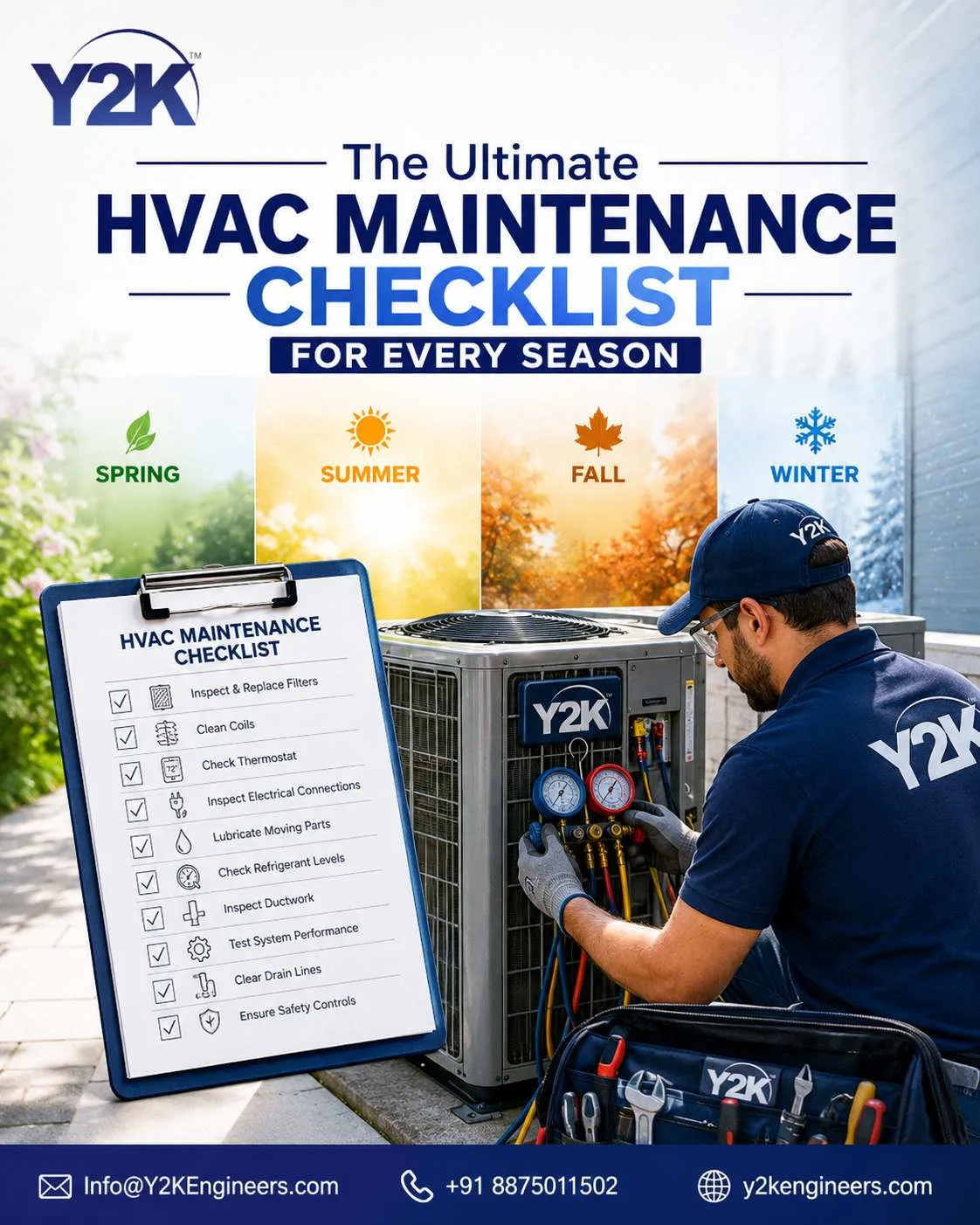
3. Spring HVAC Maintenance Checklist
Spring is the ideal time to prepare your air conditioning system before the summer heat arrives.
Spring Maintenance Tasks
• Replace dirty HVAC air filters.
• Clean evaporator and condenser coils.
• Remove debris around the outdoor AC unit.
• Inspect refrigerant lines for leaks.
• Test thermostat settings.
• Check condensate drain lines.
• Inspect electrical connections.
• Lubricate moving components.
• Examine ductwork for leaks.
• Schedule a professional HVAC tune-up.
Completing these tasks before peak cooling season ensures your air conditioner delivers maximum performance while minimizing energy usage.
4. Summer AC Maintenance Tips
Summer places the greatest demand on your air conditioning system. Regular maintenance helps prevent sudden breakdowns during extremely hot weather.
Essential Summer AC Tips
• Keep the outdoor condenser unit clean.
• Change air filters regularly.
• Avoid blocking indoor vents with furniture.
• Maintain consistent thermostat temperatures.
• Monitor unusual noises or vibrations.
• Check for weak airflow.
• Inspect insulation around refrigerant lines.
• Keep indoor humidity under control.
• Schedule emergency repairs immediately if cooling performance declines.
During the hottest months of the year, a well-functioning air conditioning system not only increases comfort but also uses less energy.
5. Fall HVAC Preparation Guide
getting your heating system ready becomes necessary as the weather starts to drop.
Fall Maintenance Checklist
• Replace HVAC filters.
• Clean heating vents.
• Inspect furnace burners.
• Test ignition systems.
• Check heat exchanger condition.
• Verify thermostat calibration.
• Inspect duct insulation.
•Tighten electrical connections.
• Clean blower assembly.
• Schedule a professional heating inspection.
Preparing your HVAC system in autumn helps ensure reliable heating performance throughout winter while reducing the likelihood of emergency repairs.
6. Winter Heating System Checklist
During winter, your heating equipment works continuously to maintain indoor comfort. Routine inspections help maximize performance and improve safety.
Winter HVAC Checklist
•Test carbon monoxide detectors.
• Inspect furnace airflow.
• Keep air vents unobstructed.
• Monitor heating efficiency.
• Check gas connections for safety.
• Inspect heat pumps for ice buildup.
• Replace clogged air filters.
• Listen for unusual furnace sounds.
• Maintain recommended indoor humidity levels.
• Schedule immediate service if heating performance decreases.
A well-maintained heating system provides dependable warmth while helping reduce fuel and electricity costs throughout the cold season.
Possible Signs Your HVAC System Needs Expert Assistance
Even with regular maintenance, HVAC systems may develop issues over time. Contact a professional technician if you notice:
• Rising electricity bills
• Uneven room temperatures
• Weak airflow
• Strange doors
• Loud or unusual noises
• Frequent system cycling
• Water leakage
• Poor indoor air quality
• Thermostat malfunctions
• Inadequate cooling or heating
Ignoring these warning signs can lead to more expensive repairs and shorter equipment life.
Why Choose Y2K Engineers?
Choosing the right HVAC service provider is just as important as maintaining your equipment. At Y2K Engineers, we are committed to delivering reliable, energy-efficient, and cost-effective HVAC solutions for residential, commercial, and industrial clients.
Our Expertise Includes
• HVAC Installation
• Air Conditioning Services
• Commercial HVAC Solutions
• Preventive HVAC Maintenance
• HVAC Repair and Troubleshooting
• Ventilation System Installation
• Refrigeration Services
• Energy-Efficient HVAC Upgrades
• Annual Maintenance Contracts (AMC)
• Emergency HVAC Support
Our experienced engineers use industry-leading practices and advanced diagnostic tools to ensure every HVAC system operates safely and efficiently. We focus on preventive maintenance, quality workmanship, and customer satisfaction, helping businesses and homeowners achieve long-term performance while reducing operational costs.
Whether you require a new HVAC installation, seasonal maintenance, emergency repairs, or energy-efficient system upgrades, Y2K Engineers delivers dependable solutions tailored to your specific needs.
Final Thoughts
Regular HVAC maintenance is the foundation of a reliable, energy-efficient, and long-lasting heating and cooling system. By following a seasonal maintenance checklist, property owners can reduce repair costs, improve indoor air quality, enhance comfort, and maximize equipment lifespan.
Investing in professional HVAC maintenance today can save significant time and money in the future. If you want your HVAC system to perform at its best throughout every season, trust the experienced professionals at Y2K Engineers for expert installation, preventive maintenance, and comprehensive HVAC services designed to keep your home or business comfortable all year round.