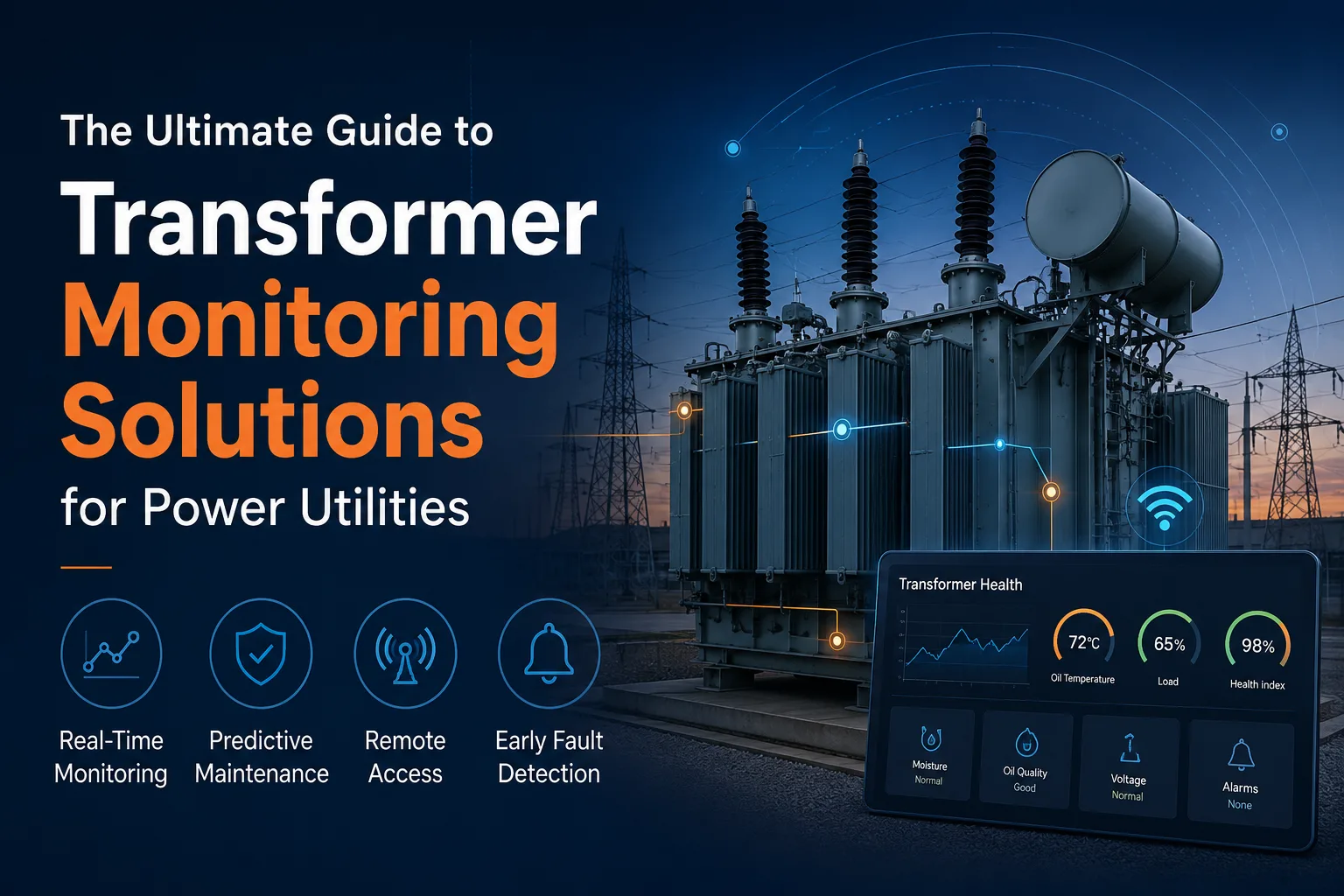
Modern power utilities rely on transformers to deliver safe, stable, and efficient electricity across residential, commercial, and industrial networks. These critical assets operate around the clock, often under demanding environmental and electrical conditions. Even a minor transformer fault can lead to costly outages, unexpected repairs, and disruptions to the power supply. That's why investing in reliable Transformer Monitoring Solutions has become a priority for utilities looking to improve asset reliability and reduce maintenance costs.
Instead of relying on scheduled inspections alone, today's utilities use advanced transformer monitoring systems to continuously assess transformer health, identify potential issues early, and make informed maintenance decisions. Combined with modern analytics and remote monitoring, these solutions help extend equipment life while improving overall network performance.
In this guide, we'll explore how transformer monitoring works, why it matters, and the technologies that help utilities protect some of their most valuable electrical assets.
What Are Transformer Monitoring Solutions?
Transformer Monitoring Solutions are intelligent systems that continuously collect, record, and analyse data from power transformers. Their primary purpose is to monitor operating conditions, detect abnormalities, and provide early warnings before small issues develop into major failures.
Rather than relying solely on routine inspections, utilities can monitor transformer performance in real time using sensors, communication modules, and cloud-based software. This allows maintenance teams to identify trends, respond quickly to changing conditions, and improve asset management.
Modern transformer monitoring systems typically monitor:
- Transformer load
- Voltage and current
- Oil and winding temperature
- Moisture levels
- Power quality events
- Environmental conditions
- Alarm notifications
With continuous access to operational data, utilities gain greater visibility into transformer performance without needing frequent site visits.
Why Transformer Monitoring Matters for Power Utilities
Power utilities manage hundreds or even thousands of transformers spread across large service areas. Monitoring each asset manually is time-consuming and often impractical. At the same time, ageing infrastructure, growing electricity demand, and increasingly complex power networks place greater stress on transformers than ever before.
Continuous transformer monitoring helps utilities move from reactive maintenance to proactive asset management.
Some of the biggest benefits include:
Early Fault Detection
Small changes in temperature, loading, or insulation condition can indicate developing problems. Detecting these warning signs early allows maintenance teams to intervene before equipment failure occurs.
Improved Asset Reliability
Reliable monitoring helps ensure transformers continue operating within safe limits, reducing the likelihood of unexpected outages and improving network stability.
Reduced Maintenance Costs
Instead of replacing components based on fixed maintenance schedules, utilities can make decisions using real operating data. This condition-based approach often reduces unnecessary maintenance while extending equipment life.
Better Operational Planning
Continuous monitoring provides valuable historical information that supports maintenance scheduling, budgeting, and long-term asset replacement planning.
Key Components of a Modern Transformer Monitoring System
Modern monitoring systems combine multiple technologies to provide a complete picture of transformer health. Each component contributes valuable operational data that helps engineers understand how equipment performs under different conditions.
Temperature Monitoring
Temperature is one of the most important indicators of transformer health. High operating temperatures accelerate insulation ageing and reduce transformer lifespan.
Monitoring systems continuously track:
- Oil temperature
- Winding temperature
- Ambient temperature
Real-time temperature monitoring allows operators to respond before overheating causes permanent damage.
Load Monitoring
Monitoring transformer load helps utilities understand how equipment performs during normal operation and peak demand periods.
Continuous load analysis can reveal:
- Overloading
- Unbalanced loads
- Capacity utilisation
- Peak demand trends
This information supports better network planning and transformer sizing.
Moisture Monitoring
Moisture inside transformer insulation significantly reduces dielectric strength and accelerates insulation deterioration.
Continuous moisture monitoring enables utilities to detect insulation issues early and take corrective action before reliability is affected.
Power Quality Monitoring
Electrical disturbances such as harmonics, voltage fluctuations, and transients can place additional stress on transformers.
A high-quality power quality analyzer helps engineers identify these disturbances, understand their impact, and improve overall network performance. By analysing power quality alongside transformer operating data, utilities gain a more complete understanding of asset health.
The Role of Energy Data Logging
Collecting data is only valuable if it can be stored, analysed, and used for decision-making. That's where an energy data logger becomes an essential part of transformer monitoring.
An energy data logger continuously records operating parameters over extended periods, creating a detailed history of transformer performance.
Typical data includes:
- Voltage
- Current
- Energy consumption
- Load profiles
- Event logs
- Temperature trends
- Alarm history
Historical data helps engineers compare operating conditions over time, identify recurring issues, and evaluate maintenance effectiveness.
Instead of responding only when alarms occur, utilities can identify gradual performance changes that may otherwise go unnoticed.
Integrating Transformer Monitoring with Substation Monitoring Solutions
Transformers rarely operate in isolation. They are part of larger electrical networks that include switchgear, protection systems, circuit breakers, and substations.
This is why many utilities integrate transformer monitoring with broader Substation Monitoring Solutions.
A unified monitoring approach provides several advantages:
- Centralised asset visibility
- Faster fault identification
- Improved operational awareness
- Better coordination between field and control rooms
- More efficient maintenance planning
By monitoring both transformers and substations from a single platform, utilities can better understand how individual assets affect overall network performance.
As electrical networks continue to become more connected and data-driven, integrated monitoring is playing an increasingly important role in improving reliability and reducing operational risk.
Continuous Monitoring vs Portable Power Quality Testing
Power utilities often use both permanent monitoring systems and portable testing equipment, but each serves a different purpose.
A portable power quality meter is ideal for short-term investigations, commissioning new installations, or troubleshooting intermittent electrical issues. Engineers can quickly measure voltage, current, harmonics, flicker, and other power quality parameters without installing permanent equipment.
However, portable testing only captures data during the period the device is connected. It may miss events that occur outside the testing window.
Continuous transformer monitoring, on the other hand, provides 24/7 visibility into asset performance. It records long-term operating trends, detects developing faults, and automatically alerts maintenance teams when abnormal conditions occur.
For utilities responsible for maintaining reliable power networks, combining continuous monitoring with periodic portable testing provides a more complete understanding of transformer health and overall system performance.
Choosing the Right Transformer Monitoring Solution
Not every monitoring system offers the same capabilities. Selecting the right solution depends on the size of the network, operational requirements, and long-term maintenance goals.
When evaluating Transformer Monitoring Solutions, consider the following features:
Real-Time Monitoring
Choose a system that continuously measures key transformer parameters and provides instant alerts when operating conditions change.
Remote Connectivity
Modern monitoring systems should support secure remote access, allowing engineers to review asset performance from virtually anywhere.
Data Logging and Analytics
An integrated energy data logger helps utilities collect historical data, identify trends, and make informed maintenance decisions based on actual operating conditions rather than fixed schedules.
Power Quality Analysis
Electrical disturbances can significantly affect transformer performance. Built-in compatibility with a power quality analyzer allows engineers to identify harmonics, voltage fluctuations, and transient events that may impact equipment reliability.
Easy Integration
The monitoring solution should integrate with existing SCADA systems, asset management platforms, and utility control centres for a unified view of network performance.
Scalability
As utility networks grow, monitoring systems should expand easily without requiring major infrastructure changes.
Best Practices for Effective Transformer Monitoring
Installing a monitoring system is only the first step. To maximise its value, utilities should follow proven monitoring practices.
- Continuously monitor critical transformers rather than relying solely on scheduled inspections.
- Review alarm notifications promptly to prevent small issues from developing into costly failures.
- Regularly analyse historical trends to identify gradual changes in transformer performance.
- Combine transformer monitoring with Substation Monitoring Solutions for complete visibility across the electrical network.
- Use data collected from monitoring systems to support predictive maintenance strategies.
- Perform routine inspections to verify sensor accuracy and communication performance.
- Maintain software updates and cybersecurity measures to ensure reliable system operation.
Following these practices helps utilities improve equipment reliability while reducing maintenance costs and unexpected outages.
Why Work with a Power Quality Consulting Company?
Advanced monitoring systems generate valuable operational data, but interpreting that information requires technical expertise.
An experienced power quality consulting company can help utilities:
- Evaluate transformer performance
- Analyse power quality events
- Investigate recurring electrical disturbances
- Recommend appropriate monitoring strategies
- Improve network reliability
- Support long-term asset management planning
Professional guidance ensures monitoring data is converted into practical maintenance decisions rather than simply collecting information.
Supporting Reliable Power Networks
Reliable monitoring begins with the right technology and industry expertise. CHK Power Quality provides advanced monitoring solutions designed to help utilities improve asset visibility, detect faults earlier, and maintain dependable electrical networks.
Its solutions support continuous transformer monitoring, remote communications, and comprehensive data collection, giving operators greater confidence in the performance of critical infrastructure. Combined with expertise in power quality analysis and monitoring technologies, CHK Power Quality helps organisations make informed decisions that improve operational efficiency and asset reliability.
Whether monitoring individual transformers or implementing broader Substation Monitoring Solutions, having accurate, real-time information allows utilities to respond proactively instead of reacting to unexpected failures.
Conclusion
Power utilities face increasing pressure to deliver reliable electricity while managing ageing infrastructure and growing network demands. Implementing effective Transformer Monitoring Solutions helps organisations move beyond reactive maintenance by providing continuous visibility into transformer health and operational performance.
When combined with Substation Monitoring Solutions, an energy data logger, and advanced power quality analyzer technology, utilities can detect potential problems earlier, reduce downtime, and make smarter maintenance decisions.
With extensive experience in monitoring technologies and electrical network performance, CHK Power Quality supports utilities with reliable solutions that improve asset management, strengthen network reliability, and help protect critical power infrastructure for the future.
Frequently Asked Questions
What are Transformer Monitoring Solutions?
Transformer Monitoring Solutions continuously monitor transformer operating conditions, helping utilities detect faults early, improve maintenance planning, and extend asset life through real-time data collection and analysis.
Why is transformer monitoring important?
Continuous transformer monitoring reduces the risk of unexpected failures, improves equipment reliability, lowers maintenance costs, and supports more effective asset management.
What does an energy data logger do?
An energy data logger records electrical and operational data over time, enabling engineers to analyse trends, investigate faults, and optimise maintenance strategies.
When should a portable power quality meter be used?
A portable power quality meter is best suited for temporary power quality investigations, commissioning, troubleshooting, and short-term performance assessments. It complements permanent monitoring systems by providing detailed measurements during specific testing periods.