Long before nylon bristles and minty synthetic pastes lined our bathroom sinks, civilizations relied on a much simpler, incredibly effective tool for oral hygiene: the Miswak stick.
Harvested primarily from the Salvadora persica tree (often called the "toothbrush tree"), the miswak is a natural twig that has been used for over 7,000 years to clean teeth, freshen breath, and protect gums. Today, as consumers increasingly seek out eco-friendly and chemical-free wellness routines, this ancient chewing stick is making a massive global comeback.
Here is everything you need to know about the miswak stick, its science-backed benefits, and how to incorporate it into your daily routine.
What Exactly is a Miswak Stick?
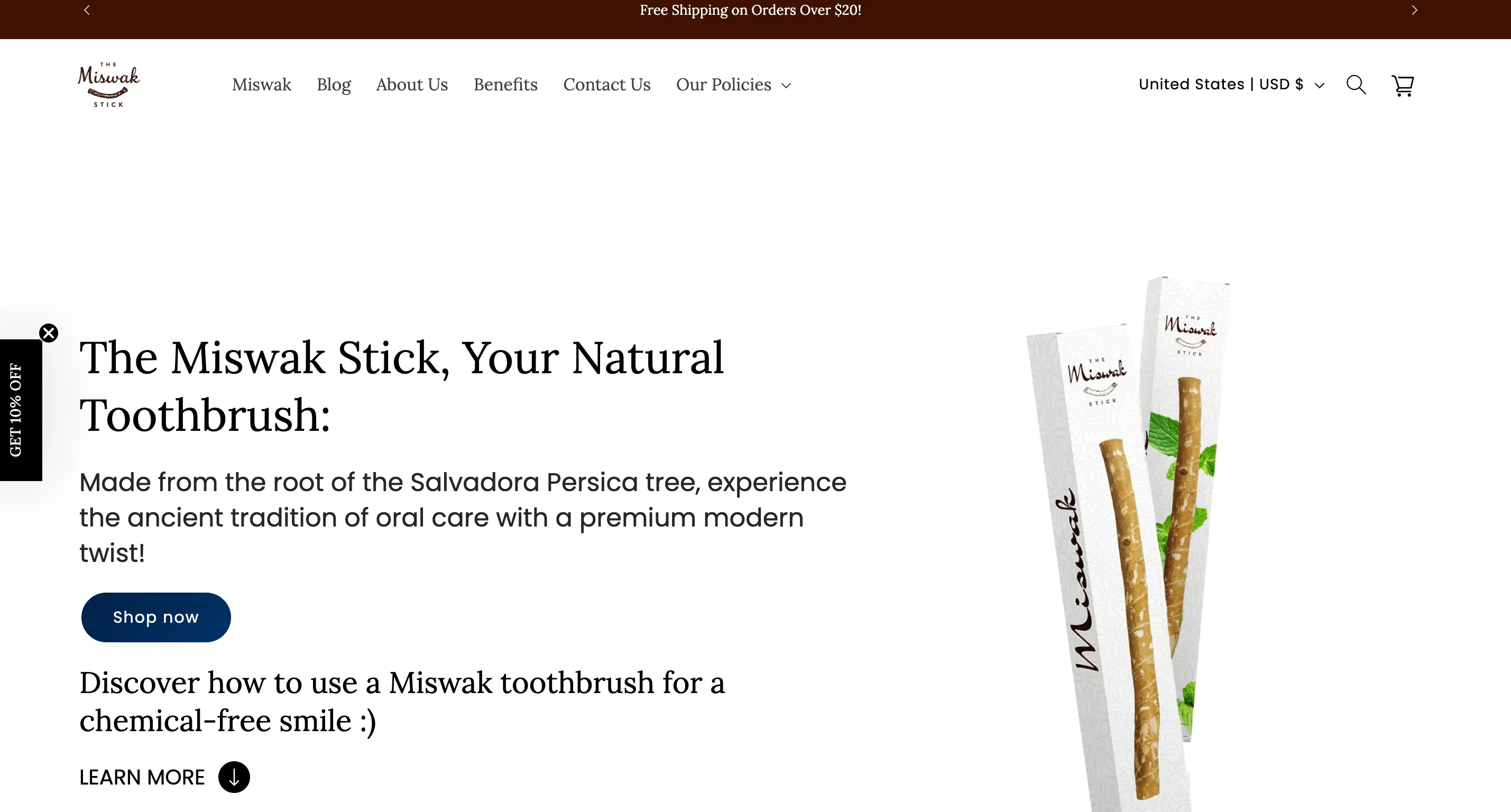
A miswak (also spelled meswak or siwak) is a pencil-sized twig with a fibrous core. When the outer bark is peeled back and the inner core is chewed, it frays into a brush-like tuft.
Unlike a standard toothbrush that requires toothpaste to be effective, the miswak is a 2-in-1 tool. The plant itself naturally contains a powerhouse of antibacterial compounds, essential oils, and minerals that actively protect your oral health as you brush.
The Science-Backed Benefits of Miswak
Modern dental research has validated what traditional cultures have known for millennia. The World Health Organization (WHO) has even explicitly recommended the use of the miswak for oral hygiene. Here is why it works so well:
- Fights Plaque and Gingivitis: Miswak contains natural antibacterial properties that inhibit the growth of Streptococcus mutans, the bacteria primarily responsible for tooth decay and plaque buildup.
- Natural Teeth Whitening: The twig contains mild natural abrasives (like silica) that gently remove surface stains from coffee, tea, and food without stripping away your enamel.
- Prevents Cavities: It is naturally rich in fluoride, calcium, and phosphorus, which help remineralize tooth enamel and prevent cavity formation.
- Eliminates Bad Breath: The natural essential oils found in the Salvadora persica tree promote saliva production (which washes away bacteria) and leave a mild, fresh scent in the mouth.
- Strengthens Gums: Vitamin C and natural astringents in the wood help heal micro-tears in the gums and reduce inflammation.
Miswak vs. The Modern Toothbrush
How does nature's toothbrush stack up against the plastic standard?
FeatureMiswak StickPlastic ToothbrushMaterial100% Natural & BiodegradablePlastic & Synthetic NylonToothpaste Required?No (Contains natural active compounds)YesPortabilityExtremely High (Use it anywhere)Moderate (Requires water and paste)Environmental ImpactZero Waste (Compostable)High (Contributes to landfill waste)How to Use a Miswak Stick (Step-by-Step)
Using a miswak is incredibly simple, making it perfect for keeping in your car, at your desk, or in your travel bag.
- Trim the Bark: Use a knife (or your teeth) to peel away about half an inch (1-2 cm) of the outer bark from one end of the stick.
- Chew the Core: Gently chew on the exposed inner wood until the fibers separate and form a bristle-like brush.
- Brush Your Teeth: Hold the miswak like a pen and gently brush your teeth using circular or up-and-down motions. Be sure to massage the gum line as well.
- Refresh the Bristles: After a few days of use, the bristles will lose their flavor and effectiveness. Simply cut off the used bristled end, peel back another half-inch of bark, and start fresh.
Pro Tip: If your new miswak feels a bit dry or too hard, soak the tip in a glass of water or rosewater for a few hours to soften the fibers before chewing.
An Eco-Friendly Switch for Zero-Waste Living
Over 1 billion plastic toothbrushes are thrown away every year in the United States alone. Because they are made from mixed plastics and nylon, they are nearly impossible to recycle, meaning every plastic toothbrush you have ever used still exists somewhere in a landfill or ocean.
Switching to a miswak stick is one of the easiest zero-waste swaps you can make. When the stick becomes too short to use, you can simply toss it into your compost bin or garden, where it will naturally biodegrade.
Final Thoughts
The miswak stick is proof that newer isn’t always better. By combining mechanical cleaning (the bristles) with chemical cleaning (the natural antibacterial properties), it offers a complete oral care solution in one small, biodegradable package. Whether you are looking for a natural teeth whitener, a travel-friendly hygiene tool, or a way to reduce your plastic footprint, the miswak is a timeless tool that deserves a spot in your daily routine.