In industrial automation, environmental monitoring, and even routine production management, the precise measurement of the level of liquid or solid materials within a vessel is crucial for ensuring process safety, efficiency, and controllability. This vital task is performed by "liquid level/material level sensors." Acting as the "eyes" of the process, these sensors monitor material inventory and fluctuations in real time; their selection and application directly impact the performance and reliability of the entire system. This article provides an accessible overview of mainstream liquid and material level sensors, their fundamental operating principles, and their key applications across various industries, helping you gain a comprehensive understanding of this field.
Main Types and Working Principles of Level SensorsLevel sensors come in various designs, aiming to meet different media, environmental, and accuracy requirements. Here are the essential working principles of several mainstream types:
1. Float Type Level Sensor
This is a classic and cost-effective solution. Its core is a float that moves up and down with the liquid level. By detecting the float's position through mechanical or magnetic means, the liquid level height can be directly converted. It has a simple structure, is easy to install, and is suitable for continuous measurement of various ordinary liquids.
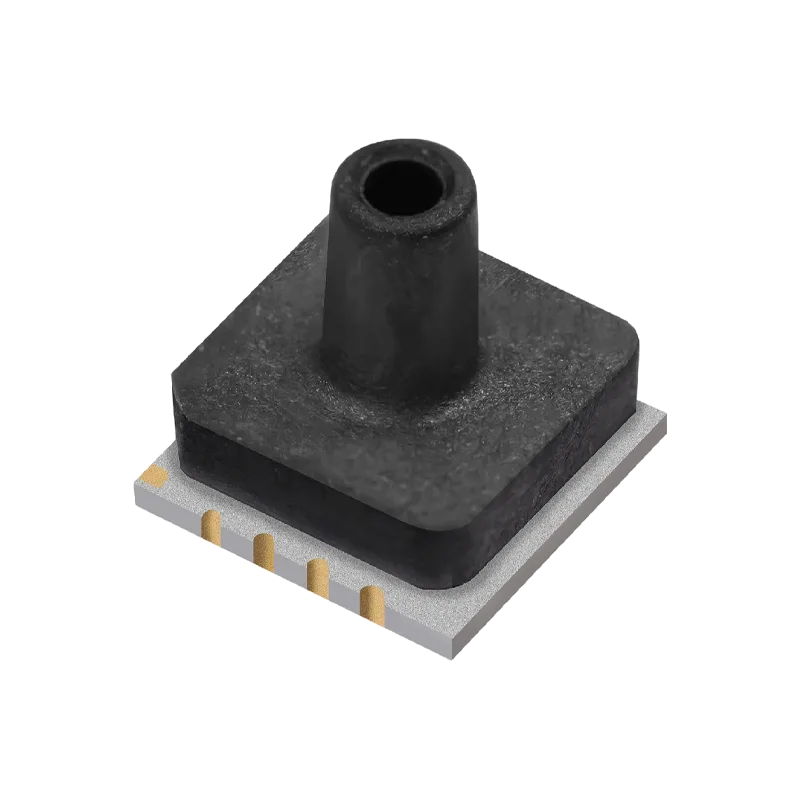
2. Pressure (Hydrostatic) Type Level Sensor
This sensor operates based on the principle of fluid statics. The liquid height generates a corresponding hydrostatic pressure, and the sensor can calculate the liquid level height by measuring the pressure at a certain point on the bottom or side wall of the container. This method is particularly suitable for level measurement in deep tanks, water tanks, or underground storage tanks.
3. Ultrasonic Level Sensor
This is a classic example of non-contact measurement. The sensor emits ultrasonic pulses toward the liquid surface and receives the echoes reflected back from it. By precisely calculating the time interval between emission and return, the distance between the sensor and the liquid surface—and thus the liquid level—can be determined. This measurement method is unaffected by the liquid's viscosity, color, or corrosiveness, making it suitable for a wide range of applications.
4. Capacitive Level Sensor
Its working principle is to utilize the change in capacitance value between the sensor probe and the container wall caused by liquid level changes. When the liquid (or material) comes into contact with the probe, the capacitance characteristics change, and the detection circuit converts this change into a level signal. It is suitable for measuring liquids, slurries, and particulate matter.
5. Radar Level Sensor
As a high-performance non-contact measurement solution, radar sensors emit microwave signals and receive echoes. Microwaves propagate at the speed of light, have strong penetration, and are not easily affected by steam, dust, or foam. Therefore, they exhibit extremely high reliability and accuracy under complex working conditions (such as high temperature, high pressure, and volatile media).
6. Optical Level Sensor
It is usually used for point level detection (such as high/low level alarms). It utilizes the change in the refraction or reflection characteristics of light at the interface between two media (such as air and liquid) for detection. Optical sensors have fast response speed and high accuracy, and are often used in occasions requiring fixed-point control or equipment protection.
Core Application Scenarios of Level SensorsWith diverse technical principles, level sensors have penetrated into all aspects of modern industry and public facilities:
Chemical and Pharmaceutical Industry: Safety is the primary consideration here. Sensors are used to accurately monitor the liquid levels of various chemical raw materials, intermediates, and finished product storage tanks, prevent tank overflow and pump dry running, ensure the safety and stability of continuous production, and meet strict industry compliance requirements.
Water Treatment and Environmental Protection Industry: From raw water reservoirs, treatment tanks to final discharge outlets, level sensors monitor water levels throughout the process, serving as indispensable sentinels for pump start-stop control, flood early warning, sewage treatment process optimization, and rational resource allocation.
Food and Beverage Industry: On production lines related to hygiene and quality, sensors monitor the liquid levels of materials such as syrup, beverages, wine, and edible oil, ensuring accurate formulas, efficient filling, and helping to achieve production automation and traceability.
Oil and Gas Industry: In oil fields, refineries, and storage and transportation stations, radar, pressure, and other sensors reliably measure the liquid levels of crude oil, refined oil, and liquefied gas storage tanks, providing key data for inventory management, trade settlement, and safety early warning.
Power and Energy Industry: Used to monitor boiler drum water levels, demineralized water tanks, fuel oil tanks, etc., it is an important parameter instrument to ensure the safe and efficient operation of power generation equipment.
How to Choose the Right Level Sensor?Faced with many types, the key to selection is tailor-made. You need to comprehensively consider the following factors:
Measured Medium Characteristics: Is it water, oil, corrosive chemicals, slurry, or particles? The conductivity, corrosiveness, viscosity, and foam tendency of the medium directly affect the choice of sensor type (such as contact or non-contact).
Measurement Environment: What is the pressure and temperature inside the container? Is there a lot of steam or dust? These conditions determine the protection level, material, and adaptability of the sensor's measurement principle.
Functional Requirements: Do you need continuous accurate measurement or only high/low level alarms? What are the specific requirements for response speed, accuracy, and output signal?
Installation and Maintenance Conditions: Does the opening method and size of the container allow sensor installation? How accessible is maintenance? This is also an important basis for selecting the sensor form (top mounting, side mounting, waveguide rod, etc.).

In conclusion,level sensors are key components of the modern industrial perception layer. Understanding the working principles and applicable scenarios of different types is the first step in making the best choice, thereby improving the level of system automation and ensuring production safety and efficiency.