
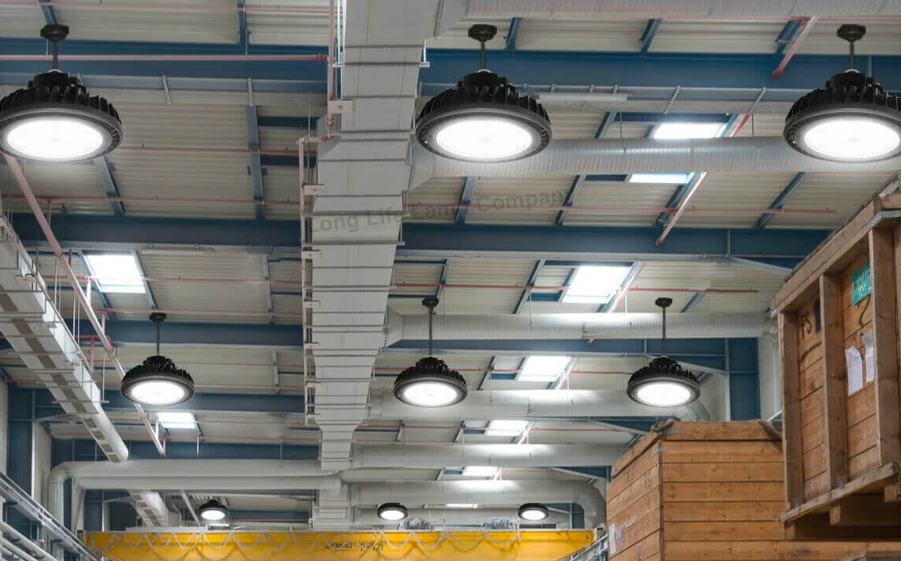
High Bay Lights are an excellent option for lighting large spaces based on their efficiency, brightness, and longevity. The lighting systems are particularly made for high-ceilinged spaces, usually between 15 to 40 feet high, such as warehouses, gymnasiums, factories, and massive retail stores. Their intense light ensures that working areas are well-illuminated, enhancing safety, productivity, and energy efficiency.
In this complete guide, you will learn the typical uses and important considerations to remember when choosing the High Bay Lights for your area.
Common Applications of High Bay Lights
1. Warehouses and Storage Facilities
Warehouses need bright, consistent lighting to ensure employees can safely navigate and accurately manage inventory. High bay lighting removes dark areas and offers clear visibility across the area.
2. Manufacturing and Industrial Facilities
Workers in factories and production spaces perform complex tasks that require high visibility. High bay lighting improves visibility, maintaining precision and minimizing errors.
3. Gymnasiums and Sports Arenas
Arena and gymnasiums require high-intensity lighting to enable players and audiences to view the action. High bay lights offer even lighting, reducing shadows and glare.
4. Supermarkets and Retail Stores
Big retail stores and supermarkets require adequate lighting to display merchandise properly and provide a comfortable environment for shopping. High bay lights increase visibility for merchandise and provide an improved customer experience.
5. Aircraft Hangars and Big Workshops
Aircraft maintenance and big workshops need intense lighting to provide safety and accuracy in operations. High bay lights are sufficient to give the brightness needed for detailed work in these large spaces.
How to Choose the Right High Bay Lights?
1. Think About Ceiling Height
Your ceiling height is important in deciding the kind of high bay lighting required. For areas with ceilings between 15-20 feet, less lumen output lights could be adequate, whereas ceilings above 30 feet call for bright lights.
2. Choose the Proper Wattage and Lumens
Wattage and lumens define how bright your lighting system will be. LED high bay lights come in a range of lumen outputs, often between 10,000 and 50,000 lumens. Select a light with a suitable lumen-to-wattage ratio for efficiency.
3. Select LED Over Conventional Lighting
Whereas older metal halide and fluorescent lighting were the norm, LED technology has emerged as the better option. LEDs are longer-lasting, use less energy, and provide higher-quality light than their traditional counterparts.
4. Seek Out Dimmable and Smart Lighting Options
Contemporary high bay lighting systems include dimmable capabilities and smart controls, enabling companies to modulate brightness levels according to requirements. This promotes energy efficiency as well as enhanced flexibility in light management.
Conclusion
Investing in High Bay Lights is a wise choice for companies and organizations that need bright, efficient, and durable lighting solutions. These lights improve safety, productivity, and energy efficiency for industrial, commercial, or recreational use. Considering ceiling height, lumen output, and energy efficiency, you can select the most suitable high bay lighting system to suit your needs.