Why Live Experiences Are Rethinking Ticketing Models
Live experiences have always relied on scarcity, access, and emotion. Concerts, sports events, festivals, theater performances, and immersive brand activations thrive on the promise of being there in person. Yet traditional ticketing systems have struggled for years with persistent issues such as fraud, scalping, lack of transparency, and limited fan engagement beyond the event itself. As audiences in the United States and the United Kingdom become more digitally savvy, expectations around ticket ownership and experience management are rapidly changing.
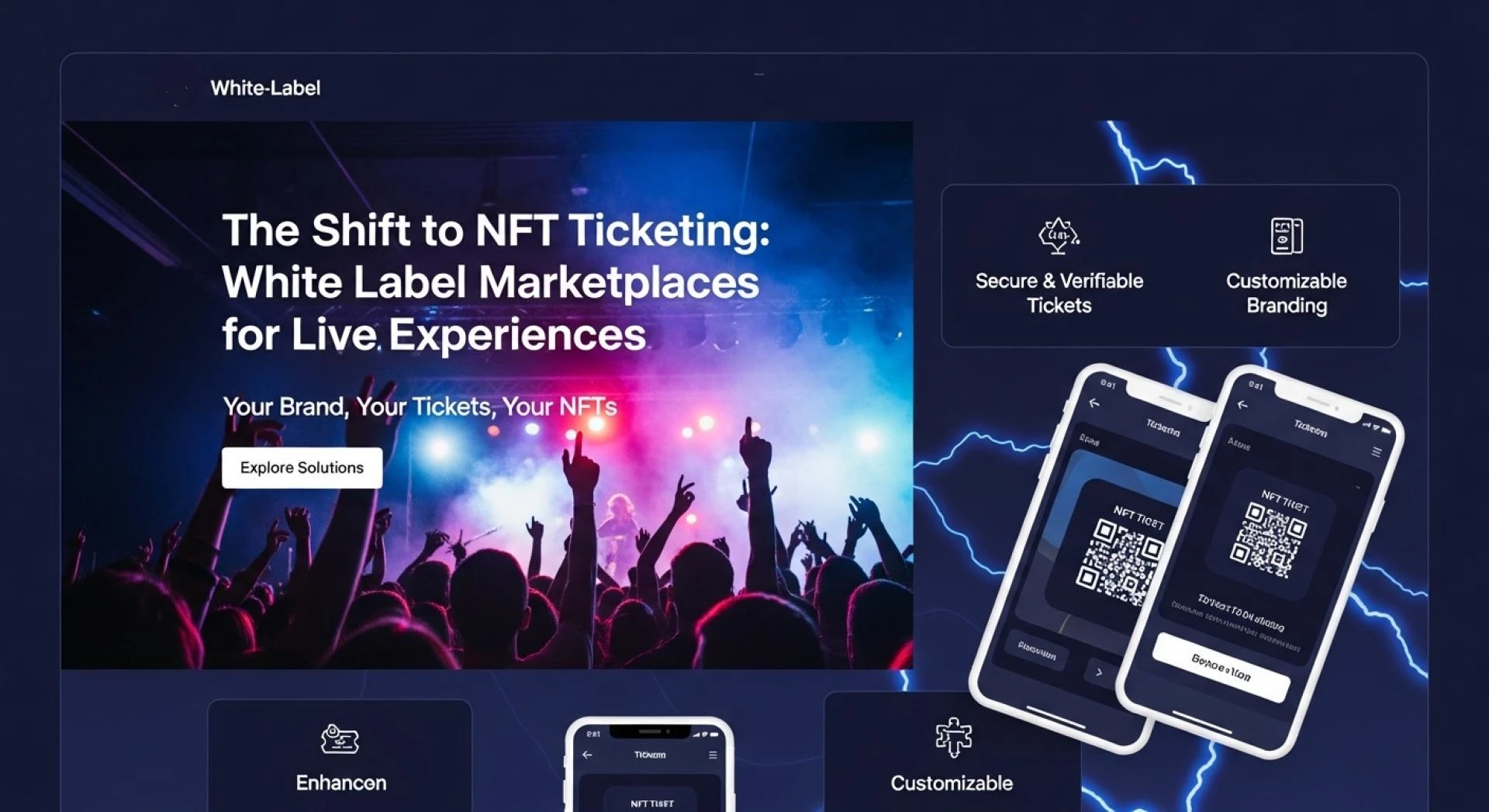
This shift has opened the door for NFT-based ticketing models. NFT tickets transform access passes into verifiable digital assets that are traceable, programmable, and transferable under controlled rules. When deployed through a White Label NFT Marketplace, NFT ticketing becomes an enterprise-ready solution rather than a technical experiment.
For event organizers and venue operators, White Label NFT Marketplace Development offers a way to regain control over ticket distribution, pricing logic, and post-event engagement. Instead of relying on third-party ticketing intermediaries, organizations can build branded platforms that directly connect them with attendees while maintaining compliance and operational oversight.
Key drivers behind the shift to NFT ticketing include:
- Growing concerns over counterfeit tickets and resale fraud
- Rising demand for transparency in secondary markets
- Desire to extend fan engagement beyond a single event
- Increased comfort with digital wallets and blockchain-backed assets
As live experiences continue to rebound and evolve, NFT ticketing supported by white label marketplaces is emerging as a foundational infrastructure for the next generation of event access.
Understanding NFT Ticketing in the Context of Live Events
NFT ticketing redefines what a ticket represents. Instead of a static barcode or PDF, an NFT ticket is a unique digital asset recorded on a blockchain. It proves ownership, tracks transfer history, and can carry programmable rules defined by the event organizer.
Through White Label NFT Marketplace Solutions, organizers can design NFT ticketing systems that fit their operational needs rather than adapting to generic NFT platforms. This is particularly valuable for large-scale events in the US and UK, where ticketing involves complex pricing tiers, access levels, and regulatory considerations.
Core characteristics of NFT ticketing include:
- Verifiable authenticity and ownership
- Programmable resale rules and price caps
- Integration with digital wallets and identity systems
- Persistent digital value beyond event entry
White Label NFT Marketplace Development allows these features to be implemented in a controlled environment. Organizers decide who can mint tickets, how they can be transferred, and what benefits persist after the event.
For audiences, NFT tickets represent a shift from disposable access credentials to digital collectibles and participation tokens, creating a deeper emotional connection with live experiences.
Why White Label NFT Marketplaces Are Ideal for Ticketing Use Cases
While NFT ticketing can technically exist on public marketplaces, enterprise adoption requires far more control than open platforms provide. White Label NFT Marketplaces address this gap by offering customizable, branded environments tailored to ticketing workflows.
Advantages of using white label marketplaces for NFT ticketing include:
- Full ownership of user data and transaction insights
- Custom branding aligned with event identity
- Control over pricing, resale, and access permissions
- Reduced reliance on third-party intermediaries
White Label NFT Marketplace Development companies build platforms that integrate ticketing logic directly into marketplace architecture. This ensures that NFT tickets function as operational tools, not speculative assets.
In regulated markets like the US and UK, white label solutions also allow organizers to align with consumer protection standards, data privacy laws, and tax reporting requirements. This level of compliance is difficult to achieve on decentralized, third-party NFT platforms.
Combating Fraud and Scalping Through NFT Ticketing
Ticket fraud and scalping are among the most damaging issues facing the live events industry. Fake tickets erode trust, while uncontrolled resale markets inflate prices and alienate genuine fans. NFT ticketing addresses these problems at the infrastructure level.
Through White Label NFT Marketplace Solutions, organizers can implement anti-fraud mechanisms such as:
- Immutable ownership records stored on blockchain
- Transfer restrictions tied to identity verification
- Automated royalty or fee structures on resales
- Time-based or usage-based ticket validation
Because NFT tickets are traceable, any resale activity is visible and enforceable. Organizers can cap resale prices, restrict transfers to approved marketplaces, or even disable resale entirely for certain ticket classes.
White Label NFT Marketplace Development enables these rules to be coded directly into smart contracts, reducing reliance on manual enforcement and customer support interventions.
Enhancing Fan Engagement Before, During, and After Events
One of the most powerful advantages of NFT ticketing is its ability to extend engagement beyond the event itself. Traditional tickets lose value once scanned at entry. NFT tickets, however, can evolve into long-term digital assets.
White Label NFT Marketplaces enable organizers to attach ongoing utility to NFT tickets, such as:
- Access to exclusive content or recordings
- Priority booking for future events
- Loyalty rewards and fan recognition programs
- Digital collectibles commemorating attendance
For live experiences in the US and UK, where competition for audience attention is intense, this extended engagement creates meaningful differentiation. Fans become participants in an ongoing ecosystem rather than one-time attendees.
By integrating NFT ticketing platforms with CRM and marketing systems, organizers can personalize communications and offers based on verified attendance history.
Operational and Technical Considerations for NFT Ticketing Platforms
Deploying NFT ticketing at scale requires robust technical planning. White Label NFT Marketplace Development addresses these requirements by offering modular, enterprise-grade architectures.
Key technical considerations include:
- Blockchain selection based on cost, scalability, and environmental impact
- Wallet integration that supports both crypto-native and mainstream users
- High-performance infrastructure for peak traffic during ticket drops
- Secure key management and recovery mechanisms
For large events, platform reliability is critical. White Label NFT Marketplace Development companies design systems that handle sudden demand spikes without downtime, ensuring fair access and positive user experiences.
Integration with physical access control systems, such as scanners and turnstiles, is also essential. NFT ticketing platforms must bridge the gap between blockchain records and real-world entry validation.
Regulatory and Consumer Protection Perspectives in the US and UK
NFT ticketing operates at the intersection of technology, commerce, and consumer rights. In the US and UK, regulatory scrutiny around digital assets and ticket sales continues to evolve.
White Label NFT Marketplace Solutions allow organizers to adapt quickly to regulatory expectations by maintaining control over platform policies and data flows.
Important compliance considerations include:
- Transparent pricing and resale disclosures
- Consumer refund and dispute resolution mechanisms
- Data protection and privacy compliance
- Tax reporting on secondary market activity
By working with experienced White Label NFT Marketplace Service Providers, event organizers can embed compliance processes directly into platform design, reducing legal and reputational risks.
Monetization Opportunities Beyond Ticket Sales
NFT ticketing opens new revenue opportunities that extend beyond initial ticket purchases. White Label NFT Marketplaces allow organizers to capture value throughout the ticket lifecycle.
Monetization strategies include:
- Royalties on secondary market transactions
- Upselling exclusive digital or physical merchandise
- Tiered access passes linked to NFT ownership
- Sponsorship integrations within NFT assets
These models are particularly attractive for large-scale events and touring productions in the US and UK, where secondary markets often generate significant value that traditionally bypasses organizers.
Scaling NFT Ticketing Across Venues and Event Portfolios
For organizations managing multiple venues or recurring events, scalability is a major concern. White Label NFT Marketplace Development supports multi-event and multi-brand configurations within a unified platform.
Scalability benefits include:
- Centralized governance with event-level customization
- Consistent user experience across different events
- Shared infrastructure reducing operational costs
- Easier rollout of new features and integrations
This approach allows organizations to build long-term digital asset strategies rather than isolated NFT experiments.
The Future of Live Experiences With NFT Ticketing
As digital and physical experiences continue to converge, NFT ticketing will play an increasingly central role in how audiences access and interact with live events. White Label NFT Marketplaces provide the flexibility and control needed to evolve alongside audience expectations and regulatory landscapes.
Future developments may include:
- Interoperable tickets across event ecosystems
- Integration with metaverse and hybrid experiences
- Advanced personalization through data-driven insights
- Deeper collaboration between artists, venues, and fans
White Label NFT Marketplace Development ensures that organizers are not locked into rigid systems but can adapt as technology and consumer behavior evolve.
Conclusion: Building Trust and Value Through NFT Ticketing Platforms
The shift to NFT ticketing represents more than a technological upgrade; it signals a fundamental rethinking of access, ownership, and engagement in live experiences. When implemented through White Label NFT Marketplaces, NFT ticketing becomes a secure, scalable, and fan-centric solution.
By partnering with experienced White Label NFT Marketplace Development companies and Service Providers, event organizers in the US and UK can reduce fraud, increase transparency, and build lasting relationships with audiences. As live experiences continue to evolve, white-label NFT ticketing platforms will be essential infrastructure for delivering trust, value, and innovation at scale.