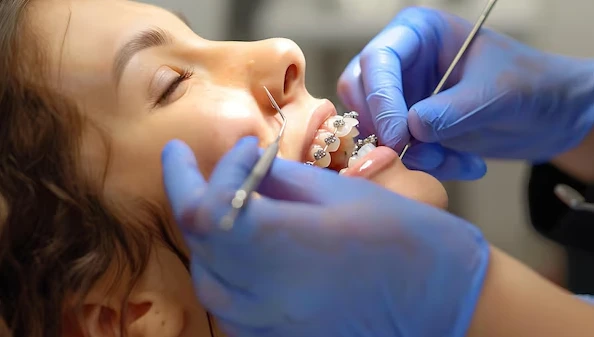
Commonly used orthodontic devices, metal braces San Antonio are employed to rectify bite problems and straighten teeth. Stainless steel brackets are attached to the teeth and connected by arch wires which exert gentle, consistent pressure to guide the teeth into their desired positions. They are the most noticeable type of braces, which can be a disadvantage for some patients.
Types of Metal Braces Used in Orthodontic Treatments
Conventional Metal Orthodontic Braces
The most typical, powerful, and effective choice.
Metal braces attached to the front of your teeth make them highly visible.
These elastic bands can be customized in various colors, thereby adding a more personal touch.
Self-Ligating Braces
These metal braces San Antonio employ a sliding clip or door system in place of elastic bands to secure the wires.
They may be simpler to clean and offer a slightly greater level of comfort.
Lingual Braces
They are fixed onto the back surfaces of the teeth.
These front-facing metal orthodontic braces are not visible.
They are more difficult to clean and somewhat awkward to wear.
Metal Orthodontic Appliances: Pros and Cons
Traditional braces are more effective than clear braces or Invisalign aligners for severe overcrowding cases, and they are also generally less costly. Your orthodontist is given the control required to shift your teeth in small steps. The main drawback of conventional orthodontic braces is the unsightly metal appearance in the mouth.
Today's braces are more aesthetically pleasing than in years past, offering a variety of color options for both the brackets and the elastics, which can seem like a more desirable choice than Invisalign for those with concerns about their appearance. Having these types of braces also means you don't have to be concerned about ever losing your aligners.
Taking Care of Metal Braces.
Steer clear of foods that aren't suitable for orthodontic appliances. Steer clear of chewy foods, such as caramels or other soft sweets, as well as extremely hard or crunchy foods that could potentially harm your braces. Fruits and vegetables that get stuck in your braces should ideally be cut into small pieces. Your practitioner will probably provide a list of foods to steer clear of in order to maintain your braces' condition and lower your chances of getting cavities.
Brush and floss regularly as recommended. Proper care of your teeth is crucial at all times, but it's particularly vital when you have braces. Regularly brushing and flossing will keep your braces looking good and help prevent stains on your teeth. Your dentist might suggest using a specific brush intended to clean into the nooks and varied surfaces of metal braces.
Attend all scheduled follow-up appointments. Regular visits to both your dentist and orthodontist enable any necessary adjustments to be made to your braces and provide a chance to discuss any questions or concerns you may have.