
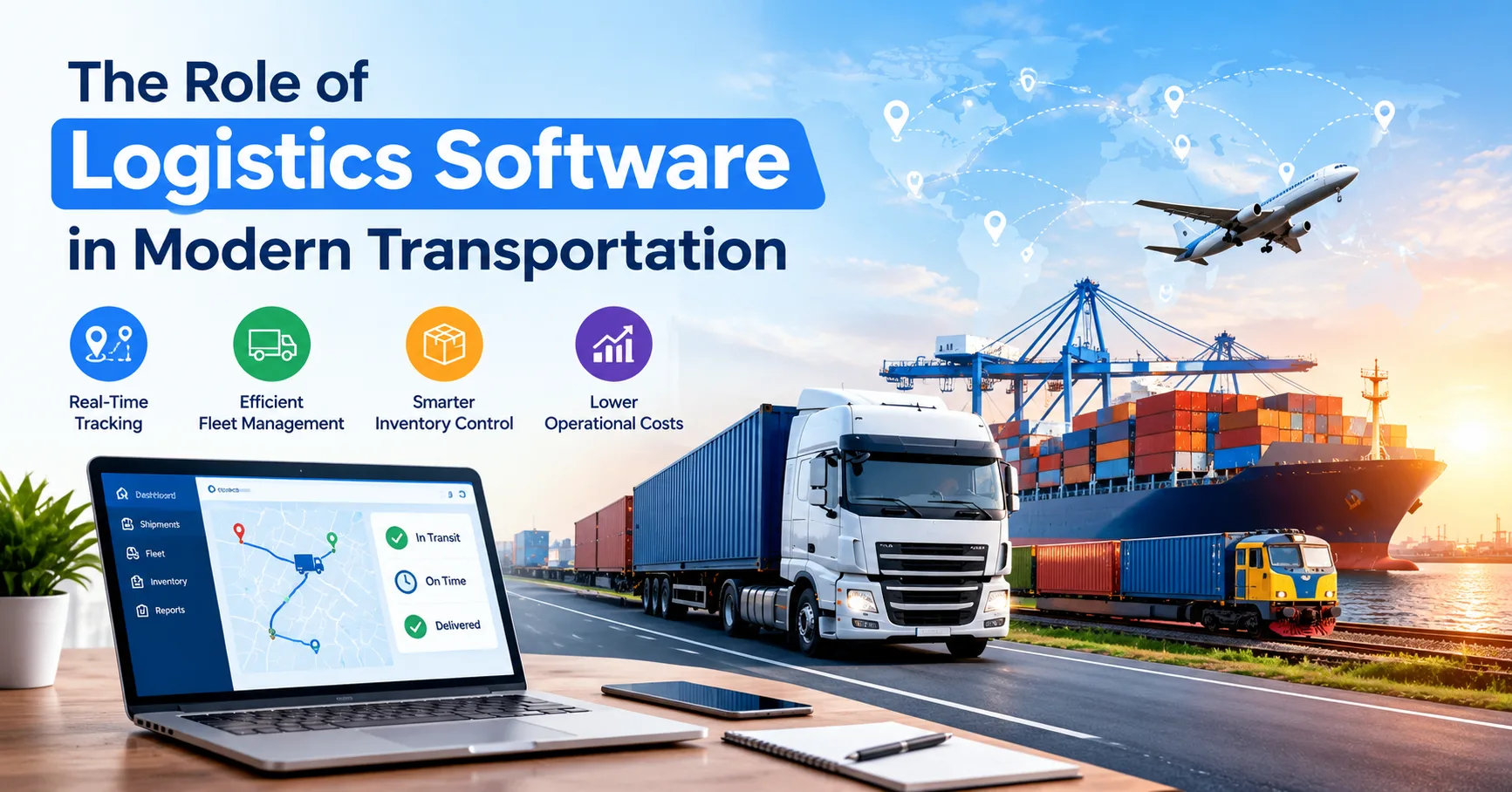
The transportation industry plays an important role in keeping businesses, supply chains, and customers connected. Every day, logistics companies manage shipments, coordinate deliveries, track vehicles, and handle large volumes of operational data. As transportation networks become more complex, traditional methods of managing these activities often lead to delays, higher costs, and communication problems.
This is where logistics software development becomes valuable. Modern logistics software helps transportation companies organize daily operations, monitor shipments, manage fleets, and make informed decisions using accurate data.
From small delivery businesses to large transportation providers, software solutions are becoming essential for improving efficiency, maintaining service quality, and meeting customer expectations.
What Is Logistics Software?
Logistics software is a digital system designed to manage, coordinate, and monitor activities involved in transporting and delivering goods. It connects different operational processes, including order management, shipment tracking, inventory control, fleet scheduling, and delivery confirmation.
Instead of relying on spreadsheets, phone calls, and disconnected systems, transportation companies can manage important information through a centralized platform.
Common types of logistics software include:
- Transportation Management Systems (TMS): Help plan shipments, select carriers, manage freight costs, and coordinate transportation activities.
- Fleet Management Software: Tracks vehicle locations, maintenance schedules, fuel consumption, and driver activities.
- Warehouse Management Systems (WMS): Support inventory tracking, order picking, packing, and warehouse operations.
- Delivery Management Software: Manages delivery assignments, route planning, proof of delivery, and customer notifications.
- Order Management Systems: Organizes customer orders and coordinates their movement through fulfillment and delivery.
These systems can work independently or integrate with existing business applications.
How Logistics Software Improves Modern Transportation
1. Better Fleet Management and Vehicle Tracking
Managing multiple vehicles across different locations requires accurate information and effective coordination.
Logistics software allows transportation managers to monitor vehicle movements, assign deliveries, and review fleet performance through a single dashboard.
GPS-enabled tracking systems can provide location updates, helping businesses identify delays and respond to unexpected situations.
Fleet management software can also support preventive maintenance by recording vehicle servicing schedules, inspection dates, and repair histories.
This reduces the risk of avoidable breakdowns and helps businesses maintain reliable transportation operations.
2. Improved Route Planning and Delivery Scheduling
Poor route planning can increase fuel consumption, delivery times, and operational expenses.
Modern logistics platforms use routing algorithms to evaluate factors such as distance, delivery locations, vehicle capacity, traffic information, and scheduled delivery windows.
Transportation companies can use these capabilities to:
- Identify more efficient delivery routes.
- Reduce unnecessary vehicle travel.
- Assign shipments according to vehicle capacity.
- Adjust schedules when disruptions occur.
- Improve estimated delivery times.
Although route optimization cannot eliminate every transportation delay, it helps businesses make better scheduling decisions.
3. Real-Time Shipment Visibility
Customers increasingly expect accurate information about their orders and deliveries.
Logistics software provides shipment visibility by collecting tracking information from GPS devices, driver applications, carrier systems, and delivery checkpoints.
Businesses can monitor shipment progress and share relevant updates with customers.
For example, when a delivery is delayed, an integrated tracking system can notify the operations team and update the expected arrival time when sufficient information is available.
This improves communication and reduces the need for repeated customer inquiries.
4. Reduced Manual Work and Operational Errors
Manual data entry often creates problems when transportation companies manage hundreds or thousands of shipments.
Incorrect addresses, duplicate orders, missing documents, and outdated delivery information can affect operational performance.
Through custom logistics software development, businesses can automate repetitive activities according to their specific workflows.
Common automation opportunities include:
- Generating shipping documents and invoices.
- Updating order and shipment statuses.
- Assigning delivery tasks.
- Recording proof of delivery.
- Preparing operational performance reports.
Automation reduces repetitive administrative work while allowing employees to focus on exceptions, customer communication, and operational decisions.
The Importance of Data Analytics in Transportation
Transportation businesses generate information about delivery performance, vehicle utilization, shipping expenses, customer demand, and operational delays.
Logistics software can organize this information into reports and dashboards that support business decisions.
For example, managers can compare planned and actual delivery times, identify frequently delayed routes, and monitor transportation costs.
Useful performance indicators include:
- On-time delivery percentage.
- Average transportation cost per shipment.
- Vehicle utilization rate.
- Fuel consumption per kilometer.
- Delivery exception frequency.
These measurements help companies identify operational problems and evaluate whether process improvements are producing meaningful results.
However, reliable reporting depends on accurate data collection and consistent system usage.
Why Transportation Businesses Need Custom Logistics Solutions
Not every transportation company operates in the same way.
A local courier service may prioritize last-mile delivery management, while an international freight provider may require multimodal shipment coordination, customs documentation, and carrier integrations.
Standard software may provide essential features but might not support every business requirement.
Custom solutions allow organizations to build functionality around their existing processes, including specialized pricing models, customer portals, delivery workflows, and reporting requirements.
However, customization should be justified by operational needs. Businesses must also consider development expenses, implementation time, maintenance, and future scalability.
Choosing the Right Logistics Software Development Partner
Selecting a technology partner is an important decision for transportation businesses planning to modernize their systems.
An experienced logistics software development company should understand transportation workflows, integration requirements, security considerations, and the challenges of maintaining reliable applications.
Businesses should evaluate potential development partners based on:
- Relevant experience with transportation and supply chain systems.
- Ability to integrate GPS, ERP, accounting, and warehouse platforms.
- Data security and access-control practices.
- Software testing and quality assurance processes.
- Ongoing maintenance and technical support.
Clear project timelines and development costs.
Similarly, a logistics app development company should demonstrate experience creating practical mobile applications for drivers, dispatchers, warehouse employees, and customers.
Reliable logistics app development services should also consider offline functionality, secure authentication, device compatibility, and synchronization when network connectivity returns.
The Future of Logistics Software in Transportation
Transportation technology continues to develop as businesses seek better visibility, efficiency, and operational control.
Artificial intelligence can support demand forecasting, estimated arrival times, and predictive maintenance when suitable data is available.
Internet of Things (IoT) devices can provide additional information about vehicle conditions, shipment locations, and temperature-sensitive cargo.
Cloud-based platforms also make it easier for distributed transportation teams to access shared operational information.
Successful adoption, however, depends on practical implementation, employee training, reliable integrations, and careful management of sensitive business data.
Conclusion
Logistics software has become an important part of modern transportation management. It helps companies coordinate deliveries, track shipments, manage vehicles, reduce manual tasks, and make decisions based on operational data.
The greatest value comes from selecting technology that addresses actual business challenges rather than simply adding more features.
Whether a transportation company chooses an established platform or a customized solution, careful planning, secure implementation, and ongoing performance monitoring are essential for achieving long-term operational improvements.