
A traveler opens your app, searches for a destination, scrolls for a few seconds, and leaves.
No booking. No interaction. No return visit.
This is the gap many travel businesses are facing today. Users expect more than listings. They want relevance, speed, and clear direction when making decisions.
That shift is exactly why AI for travel is becoming central to modern travel app development. It changes how users interact with your platform and how your business operates behind the scenes.
If you are investing in travel application development, basic functionality will not help you compete. Users expect personalized recommendations, faster responses, and smarter booking experiences. To meet these expectations, you need more than a standard build.
You need a company experienced in AI development services that can align technology with real user behavior.
In this blog, you will learn how artificial intelligence in travel is reshaping user experiences, what features matter most, and how it impacts travel app development cost.
Why Traditional Travel Apps Are Losing Momentum
Many platforms still rely on the same structure:
- Static search results
- Manual filtering
- Generic recommendations
- Limited personalization
This approach creates friction. Users spend time searching instead of deciding.
AI changes that equation by reducing effort and increasing clarity. Instead of showing hundreds of options, it shows the right ones.
That shift is driving demand for travel application development services that go beyond standard booking flows.
What AI Actually Changes in Travel App Development
AI is often discussed as a feature. In reality, it changes the logic of how your app works.
Instead of reacting to user input, the app starts anticipating it.
Here’s how that plays out in real scenarios:
- A user searches for flights and instantly gets destination suggestions based on past trips
- Pricing adjusts in real time based on demand and user behavior
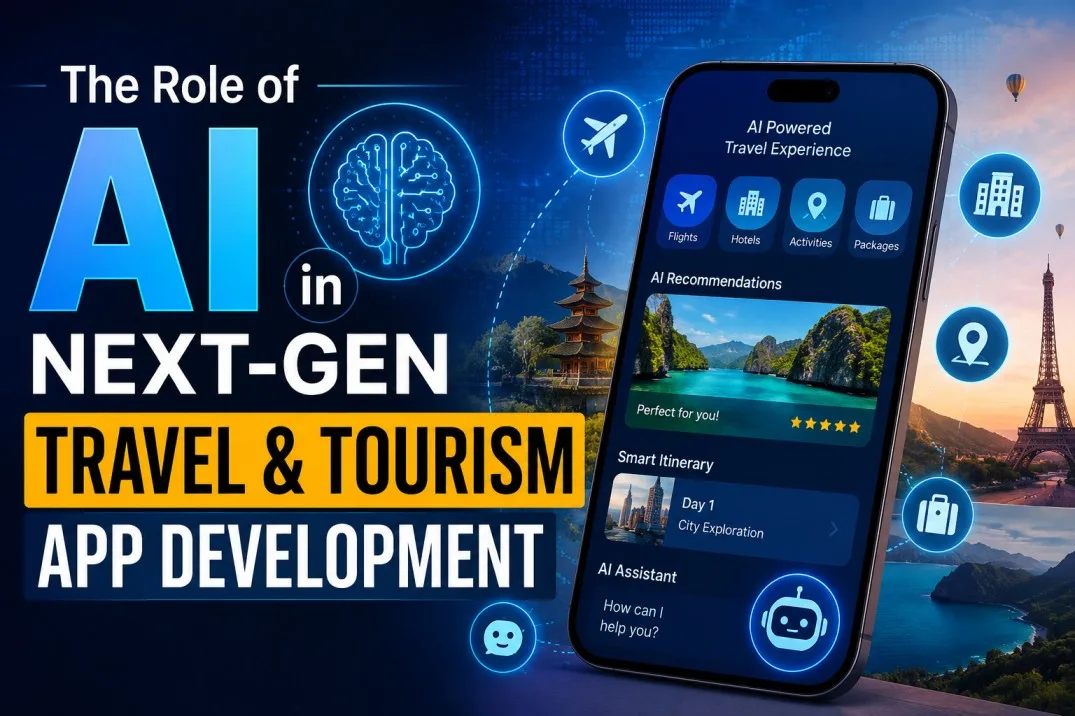
- The app suggests a complete itinerary instead of forcing users to plan everything manually
- Customer queries are resolved instantly through AI-driven chat
This is the difference between a tool and a system that actively supports decisions.
For businesses investing in travel mobile app development, this shift directly impacts engagement and revenue.
Core AI Features That Drive Real Business Impact
Here are the AI capabilities creating the biggest business impact in modern travel and tourism app development.
1. Personalized Travel Experiences
Users don’t want to start from scratch every time they open your app.
AI tracks behavior, preferences, and past interactions to create tailored experiences.
For example:
- Frequent business travelers see quick booking options
- Budget travelers get cost-focused recommendations
- Adventure seekers get activity-based suggestions
- Family travelers see curated packages with suitable accommodations
This level of personalization increases the chances of conversion in travel and tourism app development.
2. AI Chatbots That Handle More Than Basic Queries
Customer support delays often lead to drop-offs.
AI-powered chatbots solve that by handling conversations in real time. They can:
- Answer booking-related questions
- Modify reservations
- Suggest destinations
- Provide updates on delays or cancellations
For companies offering travel app development services, chatbot integration is one of the fastest ways to improve user satisfaction while reducing operational load.
3. Smart Itinerary Generation
Planning a trip can take hours. AI reduces that effort significantly.
Based on user preferences, travel dates, and external data, AI can generate:
- Day-wise travel plans
- Activity recommendations
- Optimized routes
- Budget estimates
This feature is becoming a key differentiator in travel booking app development, especially for platforms targeting repeat users.
4. Real-Time Pricing Intelligence
Travel pricing changes constantly.
AI models analyze patterns such as demand fluctuations, seasonal trends, and competitor pricing to adjust rates dynamically.
This benefits:
- Airlines managing ticket pricing
- Hotels optimizing room rates
- Aggregators offering competitive deals
- Tour operators adjusting package pricing
Businesses investing in custom software development for travel can use this capability to improve margins and stay competitive.
5. Voice Search and Natural Language Interaction
Users are shifting toward conversational search.
Instead of typing structured queries, they say:
“Find me a weekend getaway under $500”
AI-powered natural language processing allows your app to understand and respond to these requests.
This improves accessibility and adds convenience in tourism app development.
6. Fraud Detection and Secure Transactions
Trust plays a major role in travel bookings.
AI monitors transactions in real time and detects unusual patterns. This helps prevent fraud and protects user data.
For any travel software development company, integrating intelligent security systems is becoming a baseline expectation.
How AI Improves Key Business Metrics
AI adoption is not just about adding features. It influences measurable outcomes.
- Higher Conversion Rates: When users see relevant options quickly, they are more likely to book.
- Lower Drop-Off Rates: Faster responses and guided experiences reduce friction.
- Reduced Support Costs: Automation handles repetitive queries without human intervention.
- Increased Customer Retention: Users return to platforms that remember their preferences.
- Better Decision-Making: AI-generated insights help refine pricing, marketing, and user experience strategies.
This is why ai in travel and tourism is moving from optional to necessary for growth-focused businesses.
Where AI Fits Across Different Travel Businesses
AI adoption looks different depending on your business model.
Online Travel Agencies (OTAs)
- Personalized search results
- Smart filtering
- AI-driven recommendations
Hospitality Businesses
- Guest preference tracking
- Dynamic pricing
- Automated support
Airlines
- Fare prediction
- Route optimization
- Operational efficiency improvements
Tour Operators
- Custom package creation
- Demand forecasting
- Real-time itinerary adjustments
Each use case requires thoughtful travel application development backed by AI capabilities.
Understanding Travel App Development Cost with AI
Cost is often the first concern when planning AI integration.
The reality is that travel app development cost depends on how deeply AI is integrated.
Here are the key factors:
- Type of AI features included
- Data availability and processing requirements
- Platform scope (mobile, web, or both)
- Level of customization
- Integration with third-party services
Basic AI features like chatbots are relatively affordable. Advanced systems like predictive analytics require higher investment.
That said, the long-term gains in efficiency and revenue often outweigh the initial cost.
How to Choose the Right Travel App Development Company
AI-based systems require more than standard development expertise.
When selecting a travel app development company, consider:
- Experience with AI and machine learning models
- Portfolio in travel and tourism app development
- Ability to scale the platform as your business grows
- Strong focus on user experience design
- Ongoing support after launch
A capable partner helps you avoid common mistakes and build a system that aligns with your business goals.
What’s Next for AI in Travel – The Future Ahead
AI adoption is moving fast, and several trends are shaping the future of travel mobile app development.
- Hyper-Personalization: Experiences will become more precise based on real-time behavior.
- Predictive Travel Planning: Apps will suggest trips before users actively search.
- Augmented Reality Integration: Travelers will preview destinations and navigate spaces using AR.
- Sustainability Insights: Apps will highlight eco-friendly travel options.
- Fully Automated Support Systems: AI will handle most user queries without manual intervention.
Businesses that move early will have a stronger position as these capabilities become standard.
When Should You Invest in AI for Travel?
You should consider AI integration if:
- Your platform struggles with low engagement or high drop-offs
- Customer support costs are increasing
- You want to improve personalization at scale
- Your competitors are already adopting AI-driven features
- You plan to expand into new markets
AI is especially valuable when user experience directly influences bookings and retention.
Final Thoughts
Travel is no longer just about options. It is about relevance, timing, and ease of decision-making.
AI brings all three together.
By investing in a travel mobile app development company that integrates AI, you are building more than an app. You are creating a system that understands users, adapts to behavior, and supports better decisions.
For travel businesses aiming to grow, this shift is already underway. The real advantage comes from acting before it becomes standard across the market.