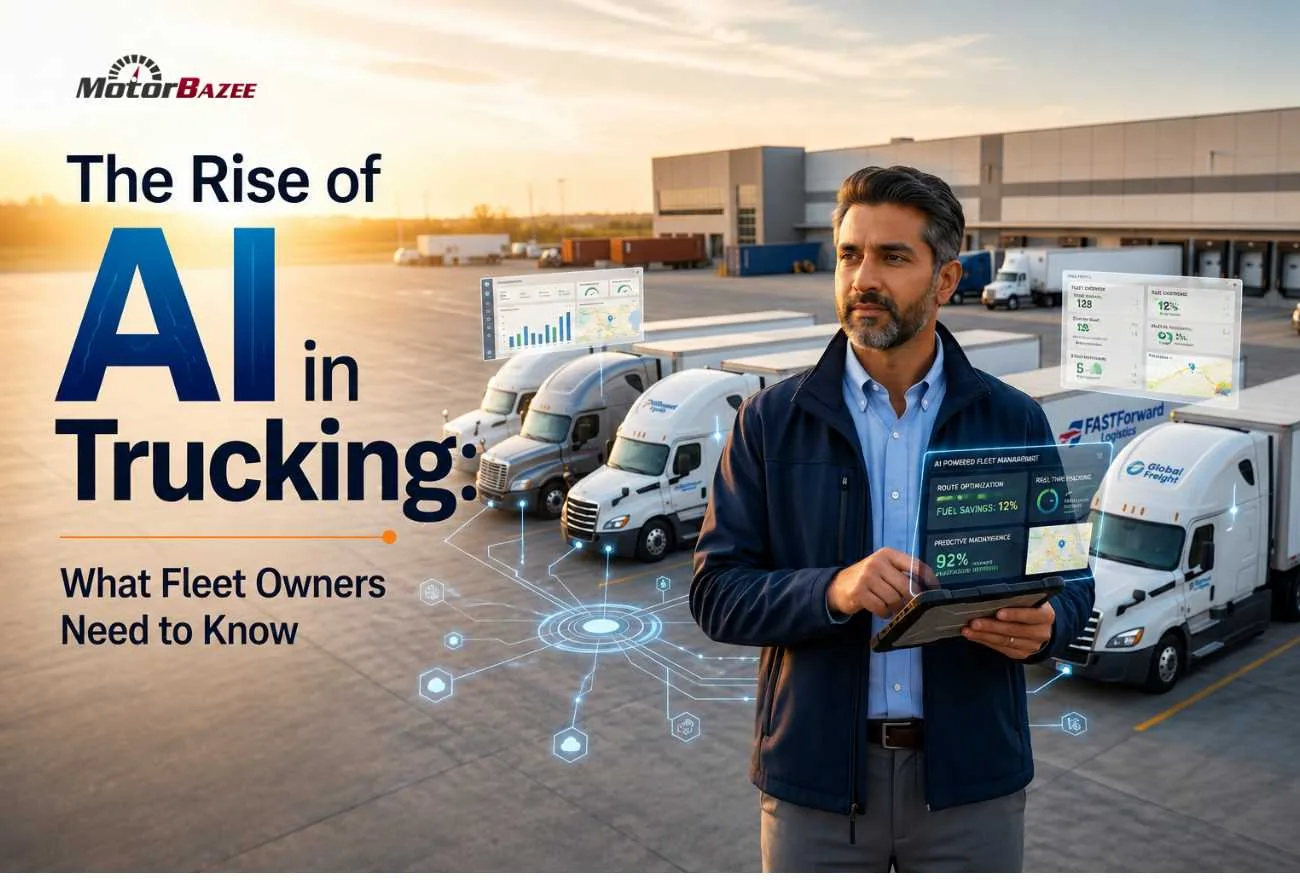
The trucking industry is entering a new era, and Artificial Intelligence (AI) is leading the transformation. From route planning and fuel management to predictive maintenance and driver safety, AI-powered technologies are helping fleet owners improve efficiency, reduce costs, and increase profitability.
Artificial Intelligence (AI) is transforming the trucking industry by improving efficiency, reducing costs, and enhancing road safety. As logistics and transportation become increasingly data-driven, AI-powered technologies are helping fleet owners make smarter decisions and streamline day-to-day operations. Understanding how AI is reshaping trucking can help fleet businesses remain competitive and prepared for the future.
One of the biggest advantages of AI in trucking is route optimization. AI systems analyze traffic patterns, weather conditions, road closures, and delivery schedules to recommend the fastest and most fuel-efficient routes. This helps reduce fuel consumption, minimize delays, and improve on-time deliveries, ultimately lowering operational costs.
AI is also revolutionizing predictive maintenance. Instead of waiting for a vehicle to break down, AI-powered systems monitor engine performance, tire pressure, brake conditions, and other critical components in real time. By identifying potential issues before they become serious, fleet owners can reduce unexpected downtime, extend vehicle lifespan, and avoid expensive repair costs.
Another major benefit is driver safety. AI-enabled driver assistance systems use cameras and sensors to detect risky driving behaviors such as harsh braking, lane departures, speeding, and distracted driving. These systems provide real-time alerts that help drivers make safer decisions, reducing the likelihood of accidents and improving overall fleet safety.
Fleet management has also become more efficient with AI-powered analytics. Modern fleet management platforms collect and analyze data from GPS devices, telematics systems, fuel usage, and driver performance. Fleet owners can use these insights to monitor vehicle utilization, improve productivity, optimize schedules, and make informed business decisions based on real-time data.
AI also plays a growing role in fuel management. By analyzing driving patterns and vehicle performance, AI identifies opportunities to improve fuel efficiency. Recommendations such as reducing idle time, maintaining consistent speeds, and scheduling timely maintenance can significantly lower fuel expenses over time.
In addition, AI supports better customer service by providing accurate delivery tracking, estimated arrival times, and automated communication. This improves transparency and helps build stronger relationships with customers through reliable and timely deliveries.
While adopting AI requires an initial investment, the long-term benefits often outweigh the costs. Increased operational efficiency, lower maintenance expenses, improved safety, and better resource management contribute to higher profitability and stronger business performance.
As AI technology continues to evolve, its role in the trucking industry will only expand. Fleet owners who embrace AI-powered solutions today will be better positioned to improve efficiency, enhance safety, reduce operating costs, and stay competitive in an increasingly digital transportation landscape.
Visit Us: The Rise of AI in Trucking: What Fleet Owners Need to Know