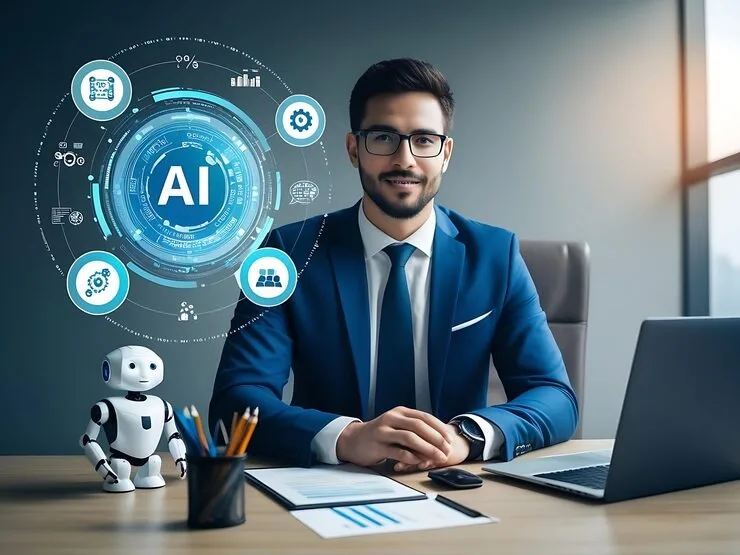
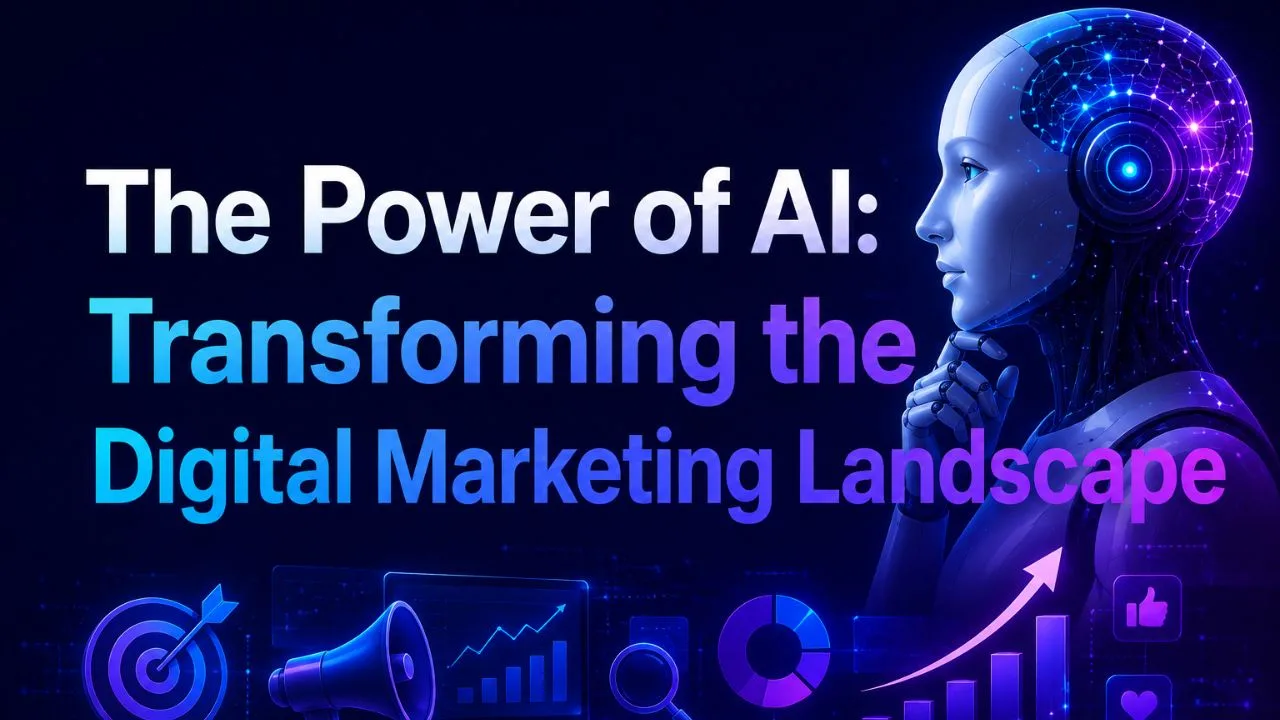
Artificial Intelligence (AI) is no longer a futuristic concept — it has become a powerful force reshaping industries around the world. From healthcare and finance to education and entertainment, AI is revolutionizing how businesses operate. One of the industries experiencing the biggest transformation is digital marketing.
Today, marketers are using AI-powered tools to understand customer behavior, automate tasks, personalize campaigns, and improve overall performance. What once required large teams and countless hours of manual work can now be achieved faster and more accurately with artificial intelligence.
As technology continues to evolve, businesses that adopt AI-driven marketing strategies are gaining a significant competitive advantage. This shift is changing the way brands connect with customers and redefining the future of online marketing.
Understanding AI in Digital Marketing
Artificial Intelligence in digital marketing refers to the use of smart technologies and machine learning algorithms to analyze data, automate processes, and improve marketing performance. AI systems can process massive amounts of information in real time, helping marketers make better decisions based on customer insights and behavior patterns.
Unlike traditional marketing methods that rely heavily on manual analysis and guesswork, AI allows businesses to create data-driven strategies with improved accuracy and efficiency.
Some common examples of AI in digital marketing include:
- Chatbots for customer support
- Personalized product recommendations
- Automated email marketing
- Voice search optimization
- Predictive analytics
- AI-generated content
- Smart advertising systems
These technologies are helping businesses deliver better customer experiences while improving return on investment (ROI).
How AI Is Changing the Digital Marketing Industry
1. Personalized Customer Experience
One of the biggest advantages of AI is personalization. Modern customers expect brands to understand their needs and preferences. AI helps marketers analyze customer data such as browsing history, purchasing behavior, and engagement patterns to deliver personalized experiences.
Platforms like Netflix, Amazon, and Spotify use AI to recommend products and content based on user behavior. This level of personalization increases customer satisfaction and improves conversion rates.
In digital marketing, personalized experiences may include:
- Customized email campaigns
- Product recommendations
- Dynamic website content
- Personalized advertisements
By delivering relevant content to the right audience, businesses can build stronger relationships with customers.
2. Smarter Content Creation
Content marketing plays a crucial role in digital marketing, and AI is making content creation faster and more efficient. AI-powered tools can generate blog ideas, optimize headlines, create social media captions, and even write basic articles.
Although human creativity is still essential, AI helps marketers save time and improve productivity. Marketers can focus more on strategy and storytelling while AI handles repetitive tasks.
AI tools can also analyze audience preferences and suggest the type of content most likely to perform well.
3. Improved Search Engine Optimization (SEO)
Search engines are becoming smarter, and AI is playing a major role in this evolution. Google uses AI algorithms like RankBrain to better understand search intent and deliver more accurate results.
This means marketers must focus on creating high-quality, user-focused content rather than relying on outdated keyword-stuffing techniques.
AI-powered SEO tools help marketers by:
- Analyzing keywords
- Tracking rankings
- Identifying content gaps
- Optimizing on-page SEO
- Predicting search trends
These tools make SEO strategies more effective and data-driven.
4. AI-Powered Chatbots and Customer Support
Customer service is a critical part of digital marketing, and AI chatbots are transforming the way businesses interact with users online.
AI chatbots can answer customer questions instantly, provide product recommendations, and guide users through the buying process. Unlike human support teams, chatbots are available 24/7, improving customer experience and response time.
Benefits of AI chatbots include:
- Faster customer support
- Reduced operational costs
- Increased engagement
- Better lead generation
- Improved customer satisfaction
Many businesses are now integrating chatbots into websites, apps, and social media platforms.
5. Better Advertising and Targeting
Online advertising has become more intelligent with AI-driven systems. Platforms like Google Ads and Meta Ads use machine learning to optimize campaigns automatically.
AI can analyze user behavior and determine:
- Which audience is most likely to convert
- The best time to display ads
- Which creatives perform better
- How much budget should be allocated
This helps businesses reduce ad spend wastage while improving campaign performance.
AI-powered advertising allows marketers to make smarter decisions and maximize returns on investment.
The Role of Predictive Analytics
Predictive analytics is one of the most powerful applications of AI in marketing. It uses historical data and machine learning algorithms to predict future customer behavior.
Businesses can use predictive analytics to:
- Forecast sales trends
- Identify potential customers
- Predict customer churn
- Optimize marketing campaigns
- Improve product recommendations
By understanding future trends, businesses can make proactive decisions and stay ahead of competitors.
Voice Search and AI
With the growing popularity of voice assistants like Alexa, Siri, and Google Assistant, voice search is becoming increasingly important in digital marketing.
AI-powered voice recognition technology is changing how people search for information online. Instead of typing short keywords, users now ask conversational questions.
For marketers, this means optimizing content for:
- Natural language queries
- Question-based searches
- Local SEO
- Mobile-friendly experiences
Voice search optimization is becoming an essential part of modern SEO strategies.
Social Media Marketing and AI
AI is also transforming social media marketing by helping brands understand audience behavior and improve engagement.
AI-powered tools can:
- Schedule posts automatically
- Analyze audience engagement
- Identify trending topics
- Generate captions and hashtags
- Track campaign performance
These insights help marketers create more effective social media strategies and connect with audiences more efficiently.
AI and Email Marketing
Email marketing remains one of the highest-converting digital marketing channels, and AI is making it even more powerful.
AI tools can personalize email campaigns based on customer behavior, improving open rates and conversions.
AI helps marketers by:
- Predicting the best sending times
- Writing optimized subject lines
- Segmenting audiences automatically
- Personalizing email content
- Analyzing campaign performance
This level of automation improves efficiency while delivering better results.
The Future of AI in Digital Marketing
AI technology is evolving rapidly, and its impact on digital marketing will continue to grow in the coming years.
Future trends may include:
- Hyper-personalized marketing experiences
- Advanced AI-generated video content
- Improved predictive analytics
- Smarter automation systems
- Enhanced virtual and augmented reality experiences
Businesses that adapt to these changes early will have a major advantage in the digital marketplace.
Why Learning AI-Driven Digital Marketing Matters
As AI continues to reshape the marketing industry, professionals must adapt to stay relevant. Companies are increasingly looking for marketers who understand AI tools, automation, analytics, and modern digital strategies.

This is why many students and professionals are enrolling in Digital Marketing Courses In Jaipur to gain practical knowledge and industry-ready skills.
Learning digital marketing today is not just about social media or SEO — it also involves understanding how AI can improve marketing performance and customer engagement.
Career Opportunities in AI-Powered Digital Marketing
The rise of AI has created exciting career opportunities for digital marketers. Companies need professionals who can combine creativity with technology-driven strategies.
Popular career roles include:
- SEO Specialist
- Performance Marketer
- Social Media Manager
- AI Marketing Analyst
- Content Strategist
- Automation Specialist
- PPC Expert
Many learners are also choosing an Online Digital Marketing Course With Placement to build practical experience and improve job opportunities in this fast-growing field.
Why BCom Students Should Explore Digital Marketing
Traditional career options are evolving, and commerce students are increasingly exploring digital careers. For students searching for a Digital Marketing Course After Bcom, this field offers a strong combination of creativity, business understanding, and career growth.
Digital marketing allows BCom graduates to work in various industries without needing a technical background. With the right training, they can quickly develop valuable skills and start earning professionally.
Challenges of AI in Digital Marketing
Although AI offers many benefits, it also comes with certain challenges.
1. Data Privacy Concerns
Businesses must ensure customer data is handled responsibly and securely.
2. Dependence on Technology
Over-automation can sometimes reduce the human touch in marketing.
3. Continuous Learning
AI technologies evolve quickly, requiring marketers to constantly update their skills.
4. Ethical Issues
Brands must use AI ethically and avoid misleading or manipulative practices.
Balancing automation with human creativity remains essential for successful marketing.
Human Creativity Still Matters
Despite the rise of AI, human creativity remains irreplaceable. AI can analyze data and automate tasks, but it cannot fully replicate emotional storytelling, creative thinking, and authentic brand communication.
The best marketing strategies combine:
- Human creativity
- Emotional intelligence
- AI-powered insights
- Data-driven decision-making
Marketers who learn how to use AI effectively while maintaining creativity will lead the future of digital marketing.
Conclusion
Artificial Intelligence is transforming the digital marketing landscape in ways that were once unimaginable. From personalized experiences and predictive analytics to automated advertising and smarter customer engagement, AI is redefining how brands connect with audiences online.
As businesses continue to adopt AI-driven technologies, the demand for skilled digital marketers will only increase. Professionals who understand both marketing fundamentals and AI-powered tools will have a strong advantage in the modern job market.
The future of digital marketing is not about humans versus AI — it is about humans working alongside AI to create smarter, faster, and more impactful marketing strategies.
For anyone looking to build a successful career in this evolving industry, now is the perfect time to learn, adapt, and embrace the power of AI in digital marketing.