So, you’ve just wrapped up your latest employee satisfaction survey. You sent the reminder emails, nudged your team to participate, and finally, the dashboard is full of data. Take a deep breath, you did the hard part, right?
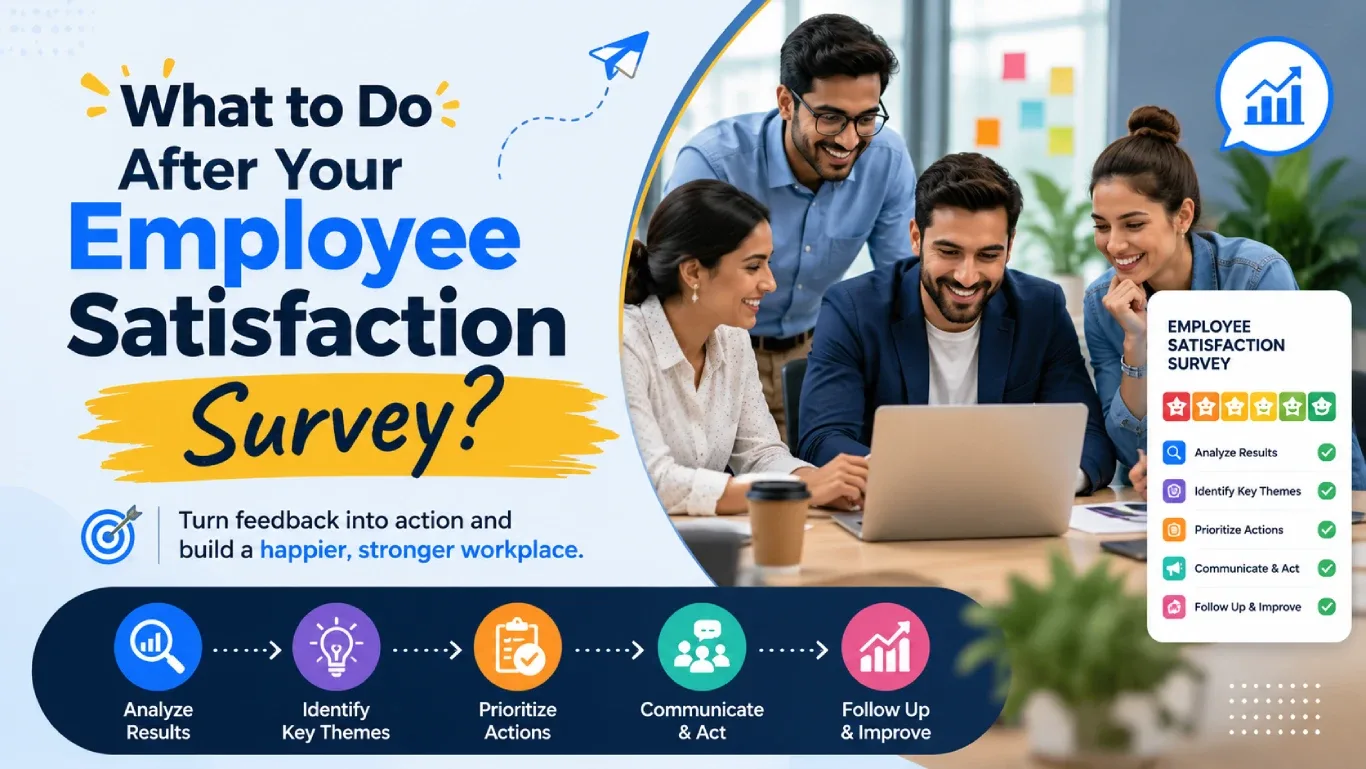
If you want to turn those charts and graphs into real, positive changes, you need a solid employee satisfaction survey action plan. Here is your step-by-step guide to keeping the momentum going and turning feedback into tangible results.
- Say Thank You (and Mean It)
Before you start fixing problems, acknowledge the effort. Your team took time out of their busy days to share their honest thoughts. Within 48 hours of the survey closing, send a quick message thanking them.
You don’t need to have all the answers right away. A simple message saying, We hear you, we are reviewing the data, and we will share the key findings by 12/05/26 goes a long way in building transparency. - Dig Into the Data (Without Panicking)
When you start reading the comments, it’s easy to feel defensive especially if the feedback is critical. Take a step back. Remember that honest feedback is a gift, even when it stings.
Look for themes rather than fixating on isolated comments. Are people consistently complaining about burnout? Is there a lack of clarity around career progression? If you are focused on improving workplace culture in KSA, pay special attention to feedback regarding work-life balance, cultural inclusivity, and localization initiatives, as these are major drivers of retention in the region. - Share the Results Transparently
Don’t hide the ugly truths. Schedule a town hall or an all-hands meeting to share a high-level summary of the results.
Highlight the positives (what are you doing right?) but be brave enough to own the negatives. Say, “You told us that our cross-departmental communication is broken, and we agree.” This level of vulnerability from leadership instantly boosts trust and shows your team that their voices were actually heard. - Build Your Employee Satisfaction Survey Action Plan
You cannot fix everything at once. If you try to tackle 15 different initiatives, you will fail at all of them. Instead, pick 2 to 3 key focus areas.
Identify Quick Wins: Is there a policy you can change tomorrow? (e.g., upgrading the coffee machine, relaxing the dress code on Thursdays). Do these immediately. It shows instant ROI on their feedback.
Form Focus Groups: For complex issues like ” lack of management support,” involve your employees in the solution. Create small, cross-functional committees to brainstorm actionable fixes.
Assign Ownership and Deadlines : An action plan without a timeline is just a wish list. Give every initiative a clear owner and a deadline. - Recognize When Structural Change is Needed
Sometimes, survey results reveal deep-rooted issues that a quick policy update can’t fix. If the feedback points to toxic leadership, deeply flawed workflows, or severe misalignment in roles, you aren’t just looking at an engagement problem you are looking at a structural problem.
In these cases, you might need to look into formal organizational restructuring steps. This could mean redefining reporting lines, overhauling your compensation and total rewards strategy, or completely transforming your HR framework. It’s heavy lifting, but it’s often the only way to save your company culture.