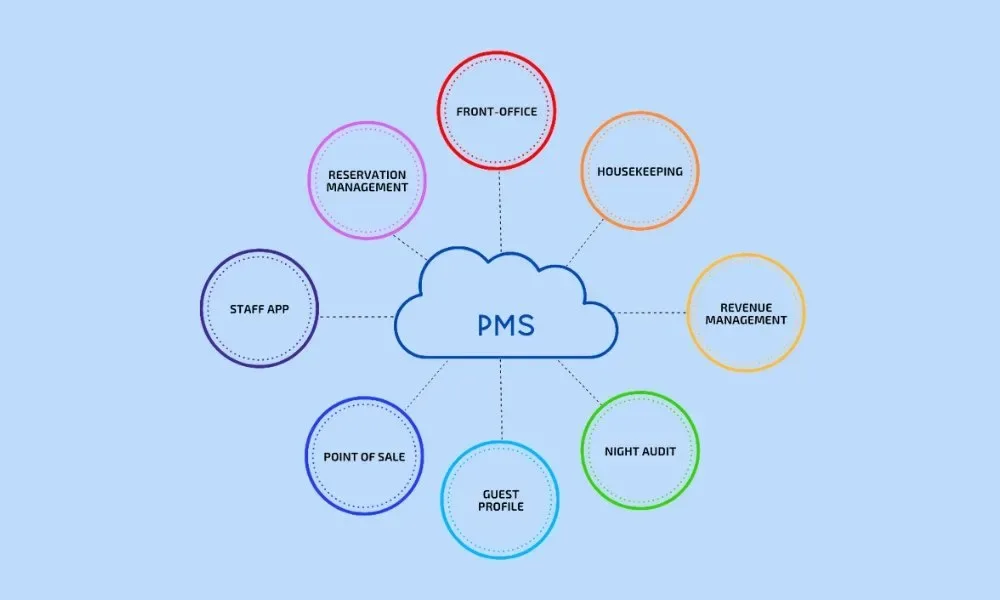
Short‑term rental management has always been a dynamic industry, but the pace of change in recent years has accelerated beyond expectations. What used to be a relatively simple workflow — managing bookings, coordinating cleanings, and communicating with guests — has evolved into a complex operational ecosystem. This is why the PMS.Rent intelligent platform is becoming a reference point for managers who want to stay ahead of the curve in 2026.
The complexity problem is real — and growing
Most managers today rely on a mix of disconnected tools. One app handles guest communication, another manages cleaning schedules, a third controls pricing, and a fourth synchronizes channels. Each tool solves a specific problem, but together they create fragmentation. This fragmentation is the silent productivity killer that drains time, increases mistakes, and slows down growth.
2026 is the year when managers finally recognize that the problem isn’t the workload — it’s the lack of integration.
Intelligent systems redefine operational clarity
An intelligent property management system doesn’t just centralize data — it creates clarity. When bookings, tasks, messages, pricing, and automation live inside one ecosystem, managers gain a level of visibility that fragmented setups simply cannot provide.
This clarity leads to:
- faster decision‑making
- fewer operational errors
- predictable workflows
- real‑time situational awareness
In a competitive market, clarity becomes a strategic advantage.
Automation becomes powerful only when unified
Automation is often misunderstood. Many managers believe that adding more automated tools will solve their problems. But automation inside isolated apps often fails because the data isn’t synchronized. A message may be sent at the wrong time, a cleaning task may not update, or pricing may remain outdated.
Unified automation, on the other hand, operates across the entire workflow. When a booking changes, every connected process updates instantly — communication, cleaning, pricing, and channel availability. This is true automation, not a patchwork of scripts.
Scaling requires simplicity, not complexity
Managers who grow from 5 to 50 properties quickly discover that fragmented setups collapse under pressure. Complexity multiplies with each new listing, each new cleaner, and each new channel. Intelligent systems solve this by reducing operational noise. Instead of adding more tools, managers rely on one ecosystem that scales naturally.
This is why 2026 marks a shift toward platforms that prioritize simplicity, clarity, and intelligence.
The future belongs to managers who embrace intelligent ecosystems
Short‑term rental management is no longer about doing more — it’s about doing better. Intelligent systems allow managers to focus on strategy instead of micromanagement. They reduce stress, eliminate repetitive tasks, and create a seamless experience for both managers and guests.
The managers who thrive in 2026 will be those who adopt unified, intelligent platforms that transform complexity into control.