When Reality Defies Intuition: The Ever-Evolving Nature of Physics
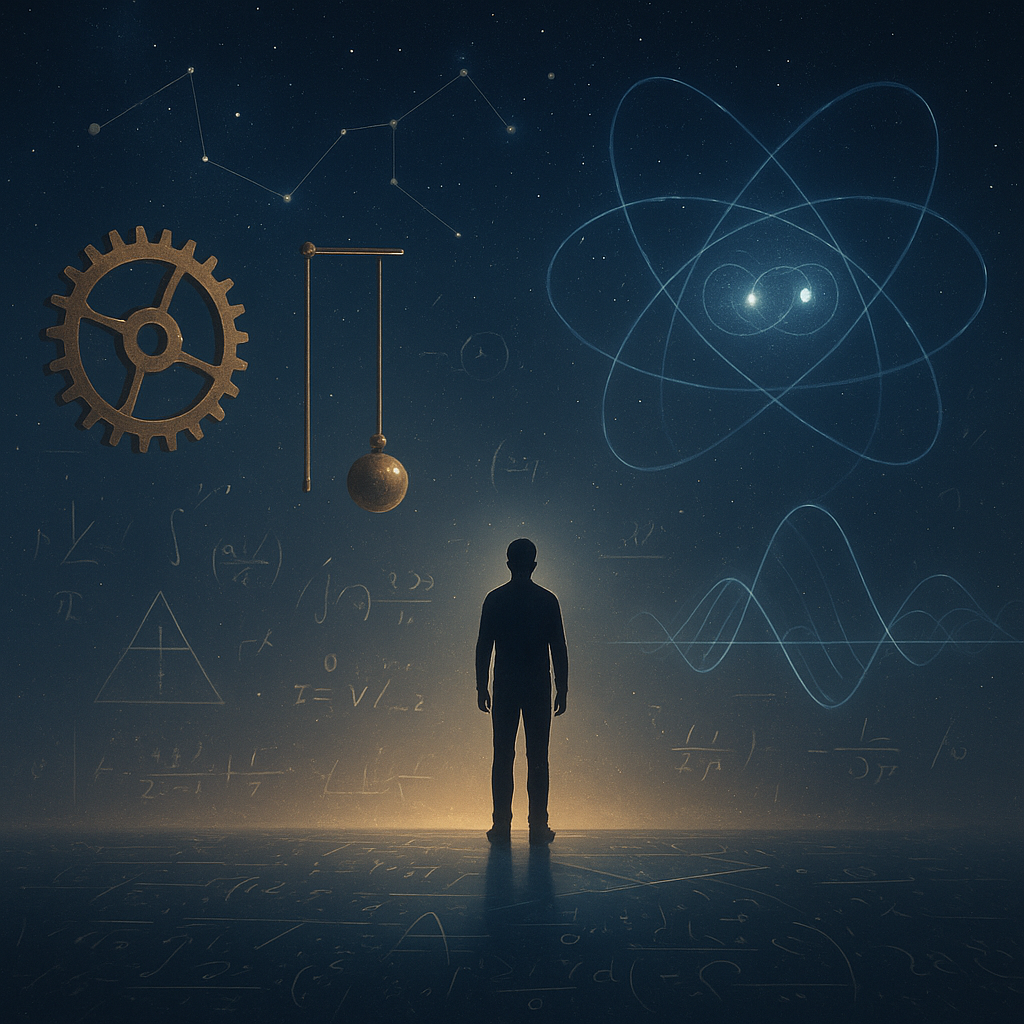
Imagine standing at the edge of a black hole, witnessing space-time twist into something unfathomable, while particles dance to quantum rhythms that defy classical logic. This is not science fiction but the frontier where modern physics operates. The discipline, rooted in centuries of inquiry, continuously pushes the boundaries of what we consider real and tangible. From the dawn of classical mechanics to the enigmatic quantum world, physics has shaped our understanding of the universe at every scale. As of 2026, the field is undergoing a renaissance, propelled by breakthroughs in quantum technologies, gravitational wave astronomy, and particle physics experiments. These advances force us to rethink fundamental concepts such as matter, energy, and causality.
The allure of physics lies in its ability to reveal the unseen fabric of reality. Yet, its progress is neither linear nor absolute. Paradigm shifts, like those introduced by Einstein’s relativity or the birth of quantum mechanics, have continuously overturned established knowledge. Today, physicists grapple with reconciling the two pillars of modern physics: general relativity and quantum mechanics. This tension drives research into quantum gravity and theories beyond the Standard Model, aiming to unify our understanding of the cosmos. As TheOmniBuzz previously explored, such efforts are not merely academic—they underpin transformative technologies and deepen humanity's cosmic perspective.
“Physics is not just about particles and forces; it’s about uncovering the rules that govern existence itself.” — Dr. Lena Ortiz, Theoretical Physicist
Tracing the Journey: From Newtonian Foundations to Quantum Frontiers
The story of physics begins with classical mechanics, formalized by Isaac Newton in the 17th century, whose laws of motion and universal gravitation explained planetary orbits and terrestrial phenomena with remarkable accuracy. This framework dominated scientific thought for over two centuries, establishing a deterministic view of the universe. However, by the late 19th century, anomalies emerged—blackbody radiation, the photoelectric effect—that classical physics could not explain.
The 20th century witnessed revolutionary ideas reshaping the field. Albert Einstein’s special and general relativity redefined space and time, revealing a dynamic, curved spacetime influenced by mass and energy. Concurrently, the advent of quantum mechanics, pioneered by figures like Planck, Schrödinger, and Heisenberg, introduced probabilistic descriptions of microscopic phenomena. These developments fractured the classical worldview and introduced concepts like wave-particle duality, uncertainty, and entanglement.
The mid-20th century brought the formulation of the Standard Model, a quantum field theory unifying electromagnetic, weak, and strong nuclear forces. Yet, gravity remained elusive, resisting incorporation into quantum frameworks. This historical context sets the stage for ongoing efforts to resolve these inconsistencies. The fusion of general relativity and quantum mechanics remains a holy grail, inspiring theories like string theory and loop quantum gravity.
“Understanding physics means embracing the unknown and revising our assumptions about nature’s deepest workings.” — Prof. Marcus Yam, Historian of Science
Quantifying the Unknown: Data-Driven Insights into Physics Progress
Recent years have seen a surge in empirical data fueling physics research. Large-scale projects like the Large Hadron Collider (LHC) have generated unprecedented volumes of particle collision data, enabling detailed examinations of subatomic particles. The 2025 update from CERN revealed new anomalies in B-meson decays, which may hint at physics beyond the Standard Model. These rare decay patterns challenge the current theoretical framework and stimulate fresh hypotheses.
Simultaneously, gravitational wave observatories such as LIGO, Virgo, and the newly operational Einstein Telescope have expanded the catalog of detected cosmic events. As of early 2026, over 120 confirmed gravitational wave signals have been recorded, including mergers of black holes and neutron stars. These observations offer a novel way to test relativity in extreme conditions and explore stellar evolution.
Quantum computing, once a theoretical concept, is now a practical tool in physics simulations. Companies like QubitX and research institutions worldwide have developed quantum processors with over 400 qubits, enabling simulations of complex quantum systems previously unreachable by classical computers. This computational leap accelerates material science, condensed matter physics, and even cosmological modeling.
- Particle Physics: Discovery of rare decay anomalies in B-mesons at LHC (2025)
- Gravitational Waves: 120+ detections, including exotic black hole mergers (2026)
- Quantum Computing: 400+ qubit processors enabling advanced simulations (2026)
- Space Telescopes: James Webb successor providing detailed cosmic microwave background data
- AI in Physics: Machine learning models improving data analysis and theoretical predictions
These quantifiable strides highlight physics’ expanding empirical base, enabling more precise tests of theories and fostering discoveries.
Physics in 2026: Breaking Barriers and Shaping Tomorrow
The current landscape of physics is marked by dynamic innovations that blur the boundary between pure research and application. One notable development is the experimental progress in quantum gravity. Projects like the Quantum Horizon Initiative have begun testing predictions of loop quantum gravity using ultra-sensitive interferometers, aiming to detect potential quantum fluctuations in spacetime itself.
Another frontier is dark matter research. Recent experiments using deep-underground detectors such as XenonNT and LUX-ZEPLIN have tightened constraints on weakly interacting massive particles (WIMPs), pushing physicists to explore alternative candidates like axions and dark photons. The integration of astrophysical observations with particle experiments is refining dark matter models, which remain one of the biggest unsolved puzzles.
Technological spin-offs from physics research are also flourishing. Quantum sensors for medical imaging and navigation have entered commercial use, demonstrating the field's practical impact. The synergy between quantum information science and gravitational physics is opening pathways toward ultra-precise timekeeping and space-based quantum communication networks.
These advancements are not isolated. Collaborative international efforts and cross-disciplinary approaches accelerate progress. The 2026 International Physics Congress emphasized the importance of open data and reproducibility, facilitating global cooperation.
- Quantum gravity experimental tests moving from theory to measurable predictions
- Dark matter searches expanding beyond traditional WIMP models
- Quantum sensor technology becoming commercially viable
- International collaboration intensifying, leveraging AI and open data
- Emergence of physics-based quantum communication satellites
These trends illustrate physics’ dual role as a quest for knowledge and a driver of innovation.
The Voices Behind the Breakthroughs: Expert Perspectives on Physics’ Trajectory
Leading physicists emphasize the importance of embracing complexity and interdisciplinarity. Dr. Amina Patel, a pioneer in quantum field theory, stresses that “the future of physics lies in integrating insights across scales—from the quantum foam to cosmic structures.” Her team’s work on emergent phenomena provides a framework connecting microscopic quantum effects with macroscopic behavior.
Meanwhile, astrophysicist Dr. Carlos Mendes highlights the transformative impact of gravitational wave astronomy. “We are witnessing the universe’s most violent events in real time, rewriting textbooks and inspiring new questions about matter under extreme conditions,” he explains. His recent research on neutron star collisions sheds light on heavy element formation.
From an industry perspective, innovators like Elena Kuznetsova, CTO of QubitX, underscore the mutual benefits of physics and technology. “Quantum computing is both a tool for physics and a beneficiary of its theories. This feedback loop accelerates discovery and commercialization.”
“Physics thrives at the intersection of curiosity and technology, where questions spark inventions that redefine what’s possible.” — Elena Kuznetsova, Quantum Technology Leader
These viewpoints reveal a vibrant ecosystem where theory, experiment, and application coalesce.
Looking Ahead: The Next Frontiers and What They Mean for Society
Physics in the coming decades promises to continue challenging perceptions and unlocking new capabilities. Key areas to watch include:
- Quantum Gravity Validation: Experimental confirmation or refutation of quantum gravity theories could revolutionize fundamental physics.
- Dark Sector Exploration: Identifying the nature of dark matter and dark energy will potentially reshape cosmology and particle physics.
- Quantum Technologies: Expansion of quantum computing, sensing, and communication will transform industries from healthcare to finance.
- Multimessenger Astronomy: Integrating gravitational waves, neutrinos, and electromagnetic signals to comprehensively study cosmic events.
- Artificial Intelligence Integration: AI tools will deepen data analysis and accelerate hypothesis generation.
Societal impacts will extend beyond academia. Educational paradigms are evolving to equip future generations with interdisciplinary skills, as covered in our piece on Mastering Physics. Furthermore, the ethical and philosophical implications of quantum technologies and cosmological discoveries will prompt broader public discourse.
Physicists and policymakers alike must navigate the balance of innovation, accessibility, and responsibility. The promise of physics is immense, but so is the need for stewardship.
“The frontier of physics is not just a scientific horizon—it’s a societal one, demanding thoughtful integration of knowledge and values.” — Prof. Naomi Cheng, Science Policy Advisor
For comprehensive context on recent breakthroughs, readers can explore our detailed analysis in Quantum Horizons and Cosmic Mysteries and the broader implications outlined in 2026 Update: Physics at the Frontier of Discovery.