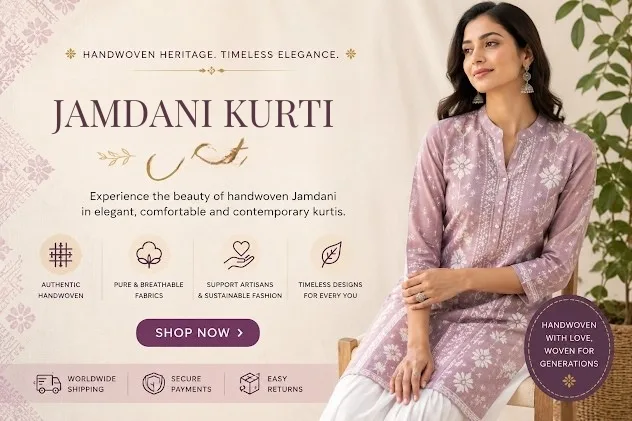
The single biggest mistake buyers make when purchasing a jamdani kurti set is judging authenticity by price and appearance alone, instead of checking the weave itself. This leads to paying handloom prices for machine-made or printed imitations — often thousands of rupees more than the fabric is actually worth. The fix is simple: know what to check before you buy, not after.
Jamdani kurti sets have become a popular pick for buyers who want something rooted in Indian craft — elegant, breathable, and distinct. But that popularity has also created a market where imitation pieces are sold at near-authentic prices, and genuine buyers end up overpaying without realizing it. Below are the mistakes actually costing buyers money, and how to avoid each one.
Mistake #1: Assuming a Higher Price Means It's Authentic
Quick answer: Price is not a reliable indicator of authenticity. Sellers price imitation "jamdani-style" kurti sets close to genuine handloom pieces precisely because buyers assume a higher price signals real craftsmanship.
A machine-printed kurti set that costs a fraction to produce can still be marked up to look like a fair "handloom price." Buyers who rely on price as their main authenticity check are the easiest to sell fakes to.
What to do instead: Judge the fabric, not the price tag. Authentic jamdani has telltale physical signs (covered below) that no amount of clever pricing can fake.
Mistake #2: Not Checking the Back of the Fabric
Quick answer: The back of a genuine jamdani kurti set shows the same motif as the front, because the design is woven through the cloth. Printed imitations only show the design on the front.
This is the fastest, most reliable check available to any buyer, and it's the one most people skip because they're focused on how the kurti looks worn, not how it's made.
How to check it:
- Turn the fabric over near a woven motif
- On real jamdani, you'll see the same pattern, slightly softer, on the reverse side
- You'll also notice small loose or knotted thread ends — a natural result of hand-weaving
- On a print, the back will be plain or blank where the motif is
Mistake #3: Buying From Unverified, Untraceable Sellers
Quick answer: Buying from sellers who can't confirm the weaving cluster or weaver source makes it far more likely you're buying a fake — because there's no accountability if the claim turns out to be false.
Tourist markets and unmarked online listings are the most common sources of this mistake. A seller who genuinely sources handloom jamdani can usually tell you where it was woven — Shantipur, Fulia, Dhatrigram, or another recognized cluster in West Bengal. A seller reselling mass-produced stock typically can't, or gives vague answers.
What to do instead: Buy from sources with weaver traceability — brands, cooperatives, or GI-registered sellers who can explain or show their sourcing chain.
Mistake #4: Ignoring Thread Count and Weave Complexity
Quick answer: Treating all jamdani kurti sets as equally valuable, regardless of thread count or motif complexity, is a mistake — finer weaves take significantly longer to produce and are priced accordingly, so paying premium prices for a simple, coarse weave is an overpay.
Not all jamdani is the same. A finely woven, intricate motif on a high thread count can take a skilled weaver several weeks. A simpler, coarser design takes far less time. Buyers who don't ask about this often end up paying premium prices for basic work.
What to do instead: Ask what thread count or weave grade you're buying. Reputable sellers will know and explain this without hesitation.
Mistake #5: Overlooking Care Instructions and Long-Term Value
Quick answer: Treating a jamdani kurti set like ordinary fabric — machine washing, direct sunlight drying, ironing directly on the motif — damages the weave and shortens the life of a piece that should last for years with proper care.
Buyers who spend on genuine jamdani but then damage it through improper care lose value twice: once in the initial overpay risk, and again in reduced garment lifespan.
Correct care for a jamdani kurti set:
- Hand wash in cold water with mild detergent
- Dry in shade, never direct sunlight
- Iron on the reverse side, low-medium heat
- Store folded in breathable cotton, not plastic
Authentic vs. Imitation Jamdani Kurti Set — Quick Comparison
CheckAuthentic Jamdani Kurti SetImitation / Printed Kurti SetBack-of-fabric motifVisible, matches frontAbsent or faintThread endsPresent near motifsNone (smooth throughout)Motif repetitionSlight natural variationPerfectly identical repeatsTextureMatte, slightly crispSmooth, sometimes glossySeller can name weaving clusterUsually yesUsually vague or noPrice justificationTime + skill of weaverFabric + printing cost
How Indeloom Helps Buyers Avoid These Mistakes
Indeloom sources jamdani kurti sets directly from weaver clusters in West Bengal, which removes the two biggest risk points buyers face: untraceable sourcing and unverified authenticity.
- Direct weaver sourcing — no unmarked middlemen chain, so pricing reflects actual weaving time and skill
- Verified handwoven motifs — every piece is checked for the weave-through construction that separates real jamdani from prints
- Traceable origin — buyers can know which cluster their kurti set was woven in
- Quality control before dispatch — pieces are checked for weave integrity, colorfastness, and finishing
Buying from a source with this kind of accountability removes most of the guesswork that leads to the mistakes above.
FAQs
What's the most common mistake people make when buying a jamdani kurti set? Assuming price or visual appeal alone confirms authenticity. The most reliable check is the back of the fabric, not the price tag or the front design.
How much more does an authentic jamdani kurti set typically cost than an imitation? This varies by thread count and motif complexity, but imitation pieces are priced to closely mirror genuine handloom prices specifically to mislead buyers — so cost alone isn't a safe way to tell them apart.
Can I return or verify a jamdani kurti set after purchase if I suspect it's fake?
This depends on the seller's return policy. Buying from traceable, weaver-sourced sellers reduces the chance you'll need to, since authenticity is verified before the piece reaches you.
Does a higher thread count always mean better quality?
Generally, a higher thread count and more intricate motif indicate finer, more time-intensive weaving, which usually justifies a higher price — but "better" also depends on your intended use, since simpler weaves can be more practical for everyday wear.
Is it a mistake to buy a jamdani kurti set from a tourist market?
Not always, but it carries higher risk. Tourist markets often mix genuine handloom sellers with resellers of mass-produced imitations, so the fabric checks above matter more in these settings than the location or price alone.
Don't Let One Mistake Cost You Thousands
The difference between an authentic jamdani kurti set and an overpriced imitation usually comes down to a few simple checks most buyers never make. Skip the guesswork by buying from a source that verifies authenticity and traces every piece back to the weaver who made it.
Shop Indeloom's collection of verified, weaver-sourced jamdani kurti sets and buy with the confidence of knowing exactly what you're paying for.