Why do some machining setups stay locked in place for hours under heavy cutting pressure while others slowly drift out of alignment halfway through a job? The answer usually has less to do with the machine itself and far more to do with the workholding underneath it. A rigid setup begins at the table. If the fastening system is unstable, every operation above it becomes harder to control.
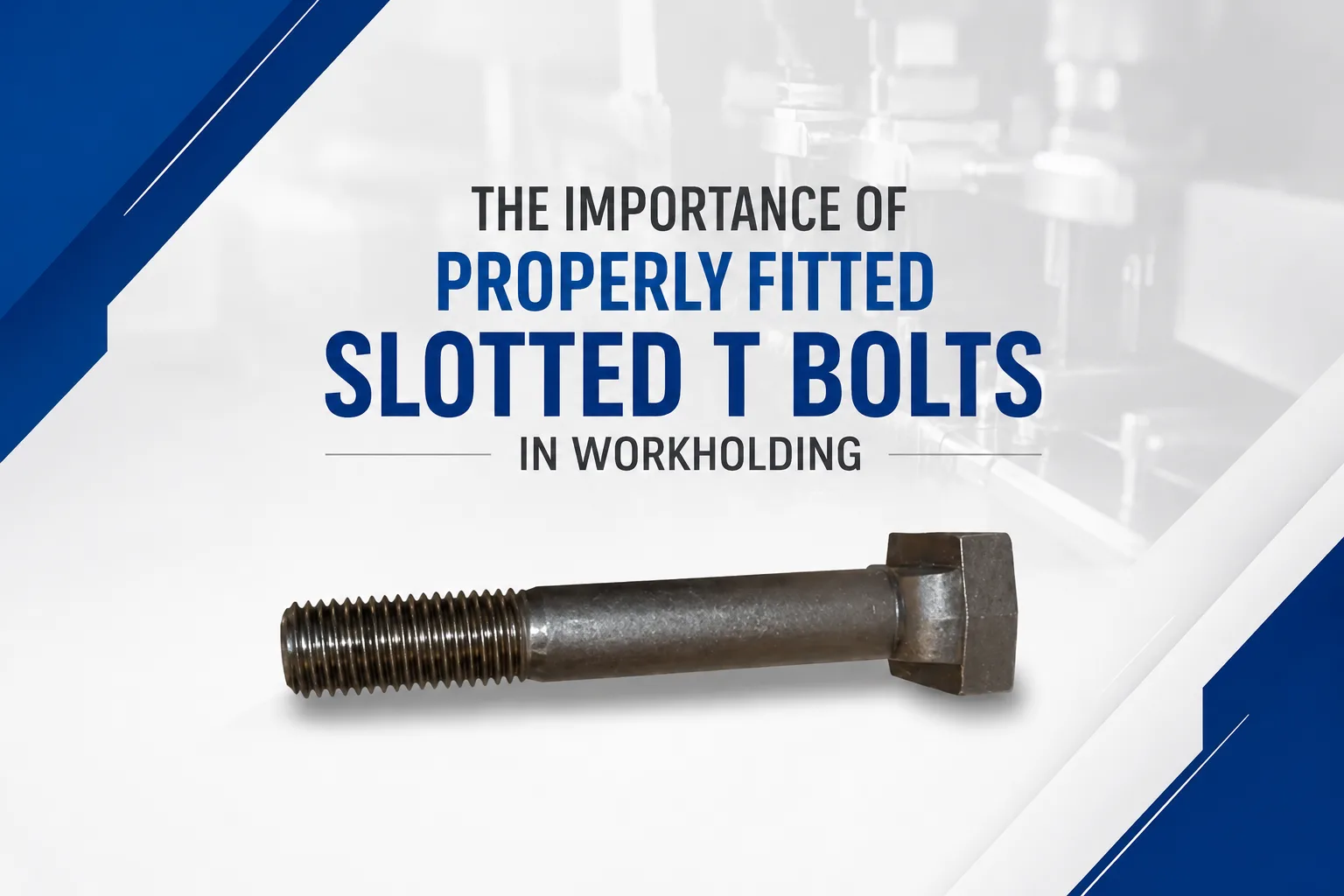
The Best T Slot Bolts are built specifically for machine tool tables where secure positioning matters throughout the machining process. Their T-shaped heads slide directly into the channels of the table, creating a mechanical hold that resists twisting and movement once tightened. That design is not a convenience feature. It is the foundation of reliable workholding. When the bolt fits the slot correctly, the setup becomes far more resistant to vibration, side pressure, and shifting during machining operations.
Workholding Starts with Proper Engagement
A machine table is designed around controlled positioning. Every slot, channel, and fastening surface exists for a reason. T-slot bolts are engineered to match those channels precisely so the workpiece can be secured without movement across multiple axes. That fit has to be exact.
If the head of the bolt is undersized, the hardware may rotate or shift under pressure. If the dimensions are too large, the bolt may not seat properly inside the channel. Neither condition belongs in a serious machining setup. Stable workholding depends on hardware that fits tightly and transfers pressure evenly throughout the assembly.
Machinists notice poor fit immediately. A clamp starts loosening unexpectedly. A fixture needs repeated adjustment. Surface finishes become inconsistent. In some cases, the workpiece develops slight movement that is almost impossible to spot visually but shows up clearly in the finished dimensions.
That is the frustrating part about workholding problems. The movement is often tiny, but the consequences are not.
Pressure Distribution Matters More Than Most People Think
A workholding system is essentially a controlled pressure network. Tightening force travels from the nut through the washer, clamp, stud, and finally into the machine table itself. Every component affects how that force is distributed.
Properly fitted T-slot bolts help maintain even pressure because the bolt head stays firmly engaged within the machine table channel. That stability improves the performance of the entire setup above it.
The glossary specifications behind these components reflect real machining demands. T-slot bolts are hot forged from C-1045 steel and manufactured for high-strength workholding applications. The material matters because machine setups endure constant stress from cutting forces, vibration, repeated tightening cycles, and heavy fixture loads.
A weaker bolt can deform gradually under pressure. A properly manufactured T-slot bolt maintains its engagement inside the slot and continues transferring force evenly across the setup. That consistency becomes especially important in larger fixtures where several clamps and fastening points must work together simultaneously.
Clamps Only Work as Well as the Hardware Beneath Them
Workholding hardware functions as a complete system. A clamp alone does not create stability. It depends entirely on the components supporting it underneath.
Forged plain clamps, goose neck clamps, finger clamps, serrated clamps, and adjustable strap clamps all rely on secure fastening pressure created through T-slot systems. If the bolt shifts inside the channel, clamp pressure changes immediately.
That instability spreads quickly across the setup.
Step blocks, double end studs, flanged nuts, coupling nuts, and extra thick washers are all designed to function together in machining environments where rigid positioning matters. The purpose is not simply tightening hardware aggressively. The goal is maintaining stable compression throughout the machining operation.
This is where properly fitted T-slot bolts become critical. Their engagement inside the table slot prevents unwanted rotation and movement while helping the rest of the workholding assembly maintain even pressure.
In real machine shops, the difference becomes obvious during longer production runs. Stable setups stay consistent. Poor setups require constant attention.
Jigs and Fixtures Depend on Repeatability
Jigs and fixtures exist for one reason: repeatable positioning. Every machining operation depends on the workpiece remaining fixed in the same orientation from one cycle to the next. Once movement enters the setup, repeatability disappears. Measurements drift. Tool paths become inconsistent. Operators lose confidence in the setup itself. Properly fitted T-slot hardware helps eliminate that uncertainty.
Because the bolt head locks securely inside the machine table channel, the fastening assembly becomes far more resistant to shifting during machining. That mechanical engagement is one of the reasons T-slot systems remain standard throughout industrial machining environments.
The surrounding components matter too. Serrated step clamps work with step blocks for adjustable positioning. T-slot nuts can be rigidly fastened to flanged nuts or hex nuts by double end studs. Extra thick washers offer flat steel washers for increased bearing support under hardware. All pieces help with set-up stability.
Suppliers such as George H. Seltzer & Co. continue manufacturing these specialized workholding components because standard hardware simply cannot provide the same performance on machine tool tables.
Secure Workholding Improves Machining Efficiency
A stable setup affects more than accuracy. It’s a problem that impacts all shop operations.
Machinists in a secure workholding position will not need to spend as much time re-tightening workholding, trying to correct alignment issues, or checking for workholding movement between operations.
Production runs become more predictable because the setup behaves consistently throughout the process.
That reliability matters in both large-scale production environments and smaller machine shops running custom setups. Nobody wants to stop a job halfway through because a poorly fitted bolt allowed movement inside the fixture.
Industrial workholding systems are designed around rigidity for exactly this reason. The T-slot bolts and nuts, clamps, studs and step blocks are designed exclusively for machine table applications where motion is not allowed.
Manufacturers like George H. Seltzer & Co. continue supplying these components because properly secured setups remain essential to accurate machining.
Conclusion
Reliable machining begins long before the cutter touches the material. It starts with the workholding system anchored to the table. When properly fitted with T-slot hardware, it provides mechanical stability to resist movement, maintain pressure and perform repeatable machining operations in difficult setups.
If bolts are snugly fitted within the machine table channels, clamps work better, fixtures remain aligned through loading and the entire setup becomes more reliable through loading. Wherever stability is a must every day in machine shops, Slotted T Bolts are one of the most critical components of the work holding system.