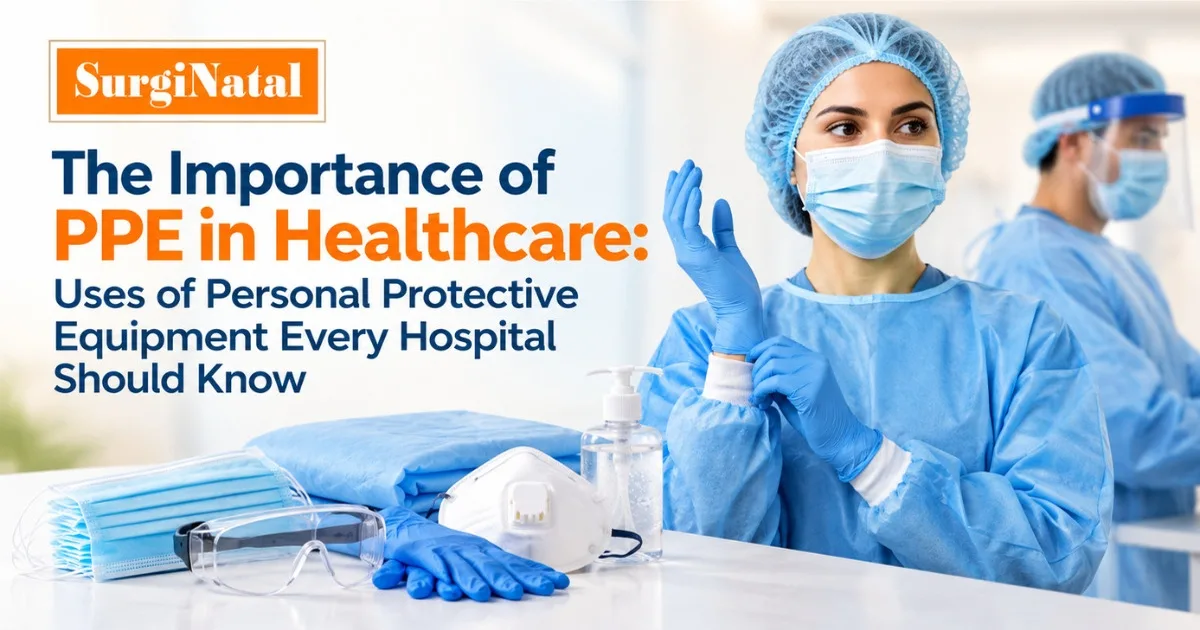
Personal protective equipment plays a vital role in every hospital and healthcare setting. Doctors, nurses, and support staff work closely with infectious patients, bodily fluids, sharp instruments, and harsh chemicals every day. In such an environment, protective equipment (PPE) acts as the first line of defence, creating a barrier between the healthcare worker and potential hazards. A single lapse can put both staff and patients at risk. The importance of PPE in healthcare lies in its ability to reduce exposure, prevent cross-contamination, and support infection prevention, keeping every care environment safe for everyone. Proper PPE use protects lives every day.
What is PPE in Healthcare?
PPE is specialised clothing and gear worn to reduce contact with infectious agents and workplace hazards. Protective equipment acts as a barrier between the wearer and germs, splashes, or contaminated surfaces. In medical settings, its purpose is simple: protect the caregiver and protect the patient from the caregiver.
Understanding Protective Equipment in Medical Settings
PPE works by physically blocking contact between skin, eyes, or airways and harmful material. Healthcare workers need it during examinations, procedures, wound care, and while handling waste or laboratory samples. Items are either disposable (single-use, then discarded) or reusable (cleaned and sterilised between uses). Disposable items suit most routine tasks, while reusable ones must follow strict reprocessing protocols.
Why PPE is Important in Hospitals and Healthcare Facilities
PPE protects both workers and patients. It reduces exposure to infectious materials, supports infection prevention and control programmes, and shields staff during invasive or messy procedures. It also helps maintain hospital hygiene standards, since contaminated clothing and hands are common routes for spreading infection between wards. When PPE is used consistently, hospitals see fewer healthcare-associated infections and fewer workplace injuries, and staff can work with greater confidence.
Different Types of PPE in Healthcare and Their Uses
Medical Gloves
Examination gloves suit routine, non-sterile tasks, while sterile surgical gloves are made for operating theatres and invasive procedures. Both are commonly available in nitrile and latex. Nitrile suits people with latex sensitivity, while latex offers excellent flexibility. Choosing gloves according to the procedure matters, because the wrong type can compromise safety or dexterity.
Surgical Masks and N95 Respirators
Surgical masks act as a barrier against splashes and respiratory droplets and are widely used in routine clinical care. A properly fitted N95 respirator goes further, filtering airborne particles and protecting the wearer during higher-risk exposures such as airborne diseases.
Hospital Protective Clothing
Disposable gowns, surgical gowns, aprons, and coveralls protect skin and uniforms from fluids and contamination. They are needed whenever splashes, spills, or contact with infectious patients is likely.
Eye and Face Protection
Face shields and protective goggles guard the eyes, nose, and mouth against splashes and sprays during suctioning, dressing changes, and surgery.
Uses of Personal Protective Equipment in Hospitals
The uses of personal protective equipment span almost every clinical activity. During patient examination, gloves and masks reduce transmission. In surgery, sterile gloves, gowns, and masks protect the surgical field. Emergency departments and intensive care units rely on layered PPE because patients’ infection status is often unknown or high-risk. PPE is equally important when handling medical waste and contaminated linen, and when cleaning and disinfecting wards, where staff face exposure to chemicals and residual pathogens.
Difference Between Surgical Masks and N95 Masks
Both masks have a place in healthcare, but they are built for different risks.
FeaturesSurgical MasksN95 MasksMain purposeBarrier against splashes and dropletsRespiratory protection against airborne particlesFitLoose-fittingTight-fittingFiltrationVaries by mask standardFilters at least 95% of test particles under specified conditionsCommon useRoutine clinical care when indicatedAirborne precautions and higher-risk respiratory exposure
Healthcare professionals select masks based on the exposure risk, the patient’s condition, and hospital infection-control guidelines.
Proper Use of Medical Gloves in Healthcare
Gloves should be worn whenever contact with blood, body fluids, mucous membranes, or non-intact skin is expected. Choose the right size and material, since loose gloves slip and tight ones tear. Put them on with clean hands, and remove them carefully by peeling them inside-out without touching the outer surface. Change gloves between patients and between tasks on the same patient. Gloves do not replace hand hygiene, so wash or sanitise hands before wearing and after removing them.
Essential PPE Products for Hospitals and Healthcare Professionals
Here are five commonly used products, with notes on their intended applications.
Blue Nitrile Powder-Free Gloves – Disposable, Non-Sterile (100 Pcs)
Made from powder-free nitrile, these gloves suit routine examinations and other non-sterile healthcare tasks. Nitrile offers good puncture resistance and is a common choice for staff with latex concerns.
Disposable 3 Ply Surgical Face Mask – 100 Pcs
This disposable mask is intended for appropriate clinical settings, helping provide a barrier against splashes and droplets during routine care.
N-95 Face Mask Earloop
An N95 respirator depends on both filtration performance and a tight facial seal. Before healthcare use, always check the product’s certification and conduct a fit check so the respirator performs as intended.
Latex Medical Examination Gloves – 100 Pcs
These flexible gloves suit non-sterile medical examinations. Because latex allergies affect some staff and patients, facilities should consider allergy risks and keep alternatives available.
Nulife Sterile Surgical Gloves
Designed for surgical procedures, sterile gloves help maintain aseptic technique and protect the surgical site from contamination.
How to Choose the Right Personal Protective Equipment in Hospitals
Start by identifying the exposure or procedure, such as splashes, droplets, airborne particles, or sterile work. Select materials and sizes that fit well and allow comfortable movement. Check applicable quality standards and certifications, and follow your hospital’s infection-control policies. Finally, store PPE in clean, dry conditions and dispose of used items correctly in designated waste streams.
Common Mistakes to Avoid When Using PPE
Even good equipment fails when used incorrectly. Common mistakes include wearing ill-fitting protective gear, reusing single-use PPE against instructions, and touching contaminated surfaces of masks or gowns. Removing PPE in the wrong order or manner can transfer contamination to skin, and skipping hand hygiene after removing gloves undoes much of the protection. Regular training and supervision help prevent these errors.
Buy Hospital PPE and Medical Protective Equipment Online at SurgiNatal
Looking for reliable protective supplies for your hospital or clinic? You can find medical gloves, surgical masks, respirators, and other hospital protective essentials in one place at SurgiNatal, an online store for surgical and medical supplies. Whether you need everyday examination gloves or sterile surgical gloves, ordering is simple; the products are genuine, and delivery is available across India. Explore PPE and Hospital Protective Equipment online today.
Frequently Asked Questions About PPE in Healthcare
Q1. What is PPE in healthcare, and why is it necessary?
Ans. PPE is protective gear such as gloves, masks, gowns, and eyewear. It is necessary to prevent the spread of infection and protect against hazards.
Q2. What are the different types of PPE used in hospitals?
Ans. Common types include gloves, surgical masks, N95 respirators, gowns, aprons, goggles, and face shields.
Q3. What is the difference between surgical masks and N95 masks?
Ans. Surgical masks are loose-fitting barriers against splashes and droplets. N95s fit tightly and filter airborne particles.
Q4. When should healthcare workers wear medical gloves?
Ans. Whenever contact with blood, body fluids, mucous membranes, or contaminated items is likely.
Q5. Can disposable PPE be reused?
Ans. No. Single-use PPE should be discarded after use unless official guidance says otherwise.
Q6. How does PPE help prevent infections in hospitals?
Ans. It blocks pathogens from reaching the wearer and stops healthcare workers from carrying them between patients.