Most parents wait for a dentist to bring up braces. But by the time that conversation happens, some issues that could have been caught early have already had years to develop. Early orthodontic assessment isn't about rushing children into treatment. It's about spotting problems while they're still easy to fix.
If you're a parent in Cheshire wondering when to start thinking about your child's bite, jaw growth, or crowded teeth, this guide walks you through why timing matters so much. Many families searching for orthodontics in Macclesfield are surprised to learn that the ideal first check-up happens far earlier than most people assume, often before a child has lost all their baby teeth.
Why Early Assessment Matters More Than People Think
Children's jaws are still growing, which is exactly why early assessment is so valuable. A dentist or orthodontist can guide that growth while it's happening, rather than trying to correct it afterwards.
Waiting until all the adult teeth have come through means some structural problems have already set in. At that stage, fixing them often takes longer and involves more complex treatment.
The Growth Window Doesn't Stay Open Forever
Bones respond to gentle pressure and guidance while a child is young. Once jaw growth slows down in the teenage years, that window narrows considerably. This is the main reason orthodontists recommend an initial check by around age seven.
What Age Should Children Have Their First Orthodontic Check?
The British Orthodontic Society, along with most dental associations, suggests age seven as a sensible benchmark. At this point, a mix of baby and adult teeth is usually present, giving an orthodontist enough information to judge how the bite is developing.
This doesn't mean treatment starts at seven. In most cases, it doesn't. It simply means a professional can flag anything worth monitoring and revisit it at the right time.
Signs Parents Shouldn't Ignore
A few everyday signs are worth mentioning to your dentist sooner rather than later:
- Teeth that look crowded or overlap noticeably
- Difficulty biting or chewing food comfortably
- A jaw that clicks, shifts, or seems misaligned
- Thumb-sucking or dummy use continuing past age four or five
- Speech that seems affected by tooth position
- Losing baby teeth much earlier or later than siblings did
None of these automatically mean treatment is needed. But they're worth a conversation.
What Happens During an Early Orthodontic Assessment
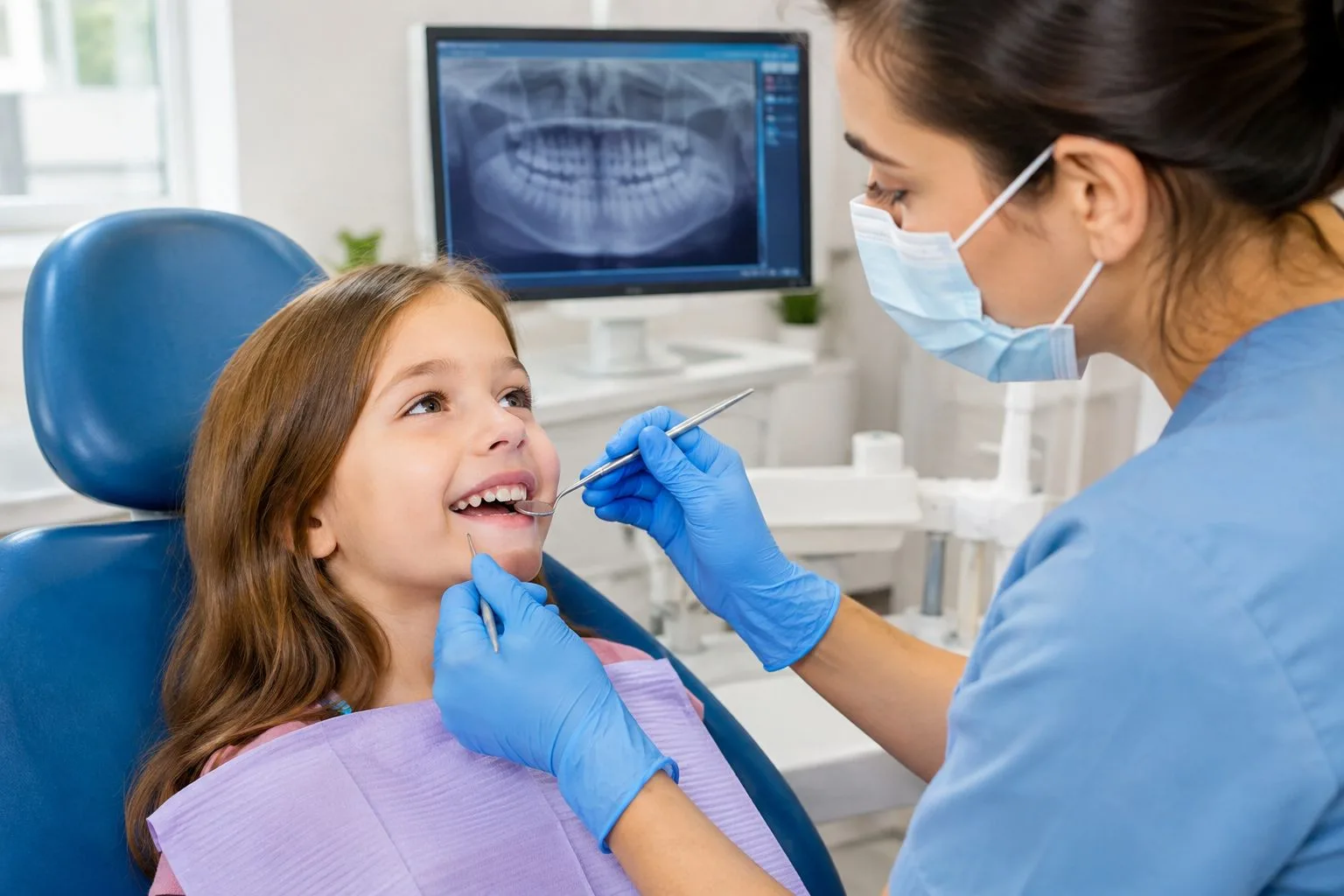
A first assessment is straightforward and rarely uncomfortable. It usually includes a visual examination, sometimes an X-ray, and a conversation with parents about what's been noticed at home.
Did You Know?
Roughly one in three children shows some sign of orthodontic concern by age seven, yet only a fraction need active treatment at that stage. Most simply get monitored, with progress reviewed every six to twelve months.
From here, one of three paths typically follows:
- No action needed - the bite and jaw are developing normally
- Monitoring - regular check-ins to track how things progress
- Early (interceptive) treatment - targeted intervention while the jaw is still growing
The Benefits of Catching Issues Early
Early intervention isn't just about straighter teeth. It can reduce the complexity of treatment later, sometimes avoiding the need for extractions or more invasive correction as a teenager.
Guiding Jaw Development
Interceptive treatment can widen a narrow palate, create space for crowded adult teeth, or correct a misaligned bite while bones are still soft enough to respond to gentle, gradual pressure.
Reducing the Risk of Injury
Protruding front teeth are more vulnerable to damage during play or sport. Correcting their position early can lower that risk considerably.
Supporting Confidence
Children notice their smiles more than parents sometimes realise. Addressing visible concerns early can make a genuine difference to how comfortable a child feels speaking and smiling in front of others.
A Note From Our Team
Having worked with families across Cheshire for many years, we've noticed that parents who bring their children in early tend to feel far more reassured throughout the whole process. There's less anxiety, fewer surprises, and a clearer sense of what to expect as their child grows. It's rarely about starting treatment immediately — it's about having a plan.
Common Mistakes Parents Make
Waiting for a dentist to mention it first. Not every general dentist flags orthodontic concerns proactively, it's fine to ask.
Assuming crowded baby teeth will simply "sort themselves out." Sometimes they do. Often, they're an early indicator of what's coming with adult teeth.
Thinking early assessment means early braces. In most cases, it means monitoring, not metal.
Why Local, Trusted Care Makes a Difference
Choosing a practice that understands your child's dental history and can track changes over multiple visits tends to produce better long-term outcomes than one-off check-ups. Families searching for orthodontics in Macclesfield often value having a consistent, familiar team who knows their child's smile inside and out, rather than starting from scratch each time.
Book Your Child's Orthodontic Check-Up in Macclesfield
Getting ahead of potential issues starts with one simple appointment. Whether your child is showing early signs worth checking or you'd simply like peace of mind, Fence House Dental welcomes families across Macclesfield and the surrounding area for friendly, unhurried orthodontic assessments.
Book a consultation with Fence House Dental today and give your child's smile the best possible start.
Frequently Asked Questions
1. At what age should my child have their first orthodontic check-up?
Most dental bodies recommend around age seven, when a mix of baby and adult teeth allows an orthodontist to assess development accurately.
2. Does an early assessment mean my child will need braces?
Not usually. Most children are simply monitored over time, with treatment only recommended if a genuine issue develops.
3. What are the warning signs I should look out for at home?
Crowded teeth, difficulty chewing, a shifting jaw, prolonged thumb-sucking, and unusual patterns of losing baby teeth are all worth mentioning to your dentist.
4. Is early orthodontic treatment painful for children?
Interceptive treatment is generally gentle, using gradual pressure suited to a child's still-developing jaw. Most children adjust to it quickly and comfortably.
5. How often should my child be reviewed if no treatment is needed yet?
Typically every six to twelve months, so any changes in growth or tooth position can be caught early and discussed with your dentist.