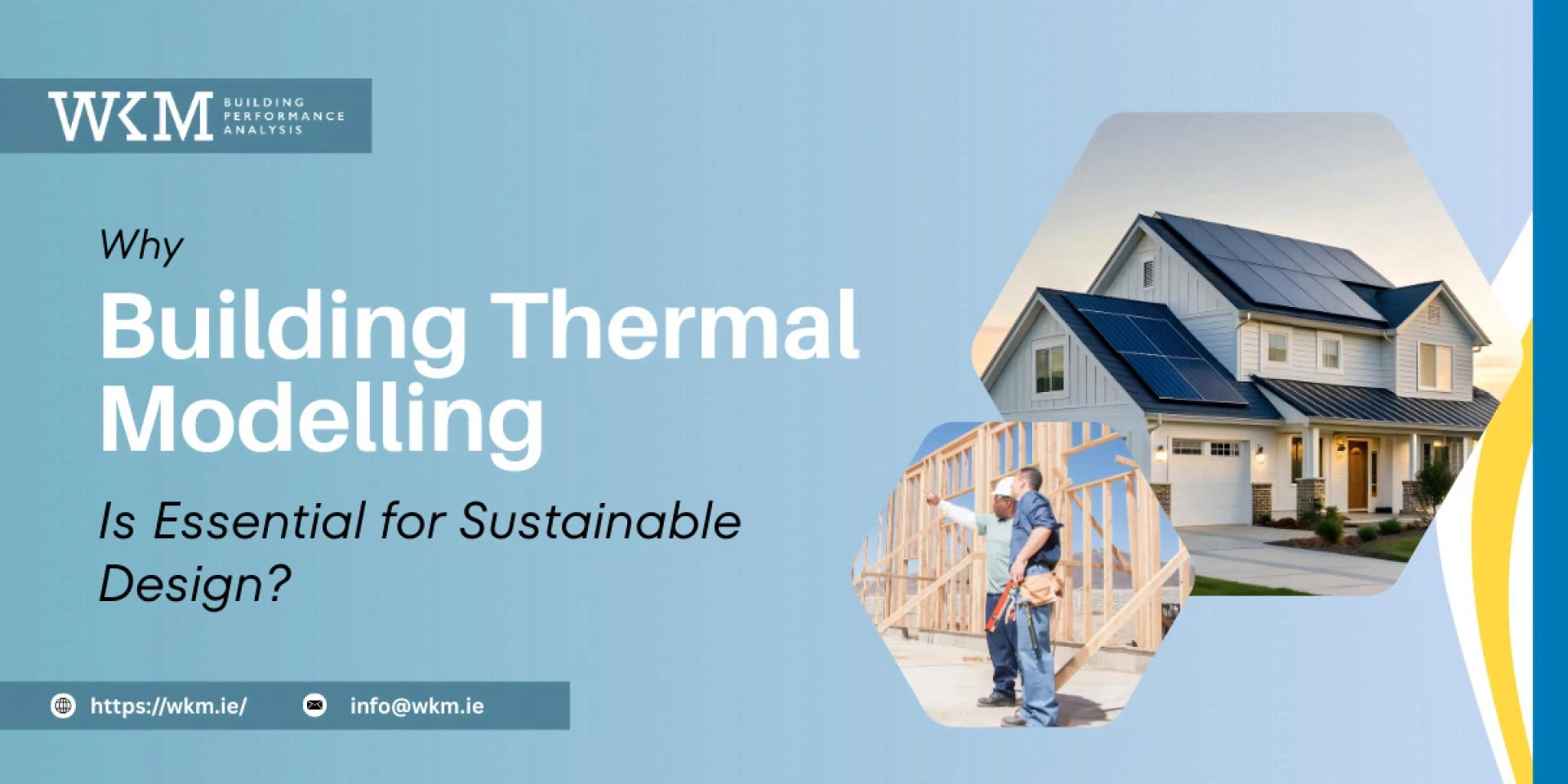
Thermal Modelling has nowadays become an indispensable part of sustainable design within the construction and architectural environment. It does not only assist in taking regulatory requirements, but also in minimizing energy use and carbon emission. Building Thermal Modelling serves to determine how heat flows through walls, floors, roofs, and Windows and thus simulates the behavior of the building at different temperature conditions that are usually predicted in advance by a designer, engineer as well as a developer.
Such a level of analysis guarantees that all the projects focus on energy efficiency as well as comfort of occupants.
What Is Thermal Modelling to Buildings?
Thermal modelling refers to simulating the performance of a building in regard to energy usage through the measurement of the quality of heat transfer, insulation, ventilation and the amount of solar gathers. It offers the proper understanding of how a building responds to the environmental factors allowing the team to make wise design decisions.
Importance to Sustainable Design
Project teams can use Building Thermal Modelling to:
- Take natural heating and cooling systems to the optimum.
- Minimize use of artificial sources of energy.
- Be sure that you are obeying the power rules.
- Enhance the comfort of occupancies by providing comfortable indoor environments.
Thermal Bridge Analysis to overcome Weak Points
Heat escape between weak points in the structure is one of the challenges that have been encountered to be among the most, when it comes to efficient building of the construction in terms of requiring energy-saving.
Thermal Bridge Analysis pinpoints such sources, e.g. insufficiently insulated junctions or window frames, and assists in avoiding unnecessary energy wastes. Combined with Building Thermal Modelling it will make designs not only compliant but very efficient.
The Road Ahead
With sustainability now being a key consideration within the construction sector, Building Thermal Modelling has proven to be an effective method of creating smarter, more eco-friendly, and cost effective structures. Using Thermal Modelling and Thermal Bridge Analysis, the project teams would have the capability of saving energy in the long term, minimizing carbon footprints, and allowing buildings to survive in the future.
Conclusion
Sustainable design is not only about innovation procurement, but accuracy as well. By using Building Thermal Modelling, construction professionals will be equipped with the data-driven information on how to construct efficiently, comfortably, and safely.