The automotive industry is continuously evolving, driven by advancements in vehicle design, manufacturing technology, and changing customer expectations. As manufacturers focus on producing safer, lighter, and more efficient vehicles, the importance of precision automotive body manufacturing continues to grow.
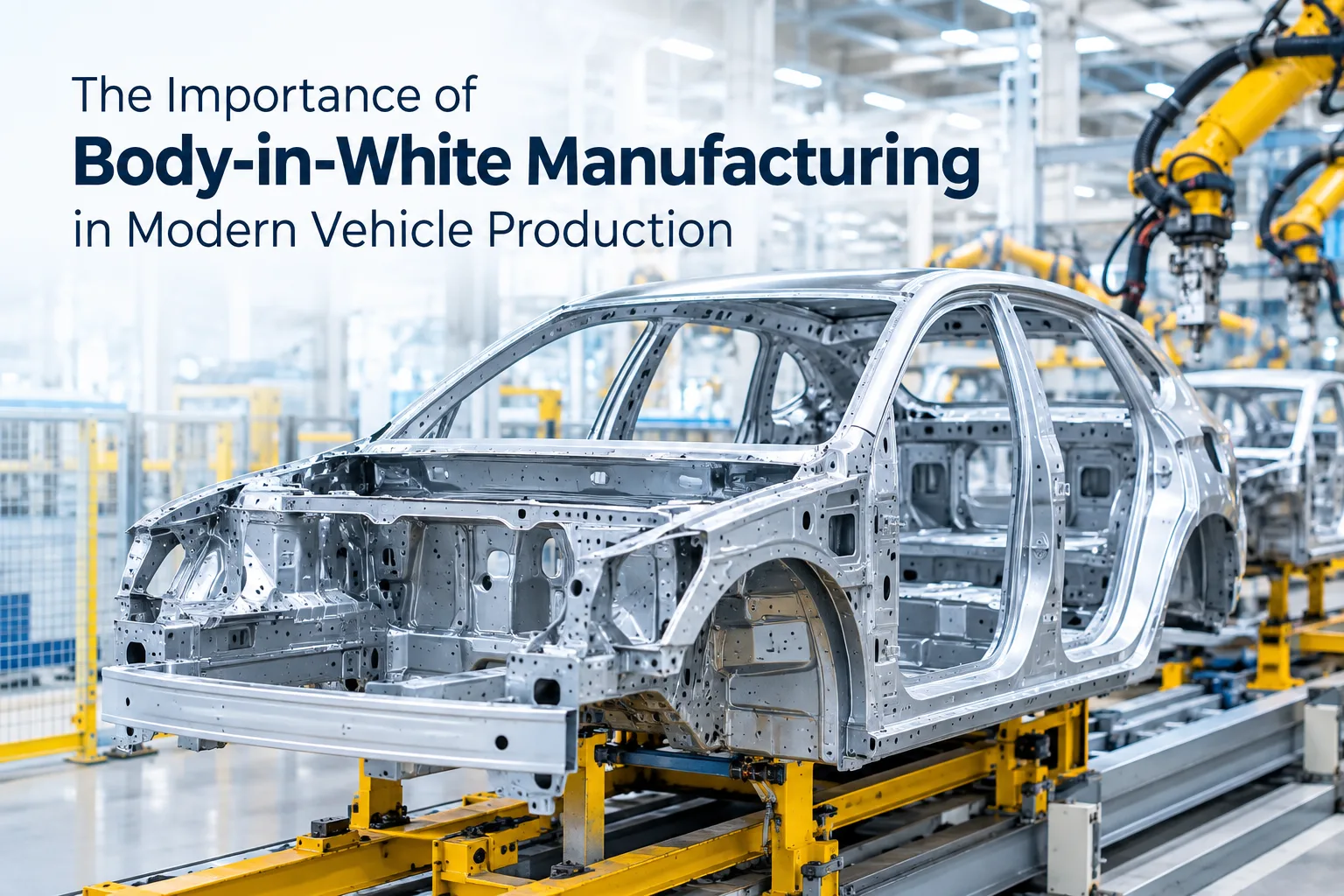
Body-in-White (BIW) manufacturing is a crucial stage in vehicle production, involving the assembly of a vehicle's primary body structure before painting and the installation of components such as the powertrain, interior and trim.
From structural integrity and dimensional accuracy to automated assembly, BIW manufacturing plays an important role in achieving consistent vehicle quality. Advanced manufacturing equipment and engineering solutions help automotive manufacturers address these requirements while improving production efficiency.
What Is Body-in-White Manufacturing?
Body-in-White manufacturing refers to the process of assembling a vehicle's body structure from various stamped and formed metal components. These components are joined using techniques such as spot welding, laser welding, and other fastening or joining methods.
The BIW structure commonly includes:
- Vehicle floor and underbody components
- Roof panels and pillars
- Side panels and body structures
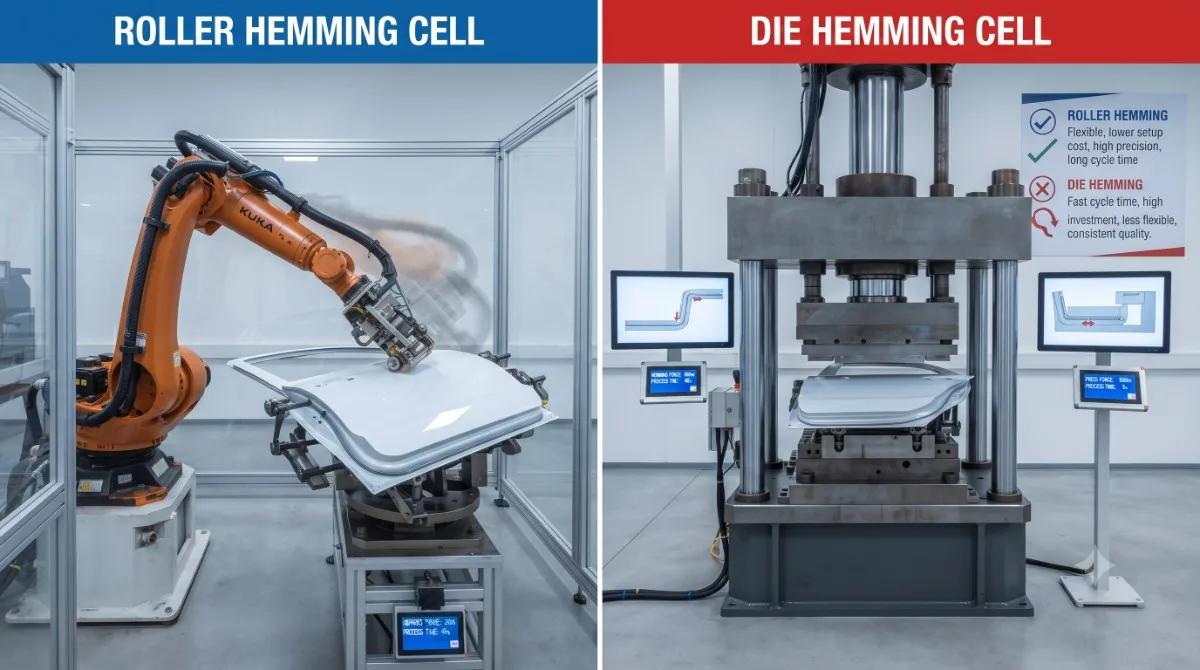
- Door and closure assemblies
- Structural reinforcement components
The exact components and assembly methods vary depending on vehicle design, materials, and manufacturing requirements.
BIW production creates the foundation for the vehicle's overall body structure, making precision and process control important considerations.
1. Supporting Vehicle Structural Integrity
Vehicle body structures are designed to meet specific performance and safety requirements. The quality of BIW assembly can influence structural consistency, dimensional accuracy, and the integration of body components.
Manufacturers use engineered joining processes and quality control systems to produce body structures according to established design specifications.
Accurate assembly helps support:
- Consistent structural geometry
- Reliable component joining
- Proper integration of body panels
- Compliance with applicable manufacturing specifications
Vehicle safety performance involves many factors, including engineering design, materials, joining methods, and validation testing. BIW manufacturing is one important part of this broader process.
2. Improving Dimensional Accuracy
Dimensional accuracy is essential for ensuring that vehicle body components align correctly during assembly. Variations in component positioning or joining can affect panel gaps, fitment, and subsequent manufacturing stages.
Modern BIW manufacturing systems use fixtures, tooling, measurement equipment, and controlled assembly processes to maintain dimensional consistency.
Key factors include:
- Accurate component positioning
- Consistent joining locations
- Proper fixture design
- Quality inspection procedures
By maintaining assembly accuracy, manufacturers can support consistent vehicle body production and reduce the need for corrective rework.
3. Increasing Manufacturing Efficiency Through Automation
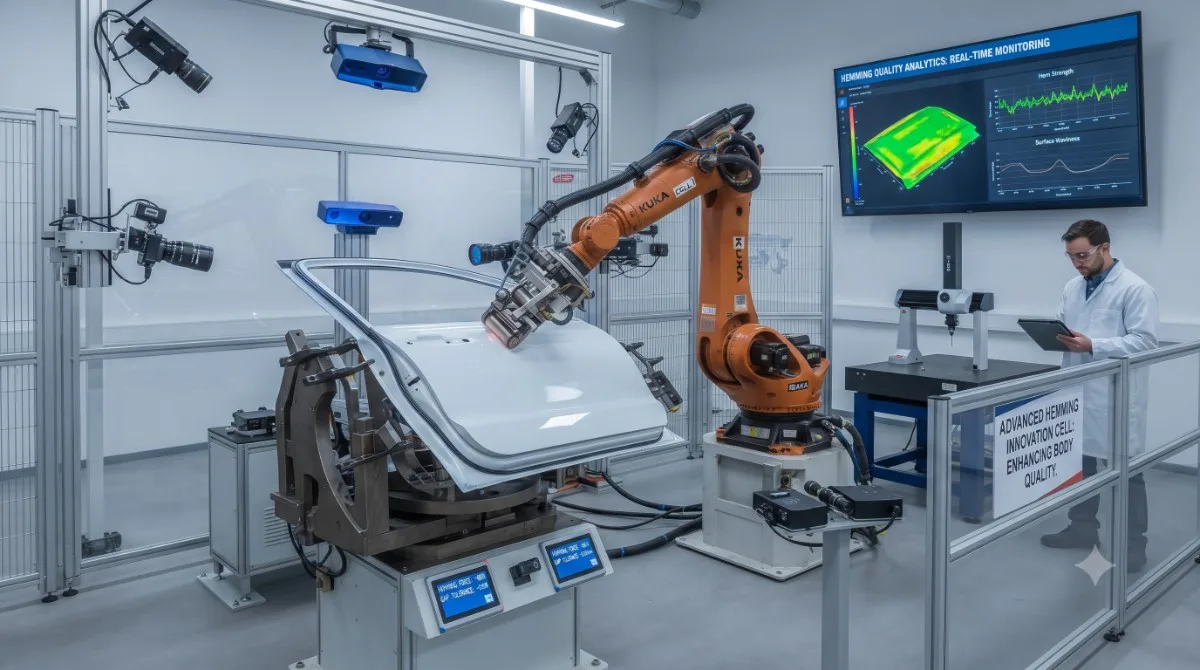
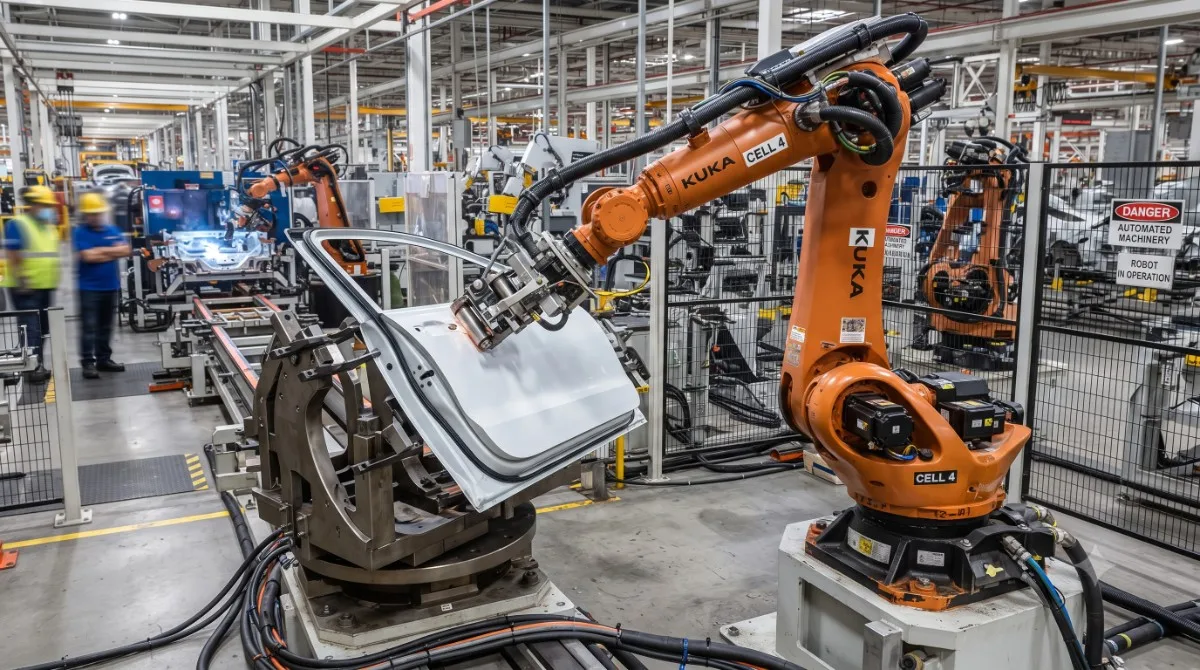
Automation is an important part of modern Body-in-White production. Robotic welding systems, automated material handling, and integrated manufacturing equipment help coordinate repetitive and precise assembly operations.
Automated BIW systems can support:
Consistent Production: Automated equipment performs programmed operations repeatedly according to defined process requirements.
Improved Process Coordination: Integrated systems help connect different assembly stages and production equipment.
Reduced Manual Repetitive Work: Automation can reduce the need for workers to perform certain repetitive operations.
Production Monitoring: Manufacturing systems can incorporate monitoring and inspection processes to support quality control.
The actual benefits depend on production volume, equipment configuration, automation design, and manufacturing requirements.
4. Supporting Lightweight Vehicle Design
Vehicle manufacturers increasingly evaluate weight reduction as part of their engineering and efficiency goals. Lower vehicle weight can influence energy consumption, driving performance, and overall vehicle design.
BIW manufacturing involves the use of different materials and structural designs, including steel and, in some applications, aluminum or other lightweight materials.
Effective manufacturing processes must account for the characteristics of each material, including:
- Material strength
- Forming requirements
- Joining compatibility
- Structural design
- Production costs
The choice of material and manufacturing method depends on the vehicle's design objectives and performance requirements.
Advanced BIW engineering helps manufacturers address these factors while maintaining the necessary structural and manufacturing specifications.
5. Enhancing Joining and Assembly Quality
Joining is a fundamental part of BIW manufacturing. Multiple body components must be assembled and joined accurately to create the intended vehicle structure.
Common joining technologies include:
- Resistance spot welding
- Laser welding
- Adhesive bonding
- Mechanical fastening
The appropriate joining method depends on the materials, component design, production process, and engineering requirements.
Consistent joining processes help manufacturers maintain assembly quality and support the repeatability of vehicle body production.
Robotic joining equipment can also help coordinate welding operations in high-volume automotive manufacturing environments.
6. Improving Production Flexibility
Automotive manufacturers produce vehicles with different body styles, configurations, and design requirements. Production systems must therefore accommodate variations in component geometry and assembly processes.
Flexible BIW manufacturing systems can be designed to support specific production needs through configurable tooling, automated equipment, and integrated manufacturing processes.
Production flexibility may help manufacturers manage:
- Different vehicle body configurations
- Component design changes
- Production volume variations
- Manufacturing process adjustments
The level of flexibility depends on the equipment architecture, tooling design, automation strategy, and production planning.
7. Supporting Quality Control and Process Optimization
Quality control is essential throughout the BIW manufacturing process. Manufacturers need to verify that body components and assembled structures meet defined dimensional and production specifications.
Quality control activities may include:
- Inspecting incoming components and materials.
- Checking fixture alignment and component positioning.
- Monitoring joining processes.
- Measuring critical body dimensions.
- Identifying and addressing manufacturing defects.
Digital monitoring, automated inspection, and manufacturing data analysis can support process optimization when appropriately integrated into production systems.
These technologies help manufacturers identify potential issues and improve consistency across manufacturing operations.
HIROTEC's Expertise in Body-in-White Manufacturing
HIROTEC is a global automotive engineering and manufacturing company established in 1932. With operations across multiple countries, the company provides automotive manufacturing solutions covering areas such as body structures, closures, exhaust systems, stamping dies, and manufacturing equipment.
Its integrated approach combines product engineering, tooling development, manufacturing equipment, and production integration.
For Body-in-White manufacturing, engineering expertise and coordinated production systems are important for addressing component accuracy, assembly requirements, and manufacturing efficiency.
HIROTEC's experience across automotive manufacturing technologies supports its involvement in developing solutions for vehicle body production.
The Future of Body-in-White Manufacturing
As automotive technology develops, BIW manufacturing continues to adapt to new vehicle architectures, material requirements, and production strategies.
Several areas are receiving attention across the industry:
Advanced Automation
Robotics and integrated manufacturing systems can support more coordinated and repeatable production processes.
Digital Manufacturing
Simulation, process monitoring, and data-driven analysis can help manufacturers evaluate and optimize production operations.
New Material Applications
Manufacturers continue to evaluate material combinations and joining technologies according to vehicle design and performance requirements.
Flexible Production Systems
Configurable tooling and manufacturing equipment can support different vehicle models and changing production needs.
The future development of BIW manufacturing will depend on engineering innovation, equipment capabilities, material technologies, and production requirements.
ConclusionBody-in-White manufacturing is a fundamental stage in modern vehicle production. It supports the assembly of vehicle body structures while addressing requirements related to dimensional accuracy, joining quality, automation and production efficiency.
As automotive manufacturers adopt new vehicle designs and manufacturing technologies, reliable BIW engineering and production systems remain important for achieving consistent manufacturing outcomes.
With its experience in automotive engineering, tooling and manufacturing equipment, HIROTEC supports the development of integrated solutions for modern vehicle body manufacturing.
Understanding the role of BIW manufacturing helps manufacturers evaluate the technologies and processes involved in producing accurate, consistent and efficiently assembled vehicle body structures.