The Great Mobile Dilemma
Every business owner eventually hits a wall. You want a mobile app, but the market is split right down the middle. One half of your customers uses iPhones, and the other half uses Android. The old way to solve this was to build two different apps. It felt like paying for two houses just to live in one. You had to hire two teams, manage two sets of bugs, and pay twice the price for every new feature.
The truth is, most small and medium businesses don't need that kind of headache. This is where the magic of a Hybrid App Development Company comes in. Instead of picking a side, you build once. Your app lives in a "shell" that works perfectly on any device. It’s like a universal key that fits every lock. The best part? Users usually can't even tell the difference.
Speed Is the New Currency
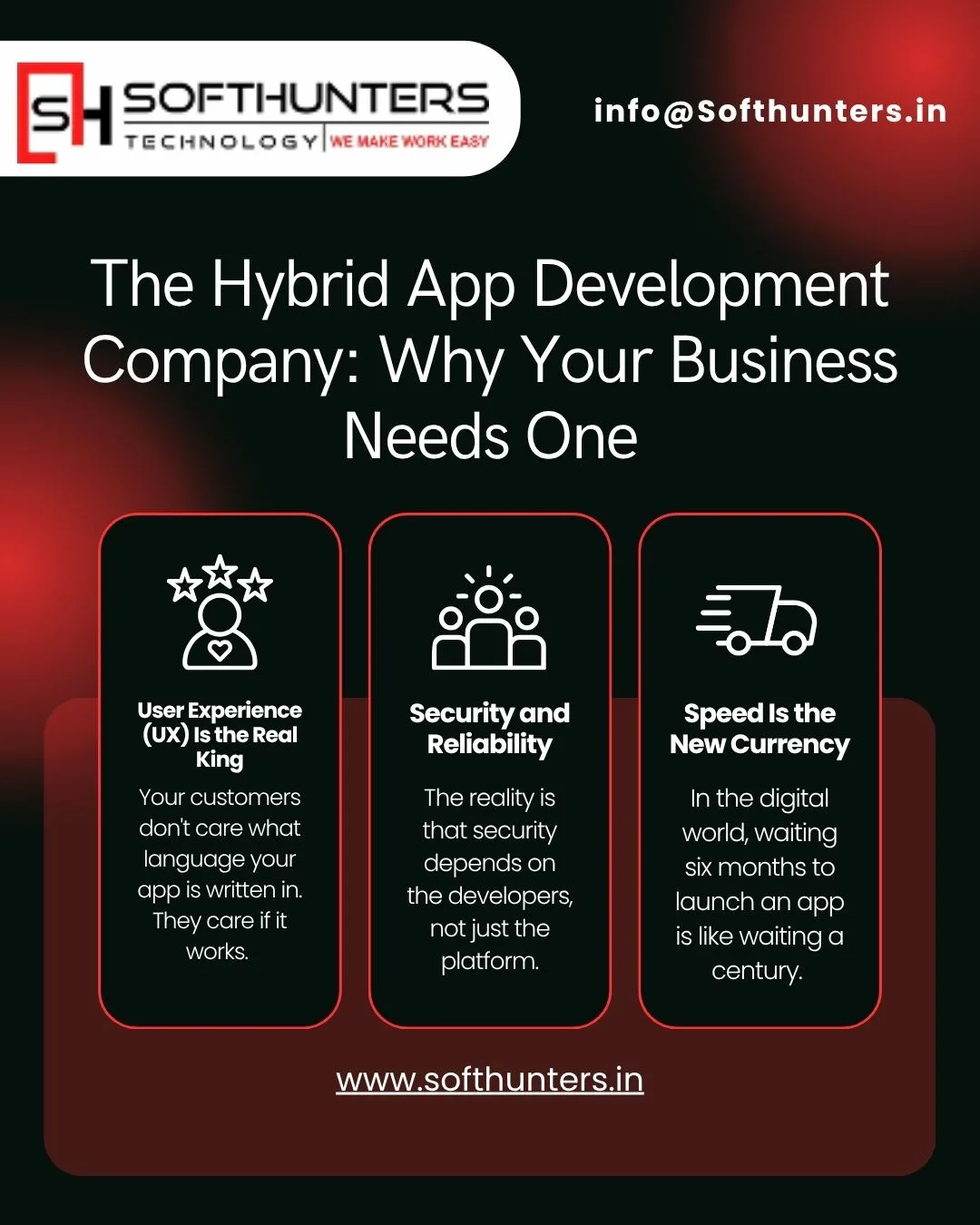
In the digital world, waiting six months to launch an app is like waiting a century. Your competitors are moving fast, and your customers’ needs change every week. Hybrid tech is designed for speed. Since developers only write the code once, the testing and launch phase is cut nearly in half.
Here's the part most guides skip: launch day is just the beginning. The real work starts when you get user feedback. With a hybrid setup, you can push a single update and it reaches every user instantly. You don't have to wait for two different app stores to approve two different versions. It adds up to a much more agile business. You can pivot, fix bugs, and add features while your competition is still stuck in the coding lab.
Native Feel Without the Native Price
People used to worry that hybrid apps felt "slow" or "clunky." That was ten years ago. Today, tools like React Native and Flutter have changed the game. A professional App Development Company can now create buttons that click, lists that scroll, and menus that slide with zero lag. You get that premium, polished feeling without the premium price tag.
The catch? You need a team that knows how to tune the engine. It’s not just about writing code; it’s about optimizing for the hardware. Softhunters Technology focuses on this exact balance, ensuring that the app interacts smoothly with the phone's camera, GPS, and sensors. Worth knowing: a well-built hybrid app can actually perform better than a poorly coded native one. It’s all about the craftsmanship behind the screen.
Budgeting for the Future
Let’s talk about money. Most people focus on the cost to build the app, but they forget about the cost to keep it alive. Every time Apple or Google updates their phone software, your app might need a tweak. If you have two native apps, you pay for those tweaks twice. For the rest of the app's life.
Choosing a hybrid path is a long-term financial strategy. You consolidate your maintenance into one stream. This frees up your budget for things that actually grow your business, like marketing or customer support. That's not all. Because the tech is web-based at its core, it’s often easier to find developers to help you grow. You aren't locked into a tiny niche of specialized coders who charge astronomical hourly rates.
User Experience (UX) Is the Real King
Your customers don't care what language your app is written in. They care if it works. They care if it’s easy to use when they are standing in line at a coffee shop. A top-tier Hybrid App Development Company puts the user first. They design interfaces that look natural on an iPhone but still feel right on a Samsung.
This is harder than it sounds. Every phone has different screen sizes and swipe gestures. The goal is to create a design that hides the complexity. You want the user to feel like the app was made specifically for their device. When you get the UX right, your retention rates go up. People keep the app on their home screen. They use it. They recommend it to friends. That is the ultimate goal of any digital product.
Scaling Beyond the First Version
Your business today won't be the same as your business in two years. Maybe you start with a simple store app and later want to add a loyalty program or a chat feature. Hybrid apps are built to grow. Because the codebase is unified, adding new modules is much simpler.
You can test a new feature on a small group of users and see how it performs before rolling it out to everyone. This "fail fast" mentality is what separates successful startups from everyone else. You don't have to bet the whole company on a single idea. You can experiment, gather data, and scale up the parts that work. It’s a safer, smarter way to build a brand in a crowded market.
Security and Reliability
One common myth is that hybrid apps are less secure. The reality is that security depends on the developers, not just the platform. A reliable App Development Company uses encrypted data paths and secure login systems to protect user info. Whether it's a native or hybrid app, the "back end" where the data lives is usually the same.
In fact, having one codebase can sometimes make security easier. You only have one set of "doors" to lock and monitor. If a security threat is found, you can patch it globally in one go. This reduces the window of time where your users might be at risk. For apps handling payments or personal info, this kind of rapid response is vital.
The Importance of Integration
Modern apps don't live in a vacuum. They need to talk to your website, your CRM, and your social media pages. Hybrid apps are naturally great at this. Since they use web-friendly languages, they "speak the same language" as most cloud services.
Connecting your app to your existing business tools shouldn't feel like a chore. It should be a bridge that helps data flow. When a customer makes a purchase on the app, your inventory should update everywhere. When they sign up for a newsletter, their info should go straight to your marketing list. These integrations are what turn a simple app into a powerful business engine.
Final Thoughts: Making the Choice
Choosing how to build your app is a big moment. It’s the foundation of your digital future. While native apps have their place for high-end gaming or very complex math, hybrid is the clear winner for 90% of business use cases. It offers the best mix of cost, speed, and quality.
The key is to focus on the value you are giving your customers. If the app solves their problem and feels great to use, they will love it. Work with a partner who understands your vision and has the technical skill to bring it to life on every screen. The jungle of the app store is big, but with the right tech, you can stand out.
Frequently Asked Questions
1. Will my app work offline?
Yes! Modern hybrid apps can store data on the device so users can still browse or perform tasks without an internet connection.
2. Can a hybrid app use the phone's camera?
Absolutely. A skilled Hybrid App Development Company can give your app full access to the camera, microphone, and even the accelerometer.
3. How long does it take to build?
While every project is different, hybrid apps typically take 30% to 50% less time to launch compared to building two separate native apps.