Most businesses generally get stuck on one question before they invest in any loyalty program software: "What's this loyalty program going to cost me?" “What will be the budget?”, “what will be my roi?”. It's a fair question, but it's the wrong one to lead with. The better question is: what will this software actually be worth to my business two or three years from now?
Done well right, a loyalty program software keeps customers coming back to your business, gets partners more invested, and hands you data of your customers and other records that you didn't have before. Add those benefits up over a few years and they usually dwarf whatever you paid upfront.
So if you're in the middle of comparing platforms right now, it's worth pausing to think about return on investment before you look too hard at the price tag.
Price Isn't the Whole Picture
Picking software because it's the cheapest option on the list rarely ends well.
Cut-rate platforms tend to skip somewhere; maybe there's no real automation, the analytics are thin, ERP integration isn't an option, or it just can't handle fraud protection or scale with you. None of that shows up on day one. It shows up eighteen months in, once you've outgrown the tool and you're paying to patch around its limits.
So instead of asking which platform is cheapest, ask which one will actually move the needle for your business. That's the question the companies who get real results are asking.
Where the Long-Term ROI Actually Comes From
Loyalty program software doesn't pay off from one single feature instead it's a handful of different things compounding together.
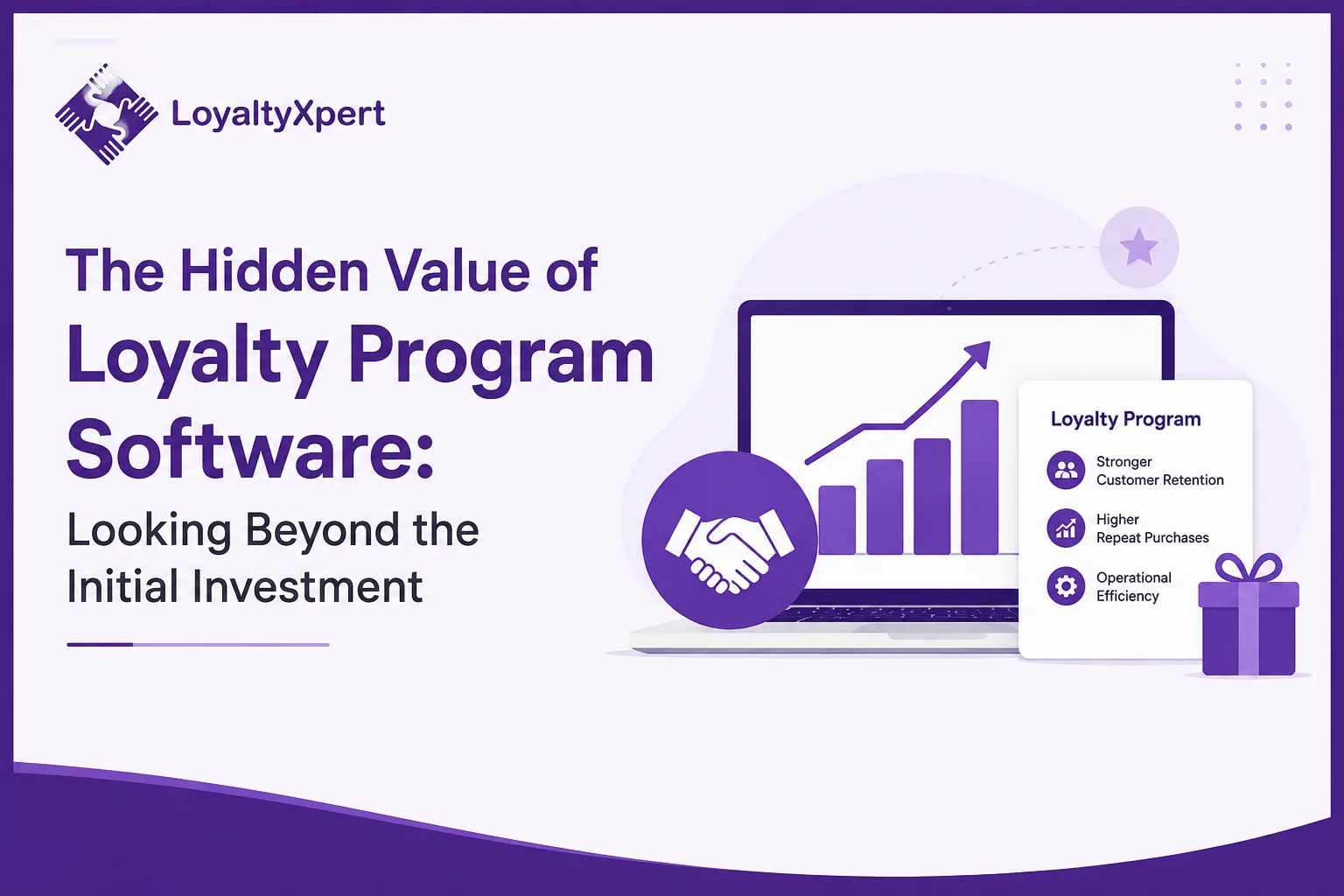
Customers stick around longer. Keeping an existing customer costs a fraction of what it takes to win a new one. A loyalty program gives people a reason to keep buying from you instead of drifting to a competitor, which is where most of the lifetime-value gains come from.
People buy more often. Points, milestone rewards, exclusive offers, personalized campaigns etc, these nudge both customers and channel partners toward buying more frequently. A small bump in repeat purchases compounds into real revenue over a year or two.
You can actually see what's happening. A decent loyalty platform gives you dashboards that show product-level sales, how individual dealers are performing, redemption patterns, regional trends, and engagement levels. That means decisions get made on data instead of gut feel.
Your team stops doing busywork. A lot of companies are still running rewards off spreadsheets and manual sign-offs. Automating point calculations, approvals, redemptions, partner verification, and performance tracking frees your team up to actually work on growth instead of admin.
What Skipping Loyalty Software Actually Costs You
It's easy to price out the software and forget to price out doing nothing.
Without a proper loyalty platform in place, businesses tend to run into weaker retention, inconsistent rewards, blind spots on secondary sales, manual mistakes, fraud slipping through, disengaged dealers, and revenue left on the table. Add it all up over time, and it often costs more than the software would have.
Features Worth Actually Paying For
Not all loyalty platforms are built the same, and the differences matter more than the price sticker.
- Smart reward automation — rewards trigger automatically for customers, dealers, distributors, or influencers based on rules you set, not manual approvals.
- Real-time analytics — a clear, live view of performance, customer activity, sales trends, and redemption behavior.
- ERP and CRM integration — your systems talk to each other instead of duplicating work across teams.
- Flexible reward structures — different programs for different customer segments, products, or channels, without turning into a management headache.
- Mobile access — people can scan QR codes, upload invoices, check their points, and redeem rewards from their phone.
How to Actually Know If It's Working
Signups alone don't tell you much. Watch these instead:
- Customer retention rate
- Repeat purchase frequency
- Average order value
- Active loyalty members
- Reward redemption rate
- Partner participation
- Customer lifetime value
- Revenue from repeat customers
Track these consistently and you'll get a far more honest read on whether the program is earning its keep.
Start With ROI, Not the Price Tag
Most businesses start by lining up quotes and comparing sticker prices. Budget matters, sure but the relationship between what you spend and what you get back matters more.
If you're still weighing the numbers, our detailed guide on loyalty program software cost vs ROI breaks down how implementation costs stack up against the long-term gains, and what actually drives that math.
Picking the Right Platform
The right software isn't the one with the lowest subscription fee. It's the one that helps you sell more repeat business, keep partners engaged, cut down on manual work, get insights you can act on, and scale without things falling apart.
A good loyalty program software platform should function as a growth engine, not just another line item. Platforms like LoyaltyXpert bring automation, QR and invoice-based point allocation, real-time analytics, ERP integrations, multilingual engagement, and loyalty programs built to scale, particularly for manufacturers and distribution businesses.
The Bottom Line
Nowadays Judging loyalty program solutions purely based on its price is how businesses end up with choosing the wrong tool.
The real payoff shows up in stronger customer relationships, more repeat business, deeper channel engagement, and smoother operations. Tracked over months and years, that's not an expense, it's an investment that keeps paying you back.
Companies which understand the importance of long-term value over short-term cost are the ones that end up building loyalty that actually lasts.