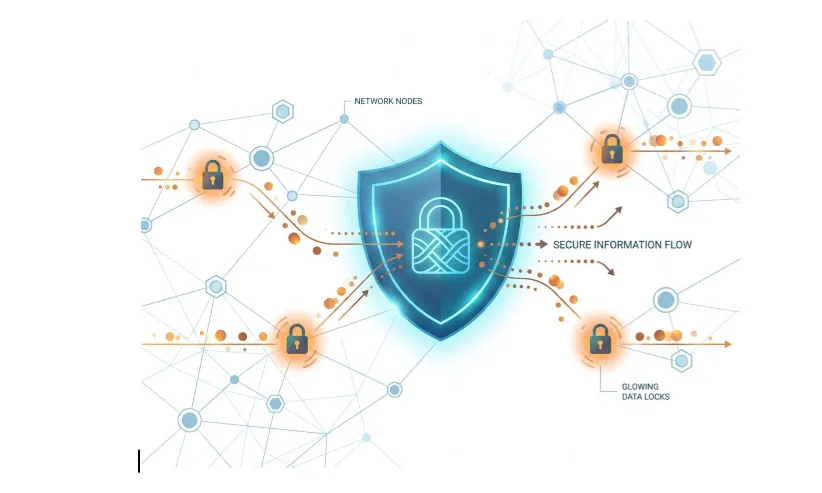
Modern businesses depend on information moving quickly between people, systems, departments, and external partners. Digital systems make these activities faster and more efficient, yet every connection introduces another security risk.
Complex data environments create particular challenges because information rarely remains in one place. Files may be stored in cloud platforms, local servers, databases, applications, employee devices, and specialist systems. Access can be granted to employees, contractors, consultants, suppliers, and other authorized parties. Each relationship creates a potential route through which sensitive information can be exposed if controls are poorly configured or compromised.
Cybersecurity provides the framework for addressing these concerns. Strong protection depends on understanding what information exists, where it is stored, who can access it, how it moves, and how quickly an organization can respond when something goes wrong.
The Growing Complexity of Digital Information
Data has become increasingly varied in both form and purpose. Traditional documents now exist alongside databases, photographs, videos, engineering models, financial records, medical scans, application data, communications, and automated system outputs. Each category can have different security requirements.
Medical information illustrates the issue clearly. Health imaging can contain highly sensitive information that needs to remain available to authorized medical professionals while being protected from unauthorized access. A system that allows clinicians to view images from different locations can improve coordination and reduce delays, but the same connectivity creates additional points that require protection.
Project-based industries face comparable challenges. Large construction, engineering, and infrastructure projects can involve thousands of documents distributed among owners, architects, engineers, contractors, consultants, and suppliers. Common data environment software can provide a central location for drawings, specifications, models, reports, and project correspondence. Centralization can improve control over information, yet it also makes the security of the environment especially significant.
The issue extends beyond the data itself. Metadata can reveal information about projects, patients, employees, suppliers, locations, and organizational activities. File names, access records, timestamps, account information, and document histories can provide useful intelligence to someone attempting to understand an organization.
For that reason, security needs to be considered alongside convenience. Information should remain accessible to people who need it for legitimate work, while access should be limited according to actual responsibilities.
Building Security Into Everyday Operations
Cybersecurity works best when it is part of ordinary information management (rather than a separate technical concern). Employees need clear guidance about handling sensitive information, recognizing suspicious messages, protecting credentials, and reporting unusual activity.
Training should reflect the actual systems people use. Generic security messages have limited value when employees face specific challenges involving cloud platforms, project applications, medical systems, remote access, or external collaboration.
Technical controls need similar alignment. Security policies should correspond with the way information actually moves through the organization. If employees regularly exchange information with external parties, external sharing needs to be considered in the security design. If sensitive information is accessed remotely, remote authentication and device security need appropriate attention.
Regular assessments can identify changes that require action. New applications, new suppliers, organizational changes, system upgrades, and new categories of information can alter the security requirements of an environment.
The importance of cybersecurity is clearer when security is considered in practical terms. A breach can interrupt operations, expose confidential information, damage relationships, create regulatory obligations, and impose significant recovery costs.
Protecting Information Over Its Entire Life
Protecting information should support the continuity of ordinary business activities. Data security begins when information is created and continues until it is securely deleted or otherwise disposed of.
Information needs to be classified according to its sensitivity and business purpose. Retention periods should reflect legal, regulatory, contractual, and operational requirements. Unnecessary information creates additional exposure because every stored record requires some degree of protection.
Secure disposal can be as important as secure storage. Old devices, documents, databases, and backups can contain information that remains sensitive long after its original purpose has ended. Thus, disposal procedures need to account for both physical and digital copies.
The same principle applies to system retirement. An organization may replace an application while leaving old databases, accounts, integrations, or backup copies behind. Those remnants can become forgotten sources of exposure.
A security approach is complete only when it considers the entire life of information: creation, storage, use, sharing, modification, archiving, and disposal.
Access Determines Exposure
Access control is one of the most important areas of cybersecurity because information cannot be protected effectively when access rights are poorly understood. Every account is a potential entry point, and every permission determines what can be viewed, changed, copied, or deleted.
A sensible access model establishes clear responsibilities. Employees need access to information required for their work, external partners may need access to specific projects or files, and temporary users may require access for a limited period. Finally, administrative accounts need stronger controls because they can affect entire systems.
The principle of least privilege provides a practical foundation. Access should correspond to the work being performed, with unnecessary permissions removed. A person responsible for reviewing documents may not need permission to delete them. A contractor working on one project may not need access to information belonging to another project.
Regular reviews are critical since organizations change constantly. Employees change roles, contractors finish assignments, departments merge, and external relationships end. However, access permissions remain unchanged unless someone deliberately reviews them. Periodic access reviews reduce the possibility that outdated privileges will remain active.
Lastly, access needs to be monitored. Logs can show which accounts accessed particular resources, when these were accessed, and what actions were performed. Proper monitoring can help identify unusual behavior.
A Practical View of Digital Security
Complex data environments cannot be protected through a single technology or isolated security measure. Instead, effective protection depends upon several connected practices working together. Access needs to be controlled, sensitive information needs appropriate storage and encryption, collaboration needs clear permissions, and third parties need scrutiny. Systems need monitoring, backups need protection, employees need practical guidance, and incident response needs preparation.
Unfortunately, excessive restrictions can interfere with operations, while excessive openness can create unacceptable risks. It turns out, good security depends on understanding what information matters, who genuinely needs it, and what could happen if it were compromised.
The growing use of systems for sharing complex information makes these questions increasingly important. Health imaging, project documentation, financial records, research data, customer information, and proprietary material can move through sophisticated digital environments every day. The convenience of that movement carries responsibilities that need to be addressed deliberately.
Ultimately, cybersecurity concerns the protection of information that organizations depend on to function.