
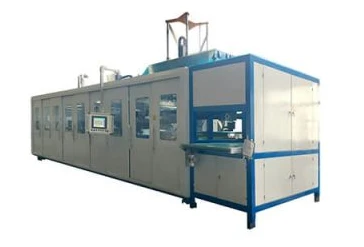
In the ever-evolving world of plastics fabrication, innovation is not just a luxury—it is a necessity. As industries ranging from automotive and aerospace to medical and consumer goods constantly seek stronger, lighter, and more cost-effective solutions, manufacturing technologies must keep pace. One such technology that is rapidly redefining the landscape of thermoforming is the Twin Sheet Thermoforming Machine.
At Shanghai Zhanshi Mechanical Equipment Co., Ltd., we have always been committed to staying ahead of the curve in thermoplastic manufacturing equipment. Today, we dive deep into the remarkable capabilities of twin sheet thermoforming—a process that merges strength, design flexibility, and efficiency into one powerful solution. By exploring how this process works, its far-reaching industrial applications, and its competitive edge over traditional methods, you'll gain a comprehensive understanding of why the Twin Sheet Thermoforming Machine is being hailed as the future of thermoformed plastics.
What is Twin Sheet Thermoforming Machine?
An Overview
Twin sheet thermoforming machine is an advanced thermoforming process that simultaneously forms two heated thermoplastic sheets (usually of the same or compatible materials) in separate molds and then bonds them together under pressure. This process results in a hollow, strong, and lightweight part—often resembling a blow-molded product but with significantly better mechanical performance and design complexity.
Unlike single sheet thermoforming or vacuum forming, the Twin Sheet Thermoforming Machine offers a unique combination of high strength-to-weight ratio, internal cavities, and custom designs tailored for functionality and aesthetics.
Working Principle of a Twin Sheet Thermoforming Machine
To break it down step-by-step, here’s how a Twin Sheet Thermoforming Machine from Shanghai Zhanshi Mechanical Equipment Co., Ltd. typically operates:
- Heating phase: Two sheets of plastic are simultaneously heated in the machine until they become malleable. This is done using infrared heating elements strategically placed around the sheets.
- Forming phase: Each sheet is formed in its separate mold using vacuum or pressure forming methods.
- Fusion or bonding phase: While still hot and pliable, the two formed sheets are brought together and compressed so they fuse along their contact surfaces, creating a hollow, rigid structure.
- Cooling phase: The joined part is held under pressure and allowed to cool, solidifying into its final form.
This process is incredibly efficient and allows for the creation of hollow components with internal structures, reinforcements, or integrated attachment features—all in a single forming cycle.
Advantages of Twin Sheet Thermoforming Machines
1. Structural Integrity and Strength
Thanks to the dual-sheet construction, parts made with a Twin Sheet Thermoforming Machine are inherently more durable and rigid than those made with single sheet forming. The internal air gap or structural foam can significantly increase the load-bearing capability without adding much weight.
This makes twin sheet thermoforming an attractive alternative for heavy-duty products, such as vehicle panels, pallets, and enclosures.
2. Design Flexibility
With the right configuration, twin sheet machines provide designers with the freedom to integrate features into both the interiors and exteriors of the component. Want internal ribs, threaded inserts, or hinges? The Twin Sheet Thermoforming Machine can accommodate a wide variety of custom features at the design stage.
Additionally, this process supports the forming of asymmetrical shapes, multi-textured finishes, and even embedded electronics or foam for insulation or soundproofing applications.
3. Weight Reduction
One of the biggest selling points for many industries—especially automotive and aerospace—is weight reduction. The twin sheet method allows for the manufacture of hollow parts that are significantly lighter than those made with solid plastic or die-cast metal, leading to increased fuel efficiency and reduced material costs.
4. Cost Efficiency
Compared to other high-volume fabrication methods like blow molding or injection molding, twin sheet thermoforming offers:
- Lower tooling costs
- Quicker setup times
- Lower per-part production costs (for small-to-medium quantities)
This makes the Twin Sheet Thermoforming Machine a smart investment for companies seeking both performance and economy.
5. Sustainability
This process minimizes waste and supports the use of eco-friendly materials. Moreover, twin sheet-formed parts can be designed for recyclability, contributing to greener manufacturing practices.
Applications of Twin Sheet Thermoforming Machines
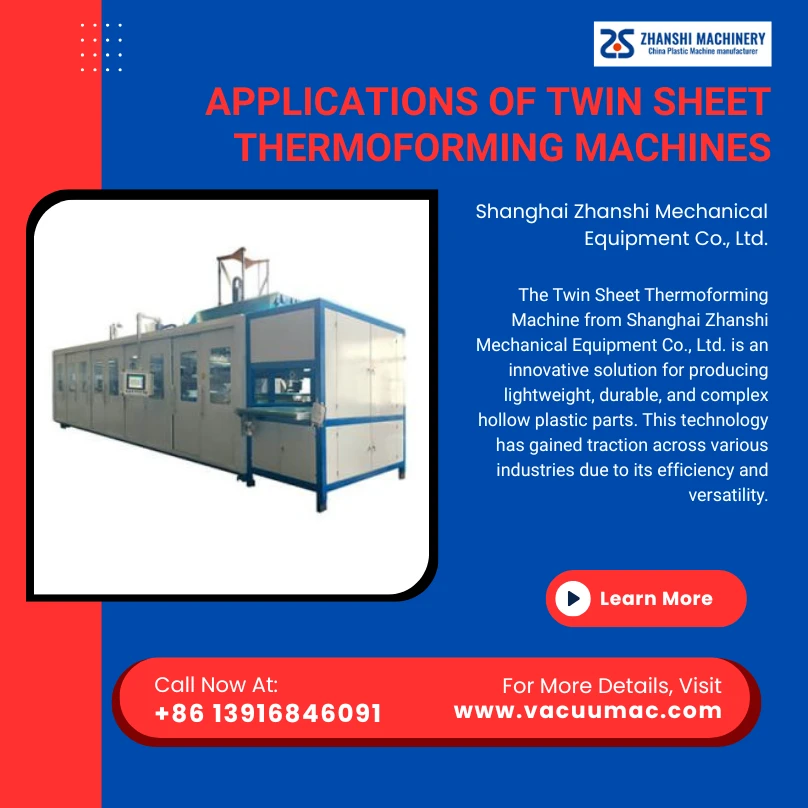
The versatility of twin sheet thermoforming machines spans a vast range of industries, including but not limited to:
1. Automotive
- Door panels
- Trunk liners
- Seat backs
- HVAC ducts
2. Material Handling
- Custom pallets
- Dunnage trays
- Shipping containers with handles
3. Medical Devices
- Equipment enclosures
- Hospital bed panels
- Mobile cart bodies
Also Read: Innovative Applications of the Twin Sheet Thermoforming Machine in Modern Industry
4. Aerospace
- Overhead bins
- Partition walls
- Thermal and acoustic insulation panels
5. Consumer Goods
- Luggage shells
- Recreational equipment (kayak bodies, sports gear cases)
- Outdoor furniture parts
Shanghai Zhanshi provides customized Twin Sheet Thermoforming Machine solutions to match your specific application requirements—both in small and large-scale production settings.
Key Features of Shanghai Zhanshi's Twin Sheet
Thermoforming Machine
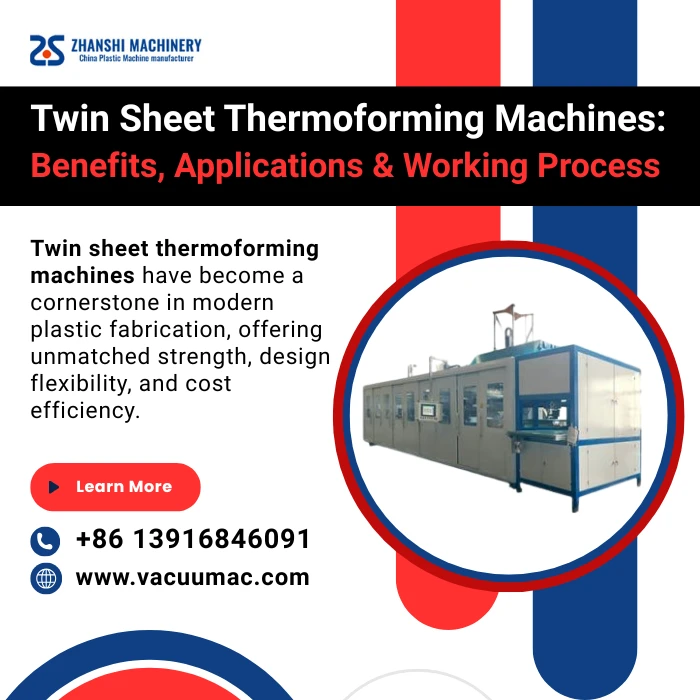
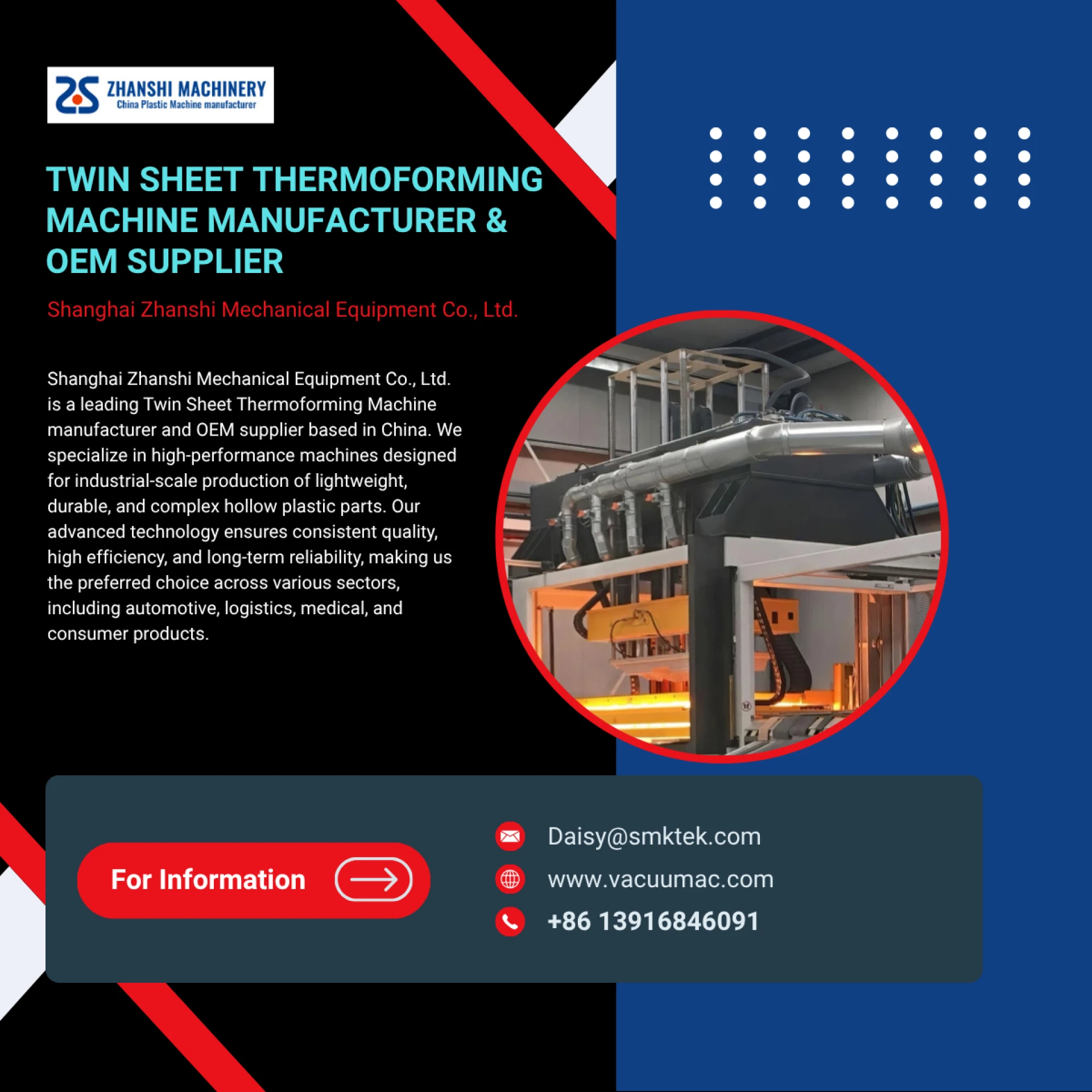
At Shanghai Zhanshi Mechanical Equipment Co., Ltd., we engineer thermoforming machines that prioritize performance, reliability, and ease of use. Our twin sheet thermoforming systems offer:
- Dual-sheet simultaneous heating systems with precise temperature control
- Integrated forming and fusing stations for accurate part geometry
- Customizable molds for product-specific needs
- Automated sheet loading and unloading for high productivity
- PLC-based control interfaces for user-friendly operation
Whether you need to fabricate robust industrial parts or lightweight consumer products, our Twin Sheet Thermoforming Machines are built to deliver consistent results, cycle after cycle.
Also Read: Twin Sheet Thermoforming Machines: Benefits, Applications, and Working Process
Trends Shaping the Future of Thermoforming
The future of plastic fabrication is closely tied to automation, digital integration, and material innovation. Here’s how the twin sheet thermoforming process is evolving:
1. Smart Manufacturing Integration
Modern Twin Sheet Thermoforming Machines are increasingly being integrated into Industry 4.0 frameworks. Features like data analytics, remote monitoring, and AI-driven process control are making machines smarter and more efficient.
2. Automation and Robotics
Automated handling of sheets, molds, and finished parts results in shorter cycle times and reduced labor costs. Shanghai Zhanshi machines are designed for seamless integration with robotics and conveyors.
3. Advanced Materials Compatibility
From biodegradable resins to fiber-reinforced plastics, new material innovations are broadening the scope of what’s possible with twin sheet thermoforming.
4. Sustainability Requirements
With regulations tightening around plastic usage and disposal, manufacturers are now focusing on forming processes that support recycling and reduced waste—areas where twin sheet thermoforming excels.
As the demand for complex, lightweight, and sustainable plastic components continues to rise, so does the need for advanced manufacturing solutions. The Twin Sheet Thermoforming Machine stands at the forefront of this transformation—offering unparalleled design flexibility, superior strength, and excellent cost-efficiency.
FAQs:
Q1: What is the difference between twin sheet and single sheet thermoforming?
A: Single sheet thermoforming uses one sheet of plastic to form a part, while twin sheet thermoforming uses two. Twin sheet forming allows for hollow, double-walled, and structurally reinforced parts, which are not possible with single sheet forming.
Q2: Can I use recycled plastic for twin sheet thermoforming?
A: Yes, many manufacturers successfully use recycled or regrind plastic materials in twin sheet thermoforming. However, consistent material quality is crucial to maintain bonding strength and final part integrity.
Q3: What industries benefit most from twin sheet thermoforming machines?
A: Industries such as automotive, aerospace, medical, industrial equipment, material handling, and consumer goods benefit greatly due to the combination of part strength, low weight, and design versatility.
Q4: What are the typical materials used in twin sheet thermoforming?
A: Common materials include HDPE, ABS, HIPS, PP, PETG, and Polycarbonate. The key is to ensure the polymers used can fuse properly during the forming stage.
Q5: What is the lifespan of a twin sheet thermoforming machine?
A: With proper care and maintenance, a high-quality Twin Sheet Thermoforming Machine from Shanghai Zhanshi can operate reliably for 15-20 years or more.
Q6: Are Shanghai Zhanshi machines customizable?
A: Absolutely. We provide tailor-made solutions based on your product requirements, production output goals, and budget.