Before day one: the habits that prevent problems
The easiest bus rides I’ve supervised weren’t the ones with the strictest rules—they were the ones where kids already knew what “normal” looks like. Parents don’t need a long speech to prep their child. A few clear habits, repeated the night before and again in the morning, does more than a stack of reminders at the stop.
Here’s what I tell families to practise early:
- Pack the bag the night before. Morning rushing leads to forgotten items, which leads to stress, which leads to behaviour that spills onto the bus.
- Use the toilet before leaving home. It sounds obvious, but it’s one of the most common “panic” moments once the bus is already moving.
- Wear shoes that stay on. Loose slides and half-tied laces turn boarding into a trip hazard.
- Keep hands free. If lunchboxes, hats, phones, and drink bottles are all loose, kids drop things, stop suddenly, and block the aisle. Put small items inside the bag.
- Arrive early, not “right on time.” Late arrivals trigger running, pushing, and stepping into traffic.
If your child is nervous, I keep the prep simple: “You line up, you board, you sit, you buckle if there’s a belt, you face forward.” Predictable steps reduce the “what happens next?” spiral. That predictability matters even more when kids use school bus services daily, because the first week often sets their long-term behaviour pattern.
At the stop and during boarding: calm bodies, clear space
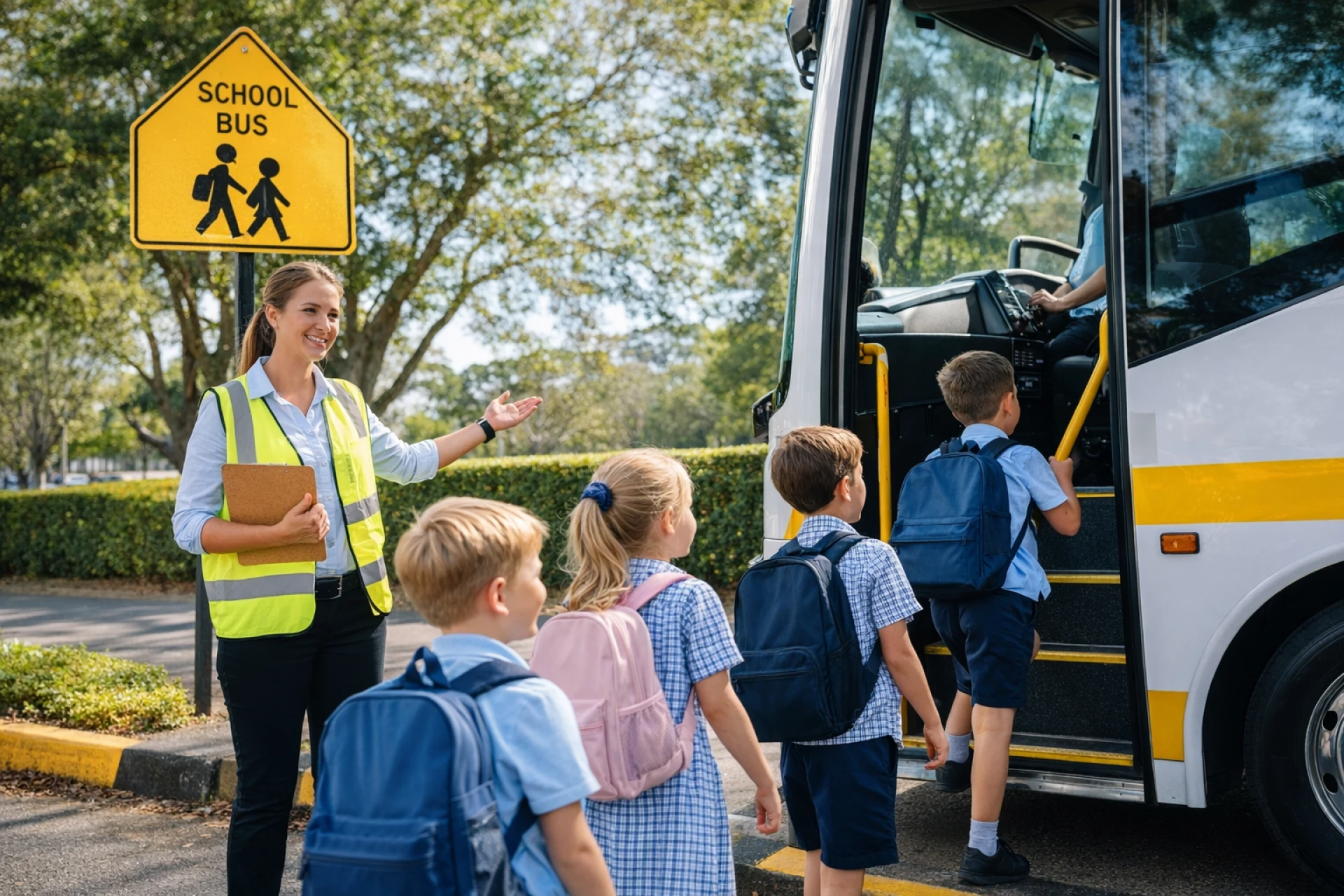
Most bus issues start before kids sit down. The stop can get loud, crowded, and messy fast—especially if students treat it like recess. The goal is to keep the area safe for everyone, including drivers who may not see smaller children darting between bodies.
These are the rules I repeat in plain language:
- Stand back from the curb. One step back is enough to create space and reduce risk.
- No running, even if the bus is arriving. Running makes kids weave around others and step into the road without checking.
- Keep voices at a normal volume. Yelling winds everyone up, and the driver needs to hear what’s happening outside.
- Wait your turn to board. Pushing causes slips on steps and creates instant conflict.
I also tell parents this: if a child drops something while boarding, the safest move is to leave it and tell an adult once seated. Stopping suddenly on the stairs to pick up a bottle is how falls happen.
When boarding is calm, everything after it is easier. When it’s chaotic, the driver starts the trip already dealing with noise, movement, and students standing up to swap seats before the vehicle has even left the curb.
On the bus: the three rules that keep everyone comfortable
Once kids are on board, I focus on three simple standards. I don’t overload them with ten different rules. Most of the time, it comes down to safety, respect, and keeping the space workable for others.
Rule 1: Stay seated and face forward.
Standing, kneeling, twisting around to talk, or moving between rows increases the chance of falls and bumps. It also distracts the driver. If kids need something, they should ask a supervising adult rather than climbing around.
Rule 2: Keep hands, feet, and belongings to yourself.
A bus is shared space. Kicking seats, tapping shoulders, leaning across the aisle, or taking someone’s hat might feel like a joke to one child and feel awful to another. Even “small” stuff can become a big conflict mid-trip.
Rule 3: Keep the bus clean and neutral.
This one prevents arguments. Food smells, loud music, and messy snacks can set other kids off. I’m not saying children can’t eat on longer trips if allowed—but if they do, it should be simple, contained, and quiet. Anything sticky or crumbly tends to end in complaints.
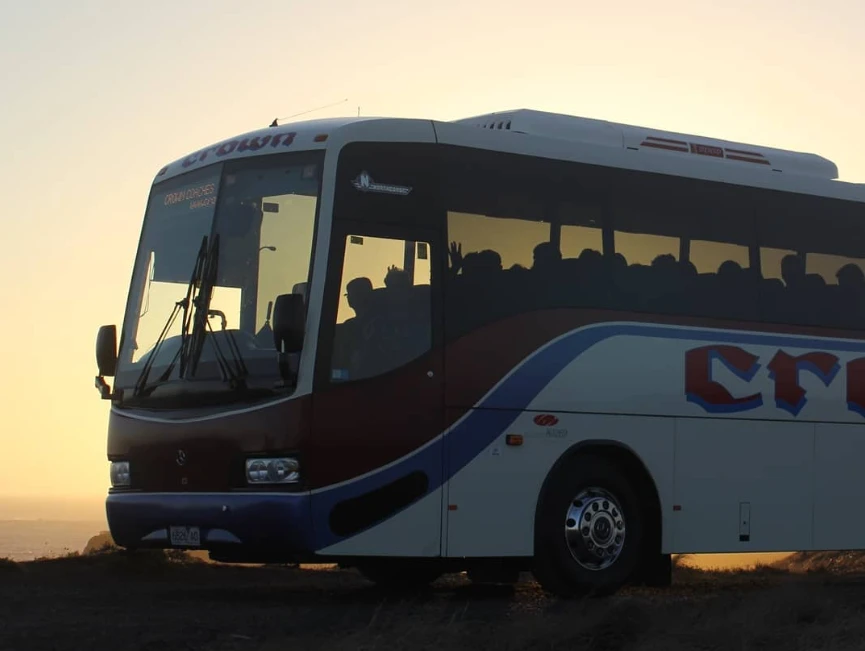
These expectations apply whether it’s a daily route or a special event using coach buses. The vehicle might be different, but the social environment is the same: a confined space where one person’s behaviour affects everyone else.
Real-life situations parents should role-play in 60 seconds
Parents often ask what to say beyond “behave.” I suggest quick role-plays because they give kids scripts to follow when they’re unsure. You can do these in one minute:
Scenario A: “Someone is being annoying.”
Script: “Stop. I don’t like that.” If it continues: “I’m moving seats / telling an adult.”
This reduces arguing and keeps the child focused on a simple next step.
Scenario B: “I feel sick.”
Script: “I feel unwell.” Tell an adult early. Face forward. Slow breaths.
Kids often try to hide it until it’s urgent, which makes everything harder.
Scenario C: “I forgot something / dropped something.”
Script: “I’ll tell an adult once I’m seated.”
This prevents kids from turning around on the steps or blocking the aisle.
Scenario D: “The bus is loud.”
Script: Put on headphones (if allowed), look forward, use a fidget, ask to sit closer to an adult. Some kids need a plan for sensory overload so it doesn’t turn into tears or conflict.
I remind families that a bus is not a private car. Kids sometimes behave differently because they’re with friends, the noise level rises, and they feed off each other’s energy. Clear expectations at home help, but consistency matters too. If a child knows the same basic rules apply for excursions, camps, and bus hire for schools, they settle faster and trips run smoother for everyone.