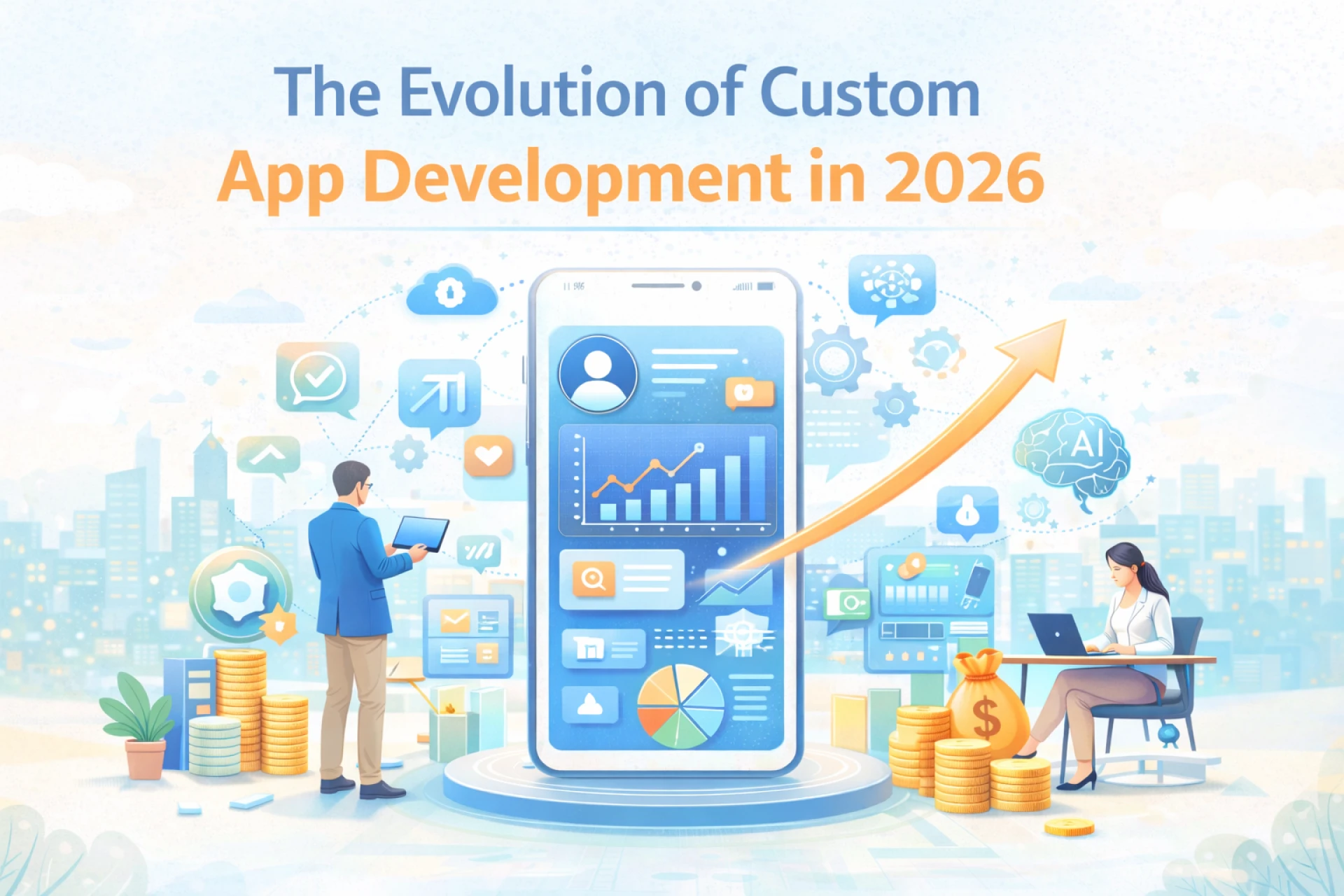
Custom app development in 2026 looks very different from what it was just a few years ago. What once focused mainly on functionality and basic user interfaces has now become a strategic discipline that blends technology, psychology, data, and long-term business planning. Apps are no longer optional add-ons. They are central to how companies operate, connect with customers, and generate revenue.
In the early stages of the mobile era, businesses rushed to build apps simply to stay relevant. Today, that rush has turned into thoughtful strategy. Many companies begin by consulting an experienced iphone app development company to understand platform standards and user expectations. But in 2026, development decisions go far beyond choosing a platform. The conversation now includes scalability, personalization, automation, data ethics, and long-term digital transformation.
Let’s explore how custom app development has evolved and what defines it in 2026.
From Basic Presence to Digital Ecosystems
A decade ago, many apps were digital brochures. They offered limited functionality and were often disconnected from broader systems. Businesses saw them as marketing tools rather than operational assets.
In 2026, custom apps function as complete ecosystems. They connect with payment systems, CRM platforms, analytics tools, cloud infrastructure, and third-party services. Instead of existing separately, apps now sit at the center of digital strategy.
This shift reflects a deeper understanding of customer behavior. Users expect seamless integration. They want to move between devices without friction. They expect data to sync instantly.
Custom development now focuses on building connected experiences rather than isolated products.
User Experience Has Become the Core Focus
As the app market matured, competition increased. Users became less forgiving. Slow loading times, confusing navigation, or unnecessary steps quickly lead to uninstalls.
In 2026, user experience is no longer just a design concern. It is a business priority. Companies invest heavily in research before development begins. They conduct user interviews, analyze behavior data, and test prototypes.
Simplicity is valued more than complexity. The best apps reduce effort. They anticipate needs. They guide users smoothly from one step to the next.
This evolution shows that design is not decoration. It is strategy.
Personalization Is Now Expected
Modern users expect apps to understand them. Static experiences feel outdated. Custom app development now includes personalization as a standard feature.
Retail apps suggest products based on past purchases. Fitness apps adjust plans based on progress. Financial apps offer tailored insights based on spending habits.
This shift is possible because of advanced data analytics and cloud computing. Businesses can process user behavior in real time and adapt accordingly.
Personalization improves engagement and retention. It turns apps into daily tools rather than occasional utilities.
The Rise of Intelligent Applications
One of the biggest changes in 2026 is the integration of artificial intelligence. Apps are no longer passive platforms. They actively analyze, predict, and respond.
Many companies now integrate AI Development Services into their custom applications to improve automation and decision-making. Chatbots handle customer support instantly. Predictive systems recommend actions before users ask. Fraud detection tools identify unusual patterns in seconds.
However, the evolution is not just about adding smart features. It is about using intelligence thoughtfully. The goal is to reduce user effort and improve outcomes, not overwhelm with complexity.
Intelligent design defines modern app development.
Cloud-Native Architecture and Scalability
Scalability has become a fundamental requirement. Apps must handle sudden growth without crashing or slowing down.
In the past, scaling often required major restructuring. Today, cloud-native architecture allows apps to expand smoothly. Flexible infrastructure adapts to traffic demands.
This evolution protects business investment. Instead of rebuilding systems every few years, companies can upgrade gradually.
Scalability is now planned from the beginning, not added later.
Security and Privacy as Central Pillars
As digital usage increased, so did security risks. Data breaches and privacy concerns forced businesses to rethink their approach.
In 2026, security is integrated into development from day one. Encryption, multi-factor authentication, and regular security audits are standard practices.
Privacy regulations around the world have also shaped development strategies. Companies must ensure compliance while maintaining user trust.
Security is no longer optional. It is essential for survival in a competitive market.
Cross-Platform Development and Faster Iteration
Development processes have also evolved. Modern tools allow faster prototyping and cross-platform compatibility.
Instead of building separate apps for different operating systems from scratch, teams often use shared frameworks while maintaining native performance standards.
Agile methodologies dominate. Teams release updates regularly instead of waiting for large version launches. User feedback influences development cycles quickly.
This approach reduces risk and improves responsiveness.
Business Strategy Drives Technical Decisions
Perhaps the most important evolution is the shift toward strategy-led development.
In earlier years, businesses focused on technical possibilities. Today, they begin with business objectives. They ask how the app will support revenue growth, operational efficiency, or brand expansion.
Every feature must justify its existence. Every design decision must support a goal.
Custom app development in 2026 is guided by measurable outcomes rather than experimentation alone.
The Human Element Remains Central
Despite rapid technological advancement, the human element remains critical. Successful apps still focus on solving real problems.
Companies invest time in understanding emotions, frustrations, and motivations. They aim to build trust and simplify daily life.
Technology may evolve, but user expectations for clarity and convenience remain constant.
The most successful apps combine innovation with empathy.
Sustainability and Ethical Design
A newer aspect of evolution is the focus on sustainability and ethical design.
Businesses are more aware of digital well-being. They avoid addictive patterns and misleading design choices. Transparent data usage policies build trust.
Environmental impact is also considered. Efficient coding and optimized infrastructure reduce energy consumption.
These practices reflect a broader shift toward responsible technology.
Collaboration Across Teams
Modern custom app development involves collaboration between developers, designers, marketers, analysts, and business leaders.
Each team brings unique insight. Designers focus on usability. Marketers understand audience behavior. Analysts interpret data trends. Leadership defines long-term goals.
This integrated approach ensures alignment between technical execution and business strategy.
Apps are no longer side projects. They are company-wide initiatives.
Looking Ahead
The evolution of custom app development in 2026 highlights a move from simple functionality to strategic ecosystems. Apps are smarter, faster, and more secure than ever before.
Emerging technologies such as wearable integration, voice interfaces, and augmented reality are already shaping the next phase of development.
However, the core principles remain clear: understand users, build for scalability, integrate intelligence thoughtfully, and align with business goals.
Final Thoughts
Custom app development in 2026 represents the maturity of digital strategy. It combines technology, data, design, and long-term planning into a unified process.
Businesses that approach development strategically gain lasting advantages. They create stronger customer relationships, improve operational efficiency, and adapt quickly to market changes.
Partnering with an experienced Mobile App Development Company can help translate evolving ideas into scalable and secure digital products. The key is not simply to build an app, but to build one that supports continuous growth.
The evolution of custom app development shows that progress is not just about new tools. It is about smarter thinking, deeper understanding, and purposeful innovation.
Frequently Ask Questions
1. How has custom app development changed in 2026?
Ans: Custom app development in 2026 has become more strategic and data-driven. Businesses now focus on scalability, personalization, AI integration, security, and long-term digital ecosystems rather than just building basic functionality.
2. Why is personalization important in modern apps?
Ans: Personalization improves user engagement and retention. Apps that adapt to user behavior, preferences, and history provide more relevant experiences, which increases satisfaction and loyalty.
3. What role does AI play in custom app development today?
Ans: AI enhances automation, personalization, predictive insights, and customer support. Modern apps use AI to analyze behavior, recommend actions, and improve decision-making in real time.
4. Why is scalability essential in 2026 app development?
Ans: Scalability ensures that an app can handle growth in users, data, and features without performance issues. Cloud-native systems and flexible infrastructure make it easier to expand as demand increases.
5. How important is security in modern mobile apps?
Ans: Security is critical. With increasing data privacy regulations and cyber threats, apps must include encryption, secure authentication, and regular updates to protect user information and maintain trust.