
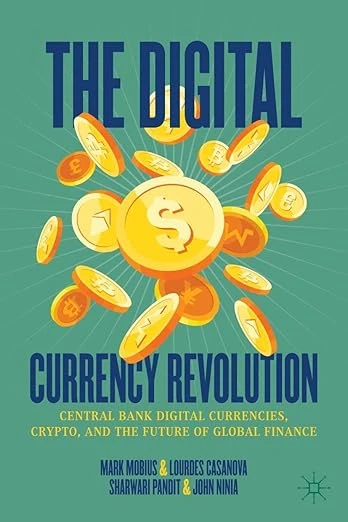
Money is being reimagined right before our eyes. The past decade has brought revolutionary changes to how billions of people pay for goods, transfer funds, and interact with financial systems worldwide. Digital wallets have become as common as physical wallets, mobile payments happen in seconds, and cryptocurrencies have introduced entirely new ways to think about money itself. Now, governments around the world are developing their own digital currencies, and the decisions they make today will fundamentally reshape the global economy for generations to come. Explore more about The Digital Currency Revolution book on the website.
The Financial Technology Explosion in Emerging Markets
This book covers the dramatic explosion of growth in digitalization, financial technology, and mobile payments that has swept through emerging markets over the last ten years. Developing countries have experienced a true financial revolution, leapfrogging traditional banking infrastructure entirely. Mobile payment platforms have brought banking services to hundreds of millions of people who previously had no access to conventional financial institutions. People can now send money instantly across borders, pay bills, make purchases, and save digitally using only their smartphones. These alternative financial systems have grown so rapidly and become so powerful that central banks worldwide realized they had to respond. The result has been dramatic—governments have fast-tracked Central Bank Digital Currencies from theoretical concepts to actual pilot programs in multiple countries around the globe.
The Global Movement Toward CBDCs
This book covers the remarkably swift and widespread rise in interest surrounding Central Bank Digital Currencies happening worldwide. According to the Atlantic Council's CBDC tracker, more than 95% of the global economy is now actively considering introducing some form of CBDC. This isn't just casual exploration—it represents a fundamental shift in how governments approach monetary policy and the future of money. Central banks have recognized that digital transformation isn't optional; it's inevitable. They must innovate and develop their own digital currency solutions or risk losing relevance as alternative payment systems continue to grow. The speed at which nations have moved from early concept stages to actual testing demonstrates how urgent they consider this challenge.
Developing Nations Leading the Way
This book covers how emerging markets have raced far ahead of wealthier countries in implementing, piloting, and launching various CBDC models. While the entire world has shown interest in digital currencies, developing nations have moved fastest from planning to real-world deployment. These countries face unique challenges that make digital solutions particularly attractive: massive populations without access to traditional banks, inefficient and expensive payment systems that slow economic growth, and outdated financial infrastructure desperately needing modernization. By boldly experimenting with different digital currency approaches, these nations have positioned themselves as pioneers shaping the future of global finance.
Learning from Countries Worldwide
This book covers the emergence of digital payments, cryptocurrencies, and CBDCs through detailed case studies from a diverse range of countries. As emerging markets continue to experiment with these futuristic digital financial systems, the book examines their unique economic and social contexts. Each nation brings different circumstances—different technological capabilities, different cultural attitudes toward money and government, different regulatory frameworks, and different economic priorities. These real-world examples provide crucial insights into what actually works when theory meets practice, revealing both successes and challenges that other nations can learn from as they develop their own strategies.
Understanding Both Sides of the Story
This book covers a comprehensive and updated overview of CBDC initiatives along with their positive and negative consequences on a global scale. The potential benefits are substantial: extending financial services to the unbanked, lowering transaction costs, increasing payment speed and efficiency, and modernizing aging systems. However, serious concerns have emerged alongside these promises. Common arguments against CBDCs focus heavily on privacy worries and fears about concentrating too much autonomy and control in central banks. Critics argue that digital currencies could enable governments to monitor and control citizens' financial lives in ways that were impossible with physical cash.
The American Privacy Question
This book covers specific concerns raised in the United States regarding CBDC adoption. American critics make a powerful argument: if cash becomes obsolete and all transactions go digital, government control over personal finances would increase dramatically while individual privacy would decline sharply. In an all-digital currency system, there would be far more government oversight and far less privacy regarding our spending and financial transactions. Every purchase, every payment, every financial decision could potentially be tracked and recorded by authorities. For many Americans who value personal freedom and limited government power, this represents an unacceptable trade-off, even if digital currencies offer greater convenience.
The Coming Disruption to Global Finance
This book covers the potential disruption to the entire worldwide financial order that could be unleashed by wholesale and retail CBDCs, cryptocurrencies, stablecoins, cross-border payment instruments, and digital payment systems. These technologies aren't simply new payment methods—they could fundamentally restructure how international finance operates, how economic power flows between nations, and how money itself functions. The book engages deeply with the ongoing policy debates and battles over financial payments and digital currencies, including critical discussions about the possible dilution of physical currency's strength and traditional role as digital alternatives continue to multiply and gain widespread acceptance.
Ready to understand the future of money? The Digital Currency Revolution provides clear, comprehensive insights into the technologies and policies transforming global finance. Whether you're interested in innovation, concerned about privacy, or simply curious about where digital currencies are headed, this book offers the knowledge you need. Order your copy today on the website, Amazon, or Barnes & Noble to explore these essential themes further.