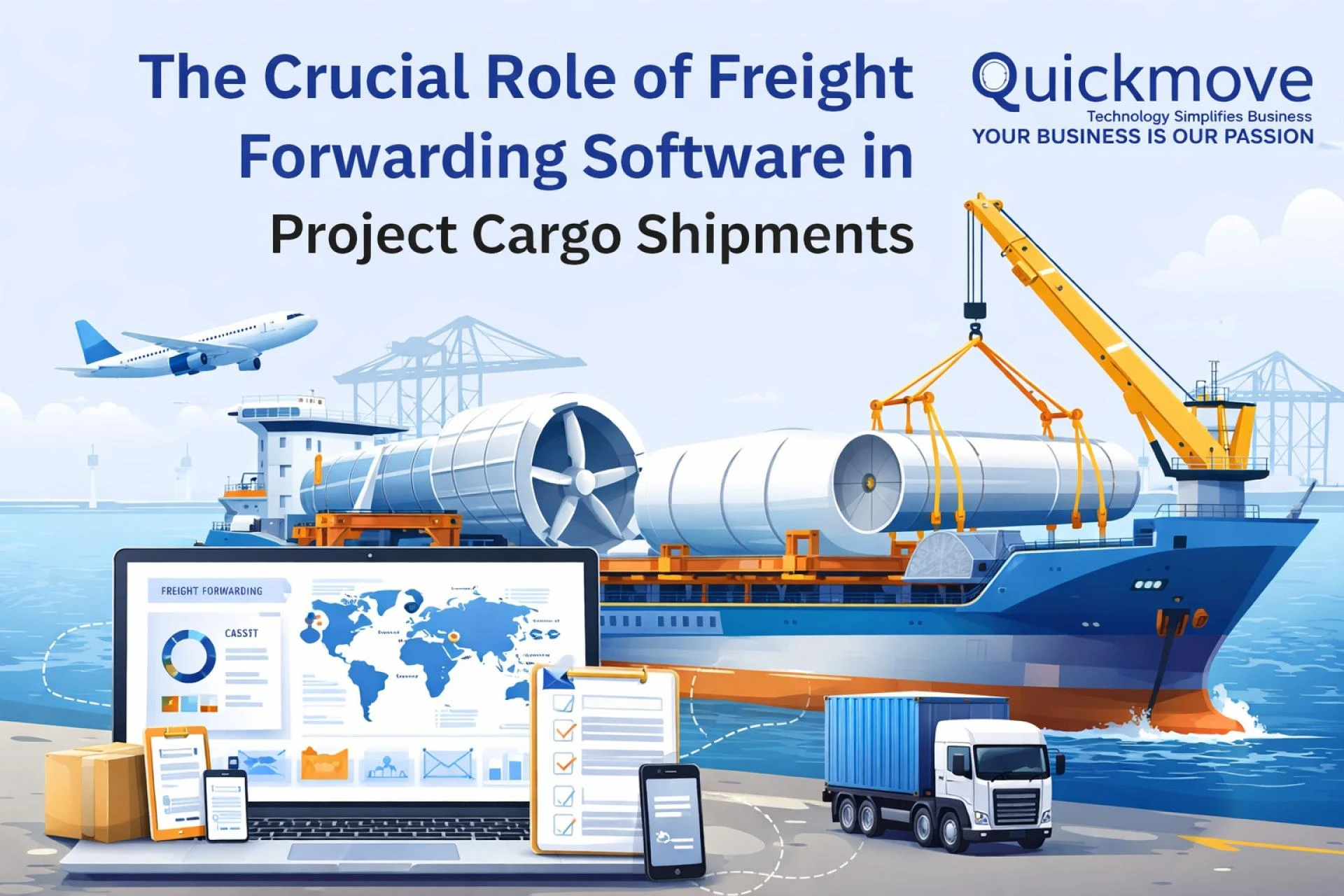
In the world of global logistics, project cargo shipments stand out as some of the most complex and high-stakes operations. These aren't your everyday container loads; they involve oversized, heavy, or specialized items like industrial machinery, wind turbines, or entire oil rig components. Coordinating such shipments requires precision, compliance with international regulations, and seamless collaboration across multiple stakeholders. This is where freight forwarding software becomes indispensable. In this blog, we'll explore its pivotal role in managing project cargo and spotlight how QuickMove emerges as a pioneering solution for forwarders.
Understanding Project Cargo Shipments
Project cargo, often referred to as heavy-lift or out-of-gauge cargo, demands meticulous planning due to its unique challenges. These shipments typically involve:
- Oversized Dimensions: Items that don't fit standard containers, requiring special equipment like flat racks, open-top containers, or even chartered vessels.
- High Value and Risk: The cargo is often worth millions, with potential for damage leading to massive financial losses.
- Multi-Modal Transport: Combining sea, air, road, and rail, often across borders with varying customs requirements.
- Tight Timelines: Tied to project deadlines, such as construction sites or infrastructure developments, where delays can cascade into costly overruns.
Without robust tools, forwarders face inefficiencies, errors in documentation, and visibility gaps that can derail the entire process.
The Role of Freight Forwarding Software in Streamlining Project Cargo
Freight forwarding software acts as the digital backbone for these operations, automating and optimizing workflows to handle the intricacies of project cargo. Here's how it makes a difference:
1. Comprehensive Planning and Quotation
Project cargo starts with accurate quoting. Software tools enable forwarders to input cargo specs, routes, and modes to generate precise quotes, factoring in duties, taxes, and surcharges. Advanced algorithms simulate scenarios, helping identify the most cost-effective and compliant paths. This reduces manual calculations and minimizes errors, ensuring competitive bids without undercutting profits.
2. Documentation and Compliance Management
One of the biggest headaches in project cargo is paperwork—bills of lading, certificates of origin, hazardous material declarations, and more. Freight forwarding software centralizes document creation, storage, and sharing, often integrating with customs systems for electronic submissions. It flags compliance issues in real-time, such as IMO regulations for dangerous goods or INCOTERMS adherence, preventing delays at ports.
3. Real-Time Tracking and Visibility
With GPS integration, IoT sensors, and API connections to carriers, software provides end-to-end visibility. Forwarders can monitor cargo status from origin to destination, alerting teams to disruptions like weather delays or port congestions. For project cargo, this means proactive rerouting or adjustments, keeping projects on schedule.
4. Collaboration and Communication
Project cargo involves a web of parties: shippers, carriers, agents, and end-users. Cloud-based freight forwarding software facilitates secure portals for sharing updates, approvals, and reports. This fosters collaboration, reducing miscommunications that could lead to safety risks or financial disputes.
5. Analytics and Optimization
Post-shipment, software analyzes data to uncover insights—like route efficiencies or cost breakdowns. Over time, this helps forwarders refine strategies, predict trends, and scale operations for future projects.
In essence, freight forwarding software transforms chaotic logistics into a streamlined, data-driven process, cutting costs by up to 20-30% and reducing errors significantly.
QuickMove: The Pioneer Solution for Forwarders
Amid a sea of logistics tools, QuickMove stands out as a trailblazer in freight forwarding software. Designed specifically for the demands of modern forwarders, QuickMove isn't just another platform—it's a comprehensive ecosystem that pioneered features now considered industry standards.
What sets QuickMove apart?
- Innovative Automation: QuickMove was among the first to integrate AI-driven predictive analytics for project cargo, forecasting potential bottlenecks and suggesting alternatives before issues arise.
- User-Centric Design: With an intuitive interface, it empowers small to mid-sized forwarders without requiring extensive IT teams, democratizing access to enterprise-level tools.
- Scalability for Project Cargo: Tailored modules handle oversized shipments, including 3D cargo modeling for optimal loading and route planning that accounts for infrastructure limitations like bridge heights or road widths.
- Seamless Integrations: QuickMove connects effortlessly with major ERPs, TMS, and customs platforms, ensuring data flows without silos.
- Security and Compliance Focus: Built with GDPR and ISO standards in mind, it offers robust encryption and audit trails, crucial for high-value project cargo.
As a pioneer, QuickMove has empowered thousands of forwarders to tackle complex shipments with confidence, from renewable energy projects to aerospace logistics. Its commitment to innovation—through regular updates and user feedback—positions it as the go-to solution for forwarders aiming to stay ahead in a competitive market.
Conclusion
In the high-stakes arena of project cargo shipments, freight forwarding software is no longer optional—it's essential for efficiency, compliance, and success. By automating the mundane and illuminating the complex, it allows forwarders to focus on what matters: delivering value to clients. And when it comes to pioneering solutions, QuickMove leads the pack, offering forwarders the tools to navigate tomorrow's challenges today.
If you're a forwarder dealing with project cargo, exploring QuickMove could be your next smart move. What are your thoughts on logistics tech? Share in the comments!